Cold Weather Hiking Tips That Will Make You Enjoy Winter Treks
Hiking can be enjoyed throughout the year — not just in the summer months — if you know about my cold weather hiking tips and implement them on your next winter adventure.
I used to avoid going hiking in winter because I thought I would be too cold and uncomfortable. Numb fingers and toes usually aren’t signs of a good time.
Then I discovered winter hiking is all about layers and striking a balance between being warm but not sweltering. You want to start a bit chilly. Your body will warm up as you begin to move.
Be bold, start cold! — a common saying when it comes to cold weather activities, and it’s certainly true.
As I learned more about how to dress and what to pack for cold hikes, I came to love them. Winter hikes are quiet and peaceful. You generally won’t see many other people on the trail.
It’s easy to stay holed up all winter if you don’t know you can be just as cozy outside with the right gear for winter hiking. My cold weather hiking tips will get you on the trail and enjoying winter trekking.
📌 Pin this image on Pinterest to save this post for reference.
Cold Weather Hiking Tips Table of Contents
-
- Always check the weather before you go
- Know when the sun sets
- Consider winter trail conditions
- Microspikes and trekking poles for safety and stability
- Wear proper footwear
- Winter hiking layers guide
- Best hiking gloves cold weather — and more accessories
- Always check the weather before you go

Check Weather Conditions
This should go without saying. No matter what time of year it is, you should check weather conditions before you embark on a hike. Hike smart! And tell someone where you’re going.
You should not only be aware of storm potential, but also whether it’s supposed to be sunny or cloudy. Did you know you can still get sunburnt in winter?
Glare from white snow reflects the sun’s rays and can lead to sunburn and snow blindness. Smear a bit of sunscreen on exposed parts of your face (if any) and wear polarized sunglasses to protect your eyes.
When Does The Sun Set?
We all know there are fewer hours of daylight in winter, so plan your hike accordingly. If it’s a long trek, be sure to give yourself plenty of time so you’re not out after dark in the cold.
See my post about what to pack for a day hike if you want to know more about hiking safety.
Consider Winter Trail Conditions
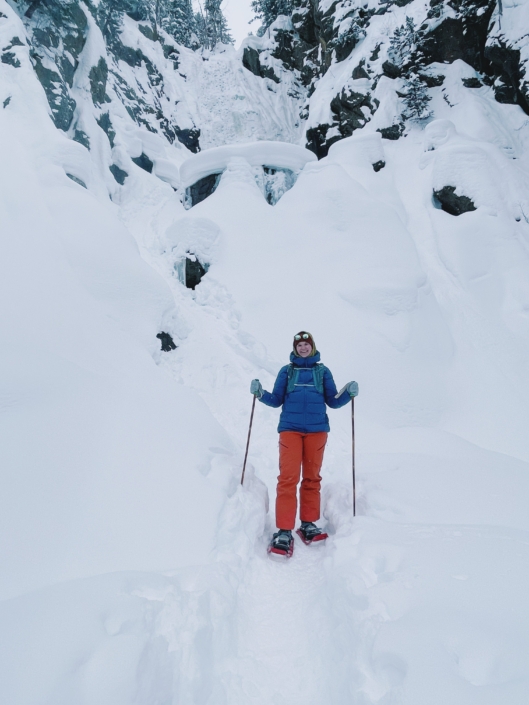
Use an app like AllTrails to determine winter trail conditions. Are other hikers reporting ice and snow on the trail? Were trail users able to find the route and hike successfully?
Microspikes and Crampons For Icy Trails
If there is ice, you may need a pair of microspikes or crampons. Microspikes and crampons strap around the bottom of your boots and are extremely sharp, providing traction on slippery surfaces. You’ll want to make sure they are tight for a proper fit.
Microspikes are likely going to do the trick unless you plan on some serious ice hiking. In that case, you might want to bring along a knowledgeable friend or book a guided hike.
Trekking Poles For Winter Hiking
For stability, consider hiking with trekking poles. I love my poles, and I use them on all kinds of hikes at any time of the year. Not only are they helpful for snowy and icy trails, but I also use them for water crossings and steep terrain.
Remember: Keep the “baskets” on your poles so they don’t sink in the snow.
I was once skeptical of trekking poles, but they really do take strain off your knees and provide excellent support for when you wish you had an extra hand.
Boots For Winter Hiking
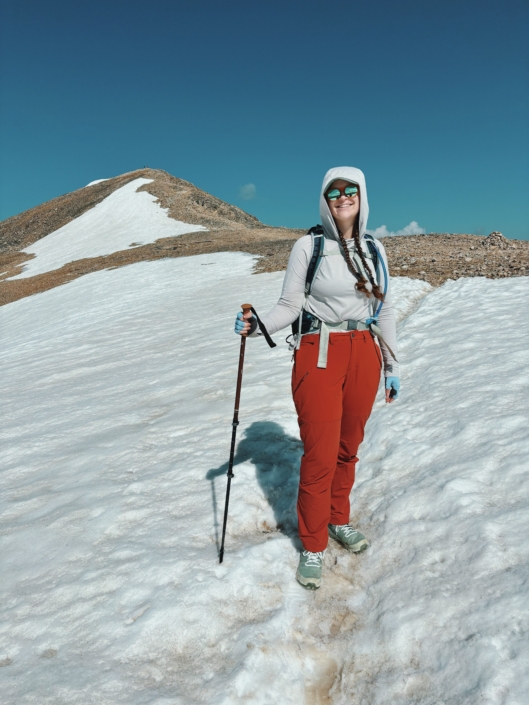
For me, cold weather hiking footwear depends on whether there’s snow on the trail. Walking on snow is going to leave your feet far colder than walking on frozen bare ground.
If the trail conditions look dry and it’s going to be a chilly, yet sunny day, I might opt for my Hoka trail runners and thick wool hiking socks. When there’s snow or mud potential, I grab my waterproof hiking boots.
The Salomon Quest Boots are my heavy-duty waterproof hiking boots. I’ve worn these for miles and miles over many years, and I can’t believe how well they’ve held up. They keep my feet plenty warm and dry.
For a lightweight boot that’s still waterproof, I love my On Cloudrock Mid Waterproof Hiking Boots. These offer a bit more cushion than the Salomon Quest Boots while still being waterproof. If the hike won’t be as cold, I’ll wear these.

Winter Hiking Layers Guide
Merino Base Layers
Let’s start with the best winter base layer for hiking: merino wool.
Merino wool wicks moisture away from your skin while maintaining breathability. It’s part of the reason why merino can keep you cool in summer and warm in winter.
I’ve got an entire post dedicated to merino wool moisture wicking hiking clothes that goes over everything from shirts and socks to underwear and bras.
In that post, I recommend the best hiking base layers and go in depth about what to wear for different conditions. I’ll give a brief overview here:
Base Layer Shirts:
REI Co-op Merino 185 Long-Sleeve Base Layer Top — mid-weight warm
Smartwool Classic Thermal Merino Crew Base Layer Top — very warm
Merino Hiking Socks:
Darn Tough Hiker Micro Crew Cushion Socks — Mid-weight socks
Darn Tough Boot Sock Full Cushion — Thickest socks
You can go the extra mile and even wear a merino bra and underwear. (And yes, they do make a difference over cotton underwear!)
Note: I only give women’s versions of clothing in this post, but also provide men’s versions in my merino hiking clothes post.
Best Women’s Pants For Cold Weather Hiking
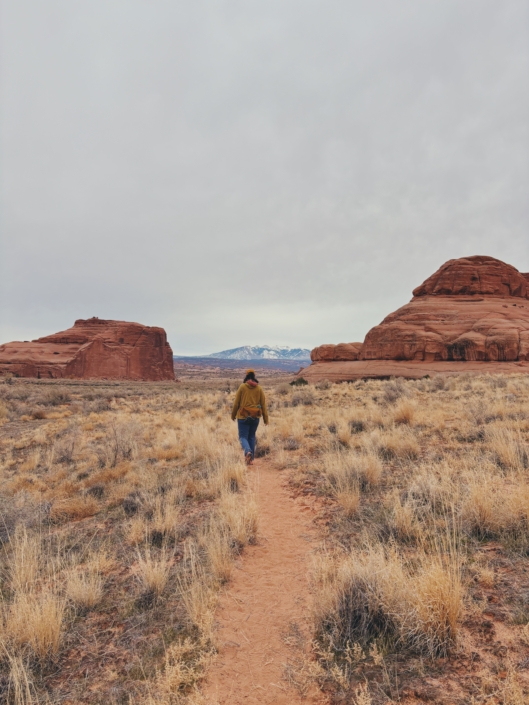
My go-to mid-weight pants are the Arc’teryx Gamma Pants. The material is water-repellent and wind-resistant, perfect for a chilly adventure. These are stretchy, and the adjustable waist means a dialed-in fit. One of the best pants to wear for winter hiking.
The Point Peak Trail Pants from Patagonia are another of my favorite heavier-weight pants. The material is extremely durable and also water-repellent.
If you tend to get cold, you can layer merino bottoms under your hiking pants. I find that if I’m exerting myself on the trail, my legs fare just fine with one layer.
See my post about durable hiking pants for curvy women if you struggle to find hiking pants that fit a larger hip-to-waist ratio.
Mid Layers For Cold Weather Hiking
If your hike is going to be a teeth-chattering and wind-whipping kind of experience, wear a mid-layer for more insulation. A fleece jacket is an excellent option.
My Patagonia Synchilla Snap Pullover has been a part of my layering wardrobe for years, and it’s cute to wear without an outer layer on summer nights or during autumn explorations.
The goal of a mid-layer is to keep your body heat in, and it can be taken off if you get too hot. Think about it as your coziest piece in your winter layers sandwich — perfectly pleasant between your base layer and outer layer.
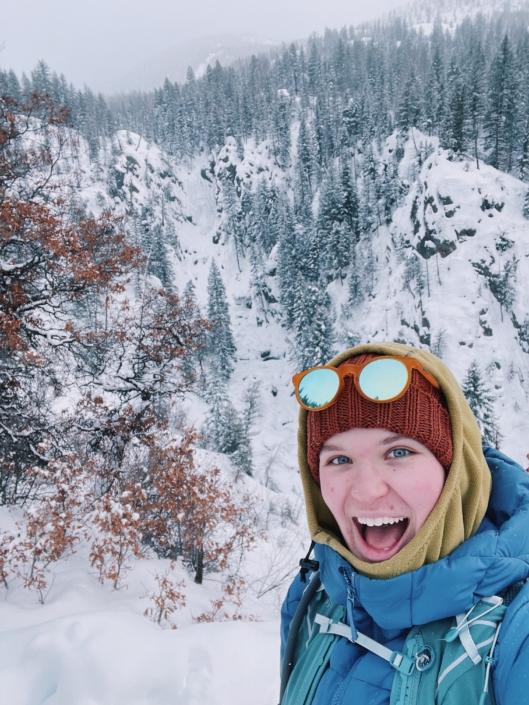
Best Women’s Cold Weather Hiking Jacket
Your outer layer is what’s in contact with the elements, so you want it to be weather-resistant and block bone-chilling winds.
Lightweight Winter Jacket
A lightweight option is the Patagonia Nano Puff — I even pack this for summer hikes in the mountains. It’s easy to stuff into a backpack and provides considerable warmth for the weight. The hood is non-negotiable for me. I use it all the time, and it’s more convenient than packing a beanie.
The Nano Puff is a comfortable option until about 30º F if you have a mid-layer underneath. Below that, I start to want something a little thicker.
➡️ The Patagonia Nano Puff is featured on my Favorite Gear Page.
Warmest Packable Jacket
I struggled to find a jacket that was packable and measurably warmer than the Nano Puff. Ultimately, I landed upon the Arc’teryx Thorium Hoody. Trust me, this jacket is worth the lofty price tag.
I’ve never been kept so warm with a packable jacket before. Even on the coldest hikes and snowshoe adventures, I am toasty and comfortable. I tried so many other coats and returned all of them because they weren’t warm enough for what I needed.
Waterproof Shell
That being said, the Thorium is for dry conditions. If it’s going to be actively snowing hard throughout the duration of your hike, you’ll need a shell. (Good for you for going out in wet and cold conditions, you are braver than most.)
A raincoat will do just fine as a waterproof outer layer, or you can invest in a ski shell jacket if you’re fancy like that. Or you don’t need to subject yourself to that kind of wet and freezing torture — just a thought.
With all these layers, you’ve just put together a fabulous cold hiking outfit. Onto the accessories!
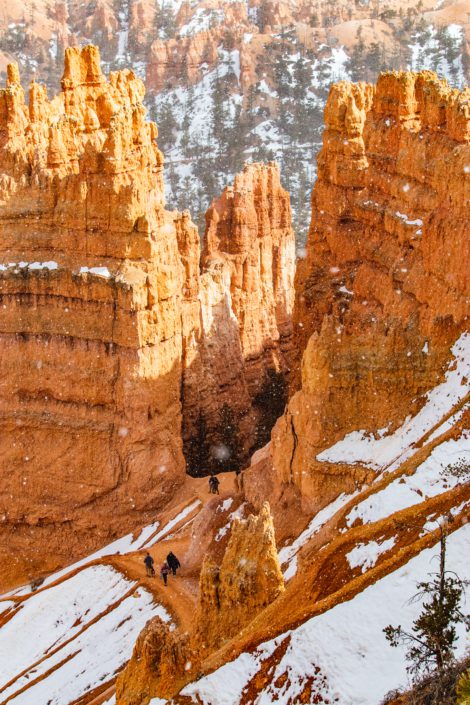
Cold Weather Hiking Accessories
Best Hiking Gloves Cold Weather
Mittens will keep your hands warmer than gloves. You might not look as cool and sporty as someone who wears thin black gloves like in a spy movie, but I assure you, your fingers will be much happier.
The Patagonia Better Sweater Gloves are the best of both worlds. Flip the mitten flap over for warmth and pull the flap back to get fingerless gloves.
I originally got these for winter photography. Fingerless gloves allowed me to press the shutter button and maneuver the touchscreen on my camera. I found they were also perfect for cold weather hiking because my hands get hot, and the fingerless option allows for more breathability.
If your hands tend to run cold, Dakine Gore-Tex mittens will be your best bet. I wear these for skiing, and I have to take them off half the time because my hands are sweating. They even have a zippered pocket for hand warmers.
Cold Weather Hiking Hats
For super wintery treks, I’ll don a fleece-lined beanie. The extra liner blocks the wind more than a regular knit beanie.
If it’s a bit warmer, I wear my Smartwool Headband. The headband keeps my ears warm without trapping all the heat on my head. I love it for walks in the neighborhood as well.
Merino Buff
A buff is essentially a tube of fabric you can wear around your neck and can pull up over your nose to cover your face from the elements. If it’s really cold and windy (like when I’m skiing), I’ll wear a Buff to keep the chill off my face (plus protects from sunburn and windburn!).
If you have a jacket without a hood, a Buff is an incredible piece of gear. Wear it around your neck and pull it up over the back of your head; then, wear a hat on top of it to stay toasty. If I’m camping when it’s cold, I’ll sleep with my hat and Buff pulled up like this.
The lightweight merino is easy to breathe through and keeps sweat moving away from your skin.
Cold Hiking Gear is Subjective
Everyone reacts to cold differently. Your job is to know your body and your level of desired comfort. A friend might not need a mid-layer, but you’re freezing your butt off wrapped up in three layers. Better to bring a backpack so you can add or subtract layers as needed.
Don’t forget to bring all the usual things like water, snacks, and safety items with you on your hike. See my post about what to pack on a day hike if you want to pack like a pro.