DOC Campgrounds New Zealand: How to Book and What to Expect
Planning where to stay at DOC campgrounds in New Zealand can feel overwhelming at first. This guide breaks down exactly how the system works so you can confidently book campsites, reserve huts, and understand freedom camping before your trip.
🇳🇿 This post is a part of my New Zealand Travel Guide.
DOC campgrounds in New Zealand are some of the most scenic and affordable places to stay. Especially if you’re traveling by campervan or planning a road trip around the South Island.
Managed by the Department of Conservation (DOC), these campgrounds are located inside national parks, near alpine lakes, along remote coastlines, and at the base of iconic hikes. But figuring out how DOC campgrounds work, and whether you need a reservation, can feel confusing at first.
➡️ Get my full 21-day New Zealand South Island itinerary with campsites included to make planning aa breeze.
In this guide, I’ll explain:
- What DOC campgrounds in New Zealand are
- The different campsite types
- What facilities you can expect
- How to book DOC campsites
- How DOC campgrounds differ from freedom camping and holiday parks
- How Great Walk huts and campsites fit into the system
After spending three weeks camping around the South Island, I quickly learned that not all DOC sites operate the same way. Some require reservations, some are first-come, first-served, and others fall under the separate Great Walk booking system.
Here’s exactly how it all works, so you can plan your trip with confidence.
📌 Pin this image on Pinterest to save this post for reference.
What Are DOC Campgrounds in New Zealand?
DOC campgrounds in New Zealand are managed by the Department of Conservation (DOC), the government agency responsible for protecting the country’s national parks and public conservation land.
If you’re road tripping New Zealand in a campervan, chances are you’ll stay at a DOC campsite at some point. These campgrounds are located in some of the most scenic parts of the country.
DOC sites are typically more basic than holiday parks, but they are affordable, well-maintained, and immersed in nature. Facilities vary depending on the campground, and not all require advance reservations.
Think of DOC as New Zealand’s version of the National Park Service, Forest Service, and Bureau of Land Management combined.

Near Godley Head Campsite, Christchurch
Types of DOC Campgrounds
DOC campgrounds are not all the same. Most travelers are referring to standard DOC campsites when they say “DOC site,” but there are several categories of campgrounds.
Basic Campsites
Usually minimal facilities, but include a pit toilet. Water may be from a tank, stream, or lake.
Standard Campsites
Typically include toilets and a water source (water may require boiling or treatment before drinking). More amenities like picnic tables, rubbish bins, and a cooking shelter may be provided.
Serviced Campsites
These may include flush toilets and treated water. There is road access for all vehicle types and there may be hot showers, laundry, and more luxury facilities.
Backcountry Campsites
Likely located near a backcountry hut.
Great Walk Campsites
Campsites located near Great Walk huts.
Unlike campgrounds in the United States, DOC campsites usually do not assign individual numbered spots. Even if you reserve online, you are reserving space within the campground, not a specific parking spot.
That means arriving earlier in the day increases your chances of securing a good location.
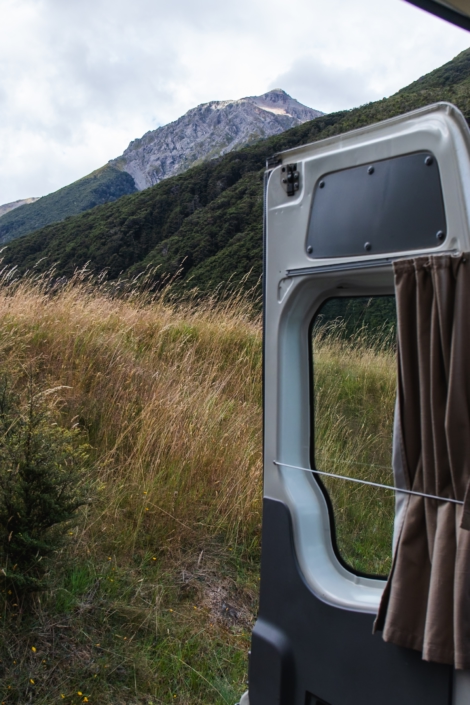
Avalanche Creek Shelter Campsite, Arthur’s Pass
What Facilities Do DOC Campgrounds Have?
Most DOC campgrounds are simple and self-sufficient. Facilities often include:
- Pit (long-drop) toilets
- Basic water access (sometimes untreated, boil before drinking)
- No powered sites
- No communal kitchens
- No showers
Always check the individual campsite listing before arrival to confirm available amenities.
DOC Campground Rules
Keep these rules in mind when you’re freedom camping and at DOC sites:
- A freedom camping site might not have rubbish bins, so take everything with you. Keep your site clean for the next person to enjoy.
- Use the public toilet or the toilet in your campervan. No one wants to camp near the smells of waste. When your tank is full, use a dump station.
- Be responsible and respectful to other campers. Keep your voices and lights low so as not to disturb anyone.
- Don’t make a campfire or damage the vegetation around your site. If you encounter wildlife, give them space.
- Read signage and obey any restrictions.
How to Book DOC Campgrounds in New Zealand
Booking a DOC campground is done through the Department of Conservation’s online booking system. Some campsites require reservations, while others operate on a first-come, first-served basis.
Before booking anything, create a DOC online services account.
How to Create a DOC Account
- Go to the DOC website
- Click “Log in” in the upper right corner of the page.
- On the next page, select “Log in to DOC bookings.”
- Click “Create Account” in the upper right corner of the bookings page.
- Fill out the registration form with your information and choose a password you’ll remember.
- Check the top corner of the page for your name. If you see it, you’ve successfully created your DOC account!
Book Your New Zealand DOC Campground (or Hut)
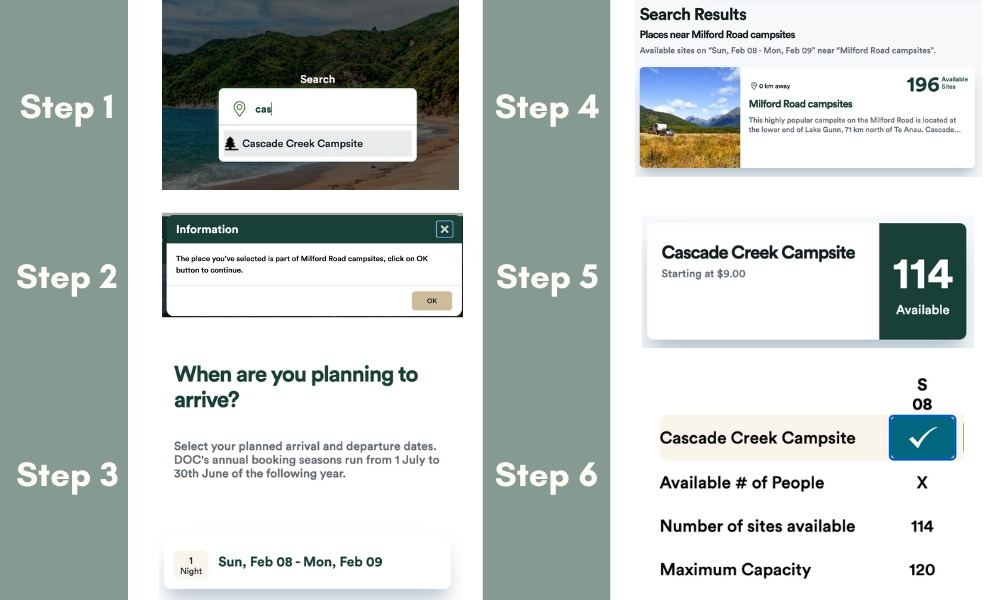
Search the campsite you want to stay at. I’ll use Cascade Creek as an example.
You must be signed in on the DOC website to make a booking.
Step 1. Type in the campsite you’re looking for and click the result that appears
Step 2. You might be prompted to select a grouping of campsites, click “Ok”
Step 3. Enter the dates you arrive and leave
Step 4. Select the grouping of campsites from the list
Step 5. Pick the specific campsite you want to book
Step 6. Select the night(s) you want to book by clicking the green checkmark and clicking the yellow “Book Now” button at the bottom of the screen
Step 7. Enter all your information in the reservation details page and verify that the nights you picked are correct
Step 8. Click “Reserve Unit” at the bottom of the page
Done! To see the booking you’ve made, go to your name in the top right corner and then click “Other Bookings.” Your campsites will show up there.
Not all DOC campsites require advance reservations. Always check the campground listing to see whether it is reservable or first-come.
DOC Campgrounds vs Freedom Camping
Freedom camping allows you to park overnight in designated public areas outside formal campgrounds. These areas usually have little to no facilities and often require a certified self-contained vehicle (meaning it has a toilet and the tanks can hold waste and wastewater for up to three days).
Key differences:
- DOC campgrounds are designated camping areas with basic facilities.
- Freedom camping sites may have no toilets or rubbish bins.
- Freedom camping rules vary by region and can result in fines if ignored.
- DOC campgrounds are more predictable and reliable for overnight stays.
If you’re new to campervan travel in New Zealand, staying at DOC campgrounds is usually the safer and easier option.
Freedom Camping App
Download the FREE Campermate New Zealand app from the App Store. You don’t need to create an account to view campsites. Allow location services while using the app to see which campsites are near you.
Campermate also has icons for toilets, trekking trails, scenic views, information sites, backpacker accommodations, and more. Play around and become familiar with the app before you need to rely on it.
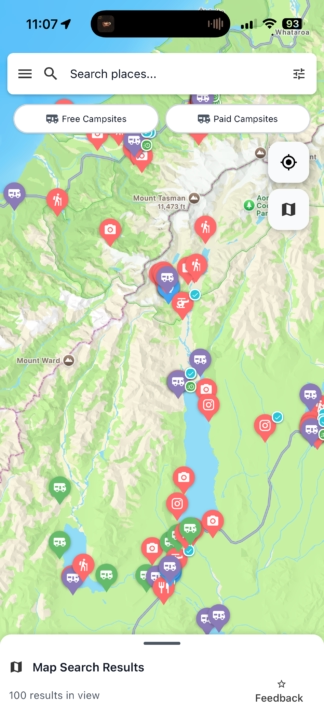
Campermate App Screenshot
DOC Campgrounds vs Holiday Parks
Holiday parks (or campervan parks) are privately operated campgrounds with more amenities. DOC campgrounds, on the other hand, prioritize location and simplicity over amenities.
Holiday parks typically include:
- Assigned powered or non-powered sites
- Showers and laundry facilities
- Dump stations
- Fresh water filling stations
- Communal kitchens
- Front desk check-in
Booking a holiday park is a nice way to “reset” after being on the road for a few days. Taking a shower and doing laundry at a holiday park is convenient. Most holiday parks also have an option to book a powered site if you need a boost in electricity.
Some holiday parks also feature a communal kitchen space. This can be a fun place to chat and get to know fellow travelers. We talked to many people while we were waiting for the laundry to finish!
Helpful tip: You can use a credit card at the front desk of a holiday park to exchange for coins for the laundry machines. Dollar notes are also accepted in exchange for coins.
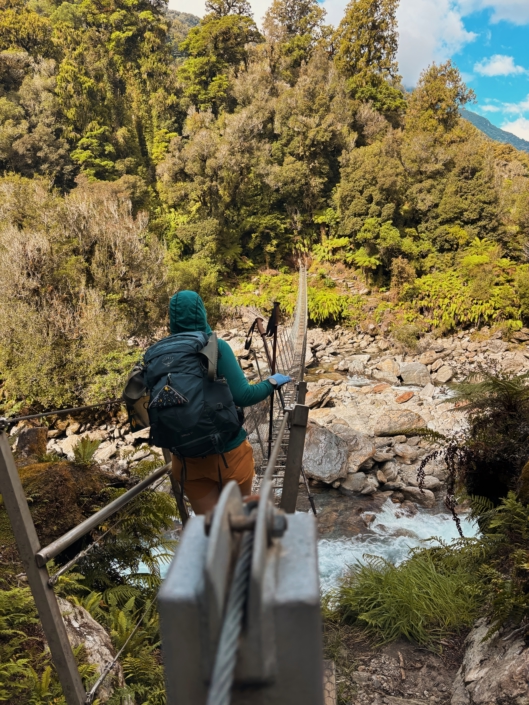
Copland Track Suspension Bridge
How Great Walk Campsites and Huts Fit Into the DOC System
If you’re looking to hike one of New Zealand’s Great Walks, you will stay in a hut or campsite along the way. The Great Walks are not meant to be completed in a day.
It’s extremely difficult to secure an NZ Great Walks booking. You will need to know the nights you want to reserve up to a year in advance and be ready to book the moment they are released.
While most DOC campgrounds in New Zealand are either reservable or first-come, first-served, the Great Walks operate under a separate booking system.
Great Walk huts and campsites are managed by DOC, but they follow a seasonal reservation model and are designed for multi-day hikes. You cannot simply show up, you must book specific huts or campsites in advance.
Here’s how the Great Walk booking process works:
- Bookings open in May for the following July through June.
- You must select specific huts or designated campsites along the track.
- Reservations are always required.
- Popular routes can sell out quickly.
Unlike standard DOC campgrounds, Great Walk reservations require you to plan your daily hiking distances and secure overnight stops in sequence.
If you’re unable to secure a Great Walk booking, don’t worry. New Zealand has hundreds of incredible DOC campgrounds and backcountry huts outside the Great Walk system that offer equally stunning scenery, often with more flexibility and fewer crowds.

On the Copland Track to the Welcome Flat Hut
Backcountry Huts in New Zealand
Backcountry huts in New Zealand are extremely popular. If you want to book a famous hut, start looking as soon as you know your dates. Huts book out months in advance, especially during the peak summer months.
Booking a hut follows the same steps as booking a DOC campsite, see the above steps for reference.
We booked the Welcome Flat Hut near Fox Glacier during our time in New Zealand. There were hot pools to relax in after a long day of trekking, and a knowledgeable hut warden told us about the history of the hut, track, and pools.
I wished we had booked two nights at the hut so we could have stayed and explored more around that area. Do research about what tracks are nearby to the hut you’re staying in, and think about whether one night will be enough or if two or more nights are preferred.
There may even be multiple huts to book along the track you are hiking. Study a map of the trail before you book any accommodations.
How to Book a Great Walk Hut or Campsite in the DOC System
Make sure you have an account and you’re logged into the DOC website to make a booking.
Step 1. Don’t use the search in the middle of the page for Great Walk bookings! No results will show up for those huts and campsites. Instead, click “Great Walks” in the top banner to begin your search.
Step 2. Select the Great Walk you want to find accommodation for. Fill out the information and click search.
Step 3. Look at the map below the available bookings. You will need to know where you want to stay along the track and how far apart the huts are.
Example: See the map in the photo below. You likely wouldn’t stay at both the Routeburn Flats Hut AND the Routeburn Falls Hut. They are only 1-1.5 hours apart. But the Lake MacKenzie Hut is a critical location to book — unless you want to hike over 23 km in a day (over 14 miles).
Step 4. Select the huts and campsites you want on the appropriate nights. You can definitely do part of the track and turn around if certain hut locations are not available.

Research New Zealand DOC Campgrounds
You really can’t go wrong with any hut or campsite in New Zealand. Each offers something unique. The best thing to do is to research the area before booking anything.
You might realize you want to spend more time hiking a particular track or discover new campsite locations in the process.
I spent hours, more like days, researching huts and campsites to book. It helps to have a loose itinerary of where you’re going to be and when before you start booking. That’s not to say you can’t also book last-minute — you can, but be warned that popular sites might be full.
A trip itinerary is a delicate balance of having things booked in advance and making room for spontaneity.
➡️ Follow my 3-week New Zealand packing list to continue planning for your trip.
DOC Campgrounds New Zealand FAQs
Do you need to book DOC campgrounds in advance?
Some DOC campgrounds require advance online reservations, especially during peak summer months. Others operate on a first-come, first-served basis. Always check the individual campground listing on the DOC website before arriving.
How much do DOC campgrounds cost?
Prices vary depending on the type of campground. Basic campsites are the most affordable, while serviced campsites cost more and may include flush toilets and additional facilities. Pricing is usually per person, per night.
Do DOC campgrounds have showers and power?
Most DOC campgrounds do not offer powered sites or showers. Facilities are typically basic and may include long-drop toilets and untreated water. Serviced DOC campsites may offer more amenities.
Can you stay at DOC campgrounds in a campervan?
Yes. DOC campgrounds are popular with campervan travelers. However, not all sites offer powered connections, and some may require vehicles to be self-contained.
Are DOC campgrounds better than freedom camping?
DOC campgrounds provide designated camping areas with facilities, making them more reliable and often more scenic than freedom camping spots. Freedom camping has stricter rules and fines for non-compliance.