Ultralight Backpacking Hygiene Kit for 5 Days or Less
Creating an ultralight backpacking hygiene kit can feel like an impossible task. How can you shave ounces on essentials? It took me years to perfect my own kit.
During my first couple of years of backpacking, I mostly went on one-night trips. A few extra ounces of toiletries weren’t a big deal to me. Then I started planning 3+ night trips and hiking more challenging trails, and carrying extra weight became a greater burden.
➡️ See my complete beginner’s packing list with what gear to bring backpacking.
Switching up your toiletries for backpacking is an easy way to lighten your load. Most of the time, you’re bringing more toothpaste and deodorant than you would use in weeks for a few nights.
➡️ Further lighten your load with my list of what NOT to bring backpacking.
I’ll share all my tips and tricks for making your own ultralight backpacking hygiene kit. Anyone can use this list as a baseline for packing their toiletries. I also give female-specific hygiene tips.
➡️ A couple of these items are on my favorite gear list that you can check out for more basics.
Please note that this list is intended for up to five days of backpacking. For longer hikes, you probably want to wash your hair and clothing. I have not included items for that on this list.

Why You Need An Ultralight Hygiene Kit
Many people pack heavy backpacking toiletries. The weight can add up quickly, not to mention the bulk of bringing full-size bottles and containers.
Often, you don’t need to ditch a product entirely; you just need to pack less of it in a different container. I still bring sunscreen and deodorant, but no longer in the huge tubes.
Saving weight on your backpacking toiletries just takes a little creativity. Little sacrifice is required if you pack properly.
Ultralight Backpacking Toiletry Bag
Let’s start with the bag to keep all your toiletries in one place. I actually used to use a real toiletry bag (albeit a small one) to carry everything. Then, when I downsized my toiletries, the bag started to feel a bit overkill.
Now, I use a 4 L ultralight dry bag. At the time I got this bag, 4 L was as small as they came. They now make a 3 L or 5 L dry bag. A 3 L would be ideal.
If anything does leak (which I haven’t had that problem yet, knock on wood), then spills should be contained within the bag, keeping everything else in your backpacking pack stain-free.
➡️ Looking for an everyday toiletry bag? See my post about packing travel toiletries for 3 weeks.
DIY and Budget-Friendly Ultralight Solutions
Usually, when something is marketed as “ultralight,” we tend to think, “Well, this is going to be expensive.” I’ll show you that not all ultralight solutions need to break the bank.
Ultralight Toiletry Containers
Years ago, after reading online about how to minimize my backpacking hygiene kit, I stumbled across the idea of using contact lens case containers. They are small, lightweight, and made for carrying liquids.
I bought a pack of them and have never looked back. Contact cases are perfect for decanting small amounts of your favorite toiletries.
To ensure I didn’t start brushing my teeth with sunscreen, I labeled the containers and brushed clear nail polish over the wording so it doesn’t smudge off. If you get a pack with caps in different colors and can remember what’s in each, that’s awesome.
I’ll share more down below about the types of creams and liquids I pack in these cases.
If you need to pack a larger volume of thick creams, use these silicone travel jars. They are the perfect size, lightweight, and leakproof.
Ultralight Zip Bags
I try to reduce the amount of single-use plastic I consume whenever I can, so instead of buying plastic baggies, I opt for compostable zip bags. They are lightweight, and I can write on them. Great for packing out used toilet paper and bringing clean wet wipes (or snacks!).

Large Ultralight Liquid Storage
What if you want to bring more liquid than the contact lens case can hold? I’ve got a solution for that, too.
The Matador Flatpak Toiletry Bottles weigh almost nothing when empty and get smaller as you use the liquid inside. I use one for ultralight backpacking soap and fill it with unscented castile soap. It’s ideal for washing your hands, body, dishes, and more.
When hiking, I cover my skin rather than apply a lot of sunscreen, but if you prefer sunscreen to long sleeves, these Flatpak bottles are a fantastic option.
Ultralight Backpacking Hygiene Kit Checklist
Alright, we’ve gone over the best tools for carrying your backpacking toiletries; now let’s move on to what you should be packing.
Avoid fragrances as much as you can. Critters are attracted to smells.
Oral and Lip Hygiene Kit
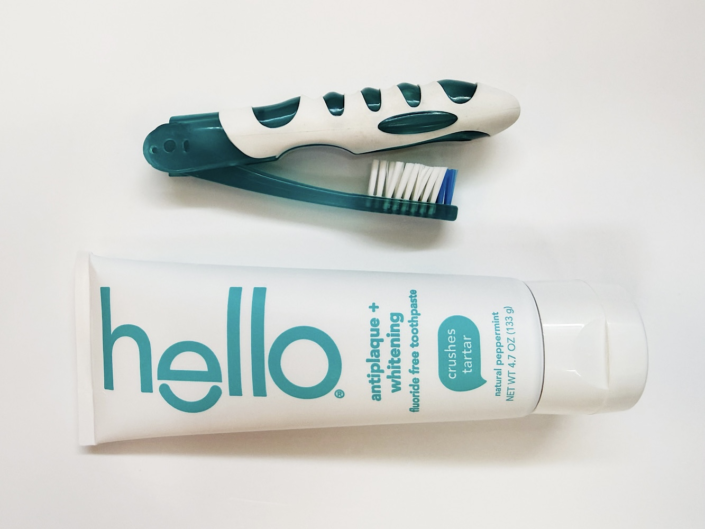
- Foldable Toothbrush
- I pack a foldable toothbrush for backpacking because not only is the handle hollow (reducing weight), but it also acts as a cover for your brush.
- Toothpaste
- Fill one or two sides of a single contact case with toothpaste. I found that a single side with toothpaste can last a few days if used sparingly.
- Sunscreen Lip Balm
- When you’re outside all day for multiple days in a row, it’s a good idea to put on some SPF lip balm. Your lips can get dry or even burned in the sun.
Ultralight Hygiene Items for Your Body
- Hand Sanitizer
- One of the most important items on this list is hand sanitizer. It helps prevent the spread of germs and bacteria from your hands to your mouth. If people get sick while backpacking, they often blame the water, but improper hand washing is a sneaky culprit. Keep your hands clean, and always use sanitizer before eating and after nature calls.
- Deodorant
- The secret to ultralight backpacking deodorant is not bringing the whole stick with you. Scrape some deodorant from the top of your bar into the contact lens case or silicone jar. When it’s time to apply it, just grab some and rub it on with your fingers. Yes, this works!
- Medication/Pills
- If you have medications, you can pack them in compostable zip bags and label if needed. Bring some pain killers like ibuprofen. You never know if you might need them.
- Baby Wipes
- It can be very refreshing to wipe down with a wet wipe after a hard day on the trail. Either get a pocket-sized pack of wet wipes or pack individual wipes in a compostable bag and leave the big pack at home.
- Sunscreen
- Decant into a contact case or Flatpak Toiletry Bottle depending on how much you want. I prefer mineral sunscreen because it contains no chemicals, and I think it performs better than traditional sunscreen.
- Castile Soap
- Unscented Castile soap is excellent for washing your hands and more. I pack it in a Matador Flatpak Bottle.
- Non-DEET Bug Spray
- Choose Picaridin Bug Spray to protect your gear. DEET can destroy synthetic fabrics found on backpacks, coats, and more. These 1 oz non-aerosol bottles are perfect for backpacking.
- Itch Cream
- On more than one occasion, I’ve been glad to have itch cream in my ultralight backpacking toiletry kit. No bug spray prevents 100% of bug bites, and this cream also relieves itching from poison ivy, oak, etc.
My Kula Cloth clipped to my backpacking backpack
“Down There” Ultralight Hygiene Kit
- pH Wipes
- Yes, pH wipes are different from baby wipes. pH wipes keep you fresh and balanced on backpacking trips when showers may be few and far between. These wipes are essential for feminine hygiene care.
- Menstrual Disc
- Invest in a menstrual disc or cup and stop throwing money away on disposable products. Remember, you should pack out used menstrual products from the backcountry.
- If you do use disposable period products, bring an empty coffee bag to carry them out. The coffee hides any smell, and the bag isn’t see-through. Works for used toilet paper as well.
- Toilet Paper
- Re-roll a bit of toilet paper and put it in a compostable zip bag to keep it dry and clean. Pack it out! Don’t bury your toilet paper.
- Kula Cloth
- I actually have two Kula Cloths. These anti-microbial pee cloths are incredible for hiking and backpacking. I don’t use toilet paper for pee anymore. When I’m at camp for the night, I rinse the cloth I used that day and use my second dry one until the next night, and repeat.
Ultralight Hygiene Kit Tools
- Lightweight Trowel
- Pack a lightweight trowel for digging proper cat-holes. This is crucial for Leave No Trace! Check out this post if you’re not sure how to dig a cat-hole.
- Quick Dry Towel
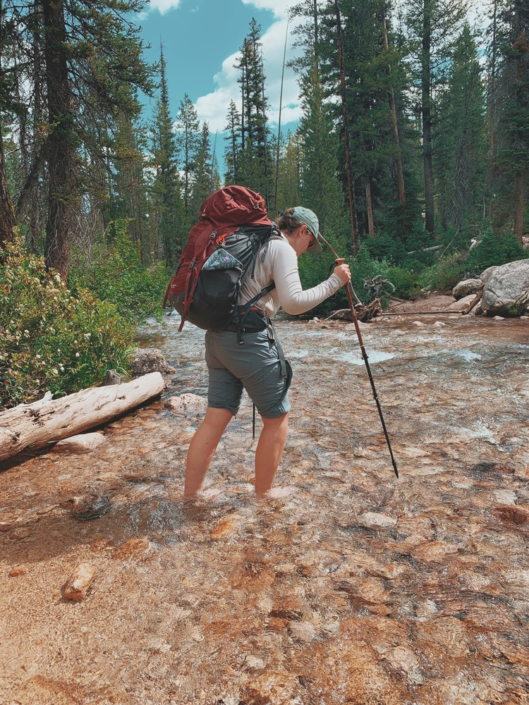
- The Nomadix Tiny Towels are ideal for adding to your ultralight backpacking hygiene kit. They come in a pack of three, but one towel is all you need to pack. It can be nice to wipe down your face or body with a towel or dry off your feet after a creek crossing.
Optional Ultralight Backpacking Hygiene Items
Not absolutely essential backpacking toiletry items, but they can be nice to have.
- Eye Drops
- If you get itchy or dry eyes after spending time outside, eye drops are lifesavers. Eye drop bottles are generally small, so just bring the whole bottle.
- Aloe Vera Gel
- Getting sunburnt in the backcountry and having nothing to treat it with sounds like a nightmare. If you burn easily, consider squeezing some aloe vera gel into a contact lens case.
- Hand Lotion
- Using hand sanitizer can dry out your hands. Decant a bit of your favorite fragrance-free lotion into a contact lens case.
- Eye Mask
- Not sure if this is considered a “toiletry” item, but I decided to add it to this ultralight hygiene kit. The sun can rise really early in the summer months, and sometimes you want a bit more sleep in your tent before venturing on. An eye mask blocks light so you can get more ZZZs.
- Extra hair ties

📌 Pin this image on Pinterest to save this post for reference.