Trail Runners vs Hiking Boots: Which Should You Wear?
Trying to choose between trail runners vs hiking boots? For most day hikes and backpacking trips, I prefer trail runners because they’re lighter, more breathable, and more comfortable over long distances. Hiking boots are still the better choice for wet weather, snow, very rugged terrain, or when I want more protection around my feet and ankles.
After hiking more than a dozen Colorado 14ers, backpacking several multi-day routes, and hiking internationally, I’ve switched almost entirely to trail runners. The lighter weight makes a noticeable difference on long climbs, and my feet feel much better at the end of high-mileage days.
I haven’t abandoned hiking boots completely, though. I still reach for my waterproof boots in rain, mud, snow, and particularly rugged terrain.
If you’re only buying one pair, I’d choose trail runners for most fair-weather hiking and hiking boots if you regularly hike in wet, snowy, or rough conditions. Below, I’ll break down the differences in weight, traction, ankle support, durability, water resistance, and comfort so you can decide which is right for you.
Disclosure: This post may contain affiliate links. If you purchase through these links, I may earn a small commission at no extra cost to you. I only recommend products I’ve personally used, tested, and genuinely love. Thank you for supporting Emma Gets Outside!
Trail Runners vs Hiking Boots: Quick Comparison
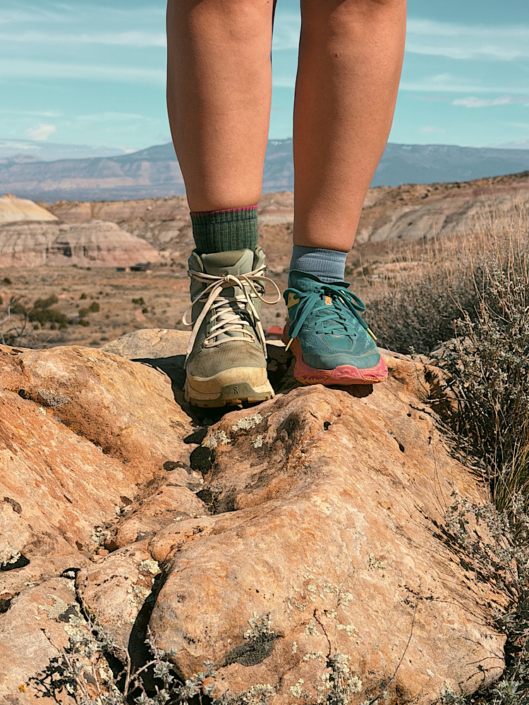
The biggest difference between trail runners and hiking boots is weight versus protection. Trail runners are lighter, more breathable, and usually more comfortable for covering lots of miles. Hiking boots are heavier but provide more durability, foot and ankle protection, and better performance in wet or rugged conditions.
Choose trail runners if: you mostly hike established trails, hike long distances, backpack, hike in hot weather, or frequently cross streams.
Choose hiking boots if: you regularly hike through mud, rain, snow, loose rock, rough terrain, or want additional protection around your feet and ankles.
My pick: Trail runners. I wear them for the majority of my hikes and backpacking trips, but I keep waterproof hiking boots for rough or wet conditions.
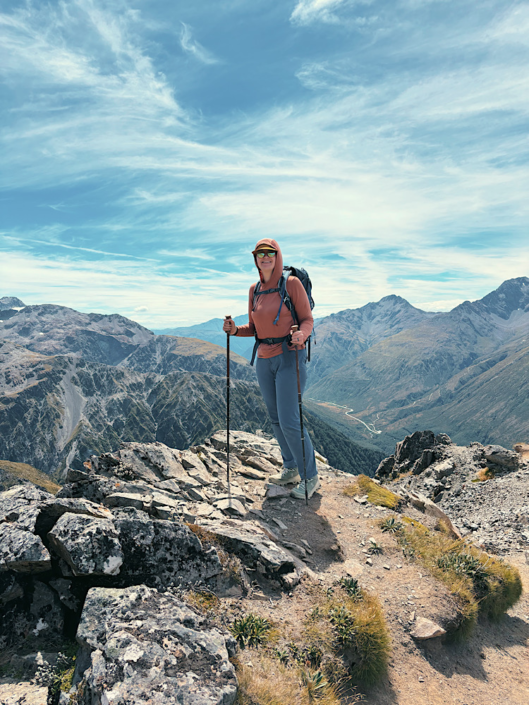
I was very glad I wore my hiking boots for trekking up Avalanche Peak in New Zealand. The trail was insanely rocky and the steepest I’ve ever hiked.
Key Differences Between Trail Runners and Hiking Boots
Depending on your body, the terrain, and how wet you plan to get on the trail, you should consider the differences between trail runners vs hiking boots.
Trail Runners vs Hiking Shoes vs Hiking Boots
Hiking shoes fall somewhere between trail runners and hiking boots. They have a low-cut design similar to trail runners but are generally built with sturdier materials, firmer soles, and more protection for rocky terrain.
I personally prefer trail runners because I like the cushioning, breathability, and lighter weight. But hiking shoes can be a good middle ground if you want more durability and protection without the weight and higher ankle of a hiking boot.
Weight
When comparing hiking boots vs trail runners, weight on your feet matters!
I notice my legs and feet fatigue faster when I’m wearing heavier boots, especially on long hiking and backpacking days.
Each step took a lot of energy, and I was so tired after hiking. I couldn’t wait to get my heavy boots off and switch into something lighter.
Ankle Support
Hiking boots extend higher around the ankle, but that doesn’t automatically mean every hiker needs a boot. I originally assumed I needed hiking boots for serious hikes because of the extra ankle support, but after switching to trail runners, I realized I was comfortable hiking without it.
Where I do appreciate boots is loose mountain terrain. On talus, scree, and rocky routes, the higher material protects my ankles when I knock them against rocks or accidentally wedge a foot between boulders.
If you have a history of ankle injuries or specific stability concerns, your footwear choice is more individual. But for me, ankle support alone isn’t enough reason to wear heavier boots on most trails.
Traction
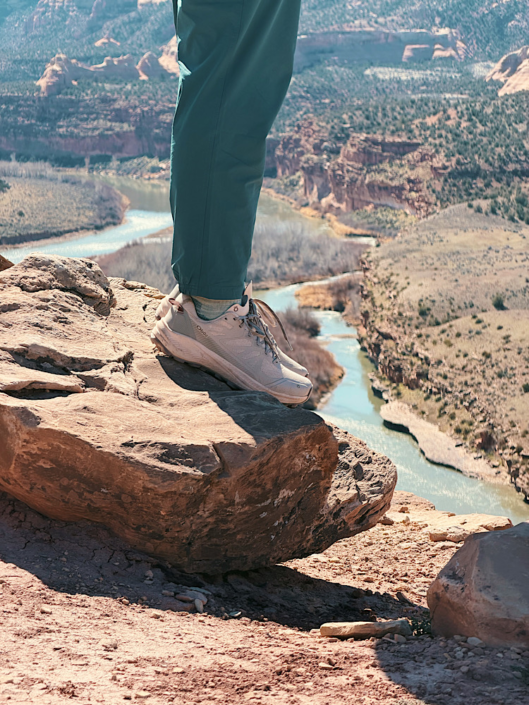
Hiking boots often have deeper, more widely spaced lugs designed for loose, muddy terrain. Mud doesn’t get caked onto your boots as quickly as with trail runners. Slippery terrain, such as snow, can be navigated more easily with boots.
Trail runners offer a more responsive grip with greater flexibility. They are the best on solid rock or hard-packed trails.
I’ve worn trail runners in slippery conditions, and I just take it slow if I feel a loss of traction. When hiking on talus slopes, I prefer boots for grip and ankle protection. If I accidentally hit my ankle on a rock or get it stuck between boulders, the boot provides cushion where I need it.
Durability
There is a significant difference in durability between hiking boots vs trail runners. Boots are made with thicker materials and last longer. I’ve had the same pair of hiking boots for over 5 years, and they are still in excellent condition.
My trail runners, on the other hand, I need to replace practically every season. For me, the lugs are always the first to go on my trail runners, and the loss of traction is very noticeable.
The upper material on trail runners is thin, like a tennis shoe, and people may also find that it rips. I had a pair of hiking shoes that got a hole in them after only a few wears! Disappointing considering the tread was still perfectly usable.
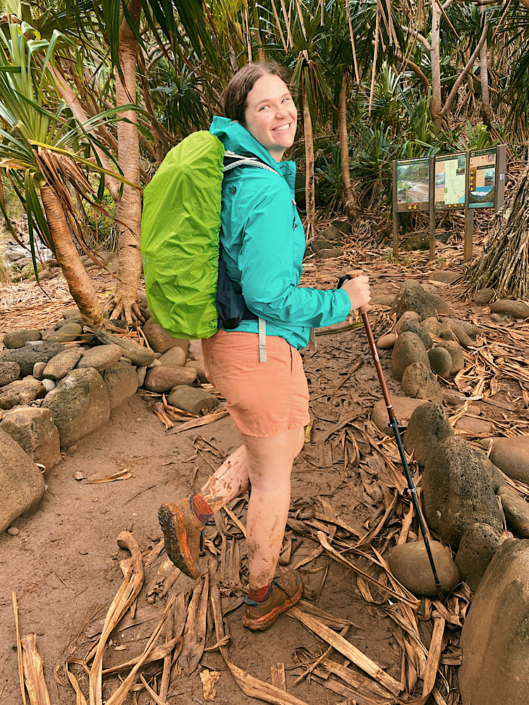
Hiking along the Nā Pali Coast in Hawaii. The trail was so muddy and I had to walk through so much water that I embraced the mess. Oh, and it was raining.
Water Resistance
Water resistance is a more nuanced feature than you might initially realize. At first, you think waterproof is all you want. Dry socks? Yes, please! But let’s consider various situations that you run into on the trail.
Creek Crossings
Hiking boots, especially waterproof boots, will hold water if they become completely submerged. You literally have to dump the water out. Also, good luck with drying them. Boots are thick, and the materials weren’t made to dry fast.
Trail runners were designed for breathability. If you pick a non-waterproof trail runner (which I’d recommend), then water can move in and out of the shoe. Each step you take after submerging your shoe squishes the water out.
If I’m wearing my non-waterproof trail runners and wool socks, my feet stay warm after a water crossing, and my shoes can dry out in a matter of hours. When I’m backpacking, I try not to carry a second pair of shoes for water crossings and prefer to get my trail runners wet.
➡️ An extra pair of shoes just for water crossings is on my list of what NOT to bring backpacking.
Rain and Puddles
If you don’t plan on completely submerging your feet, this is where waterproof hiking boots shine. I’ve spent hours hiking in the rain and walking through shallow puddles with waterproof hiking boots, and my socks stayed dry.
If my non-waterproof trail runners get soaked in the rain, they wouldn’t ever get a chance to dry out. Wet shoes and socks are alright for a time, but hiking all day in soaking wet shoes isn’t good for your feet.
Breathability
Waterproof boots and trail runners have decreased breathability because they were designed to keep water out. I notice a big difference in how warm my feet feel in waterproof vs non-waterproof shoes.
For desert hiking, I’ll pick my non-waterproof trail runners 99% of the time because my feet stay cooler. If I’m hiking in snow, rain, or muddy conditions, I’ll reach for my waterproof boots to keep my feet warm and dry.
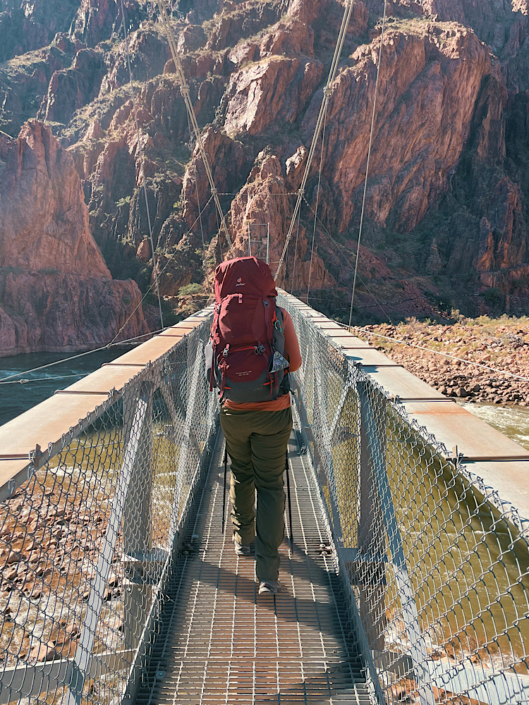
Wearing hiking boots while backpacking the Grand Canyon rim-to-rim.
Trail Runners vs Hiking Boots for Backpacking: I Choose Trail Runners
I regretted wearing hiking boots when I backpacked rim-to-rim of the Grand Canyon. Over four days, I hauled my heavy boots on my feet. The first day was all downhill, so it wasn’t so bad. But the second day was mostly flat, and my feet started to hurt.
I had gone on other multi-day backpacking trips wearing hiking boots before, but for some reason, this time it was really uncomfortable. After that trip, I decided to try backpacking in trail runners. After all, thru-hikers do it. My pack isn’t nearly as lightweight as a thru-hiker’s bag, but I wanted to give it a try.
➡️ See my gear to bring backpacking for a realistic beginner backpacker’s packing list.
Oh my goodness, I had no idea what I was missing out on. I have flat feet and prefer cushioned shoes. After backpacking in trail runners, my feet didn’t hurt at the end of the day, and I felt like I could keep tacking on miles.
The lightness and cushion sealed the deal for me. I haven’t backpacked in hiking boots since my fateful Grand Canyon hike.
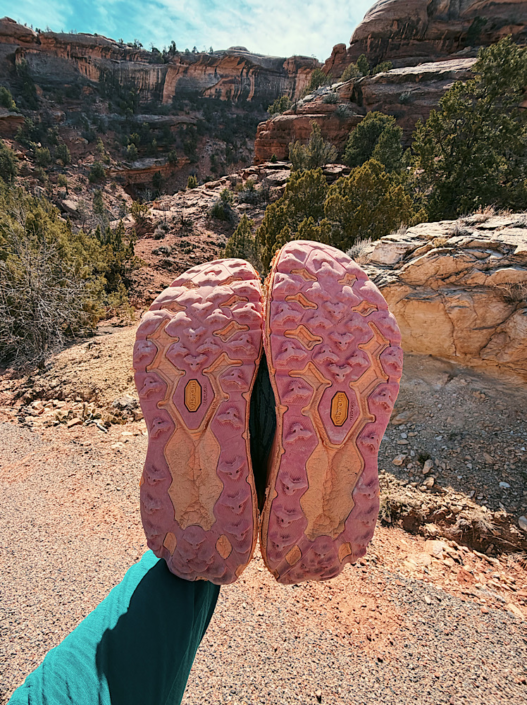
Many small, shallow lugs on trail runners
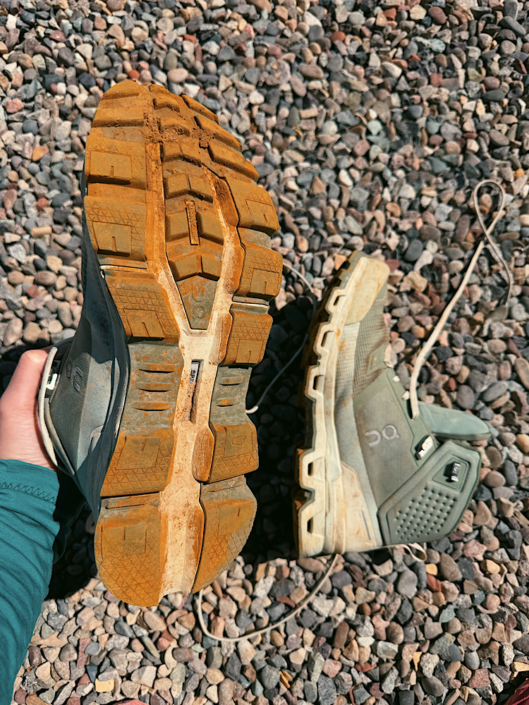
Fewer, deeper lugs on hiking boots
When Trail Runners Are Better
I prefer trail runners for backpacking and moderately technical trails. Wearing them for water crossings is also ideal compared to boots. I get more wear out of my trail runners because they are perfect for a majority of the types of hikes I do.
Times I loved wearing trail runners:
- Backpacking Four Pass Loop in Colorado
- Climbing Roy’s Peak in New Zealand
- Hiking in Colorado National Monument
- Exploring Fiery Furnace in Arches National Park
When Hiking Boots Are Better
On steep and technical terrain, hiking boots are a fantastic choice. I also like to wear them when it’s raining.
Times I loved wearing hiking boots:
- Hiking the Alex Knob Track in New Zealand
- Going on a Milford Sound Boat Tour in New Zealand
- Walking up dunes at Great Sand Dunes National Park in Colorado
- Hiking challenging 14ers in Colorado
I actually wore my trail runners at Great Sand Dunes National Park, but I got so much more sand in my shoes than my husband, who wore his boots.
Best Trail Runners for Hiking: Hoka Speedgoat
My go-to hiking trail runners are Hoka Speedgoats, which I’ve worn for years on day hikes, backpacking trips, and Colorado 14ers. I have flat feet and prefer a lot of cushioning, and the Speedgoats stay comfortable for me even when I’m putting in long days.
I specifically buy the non-waterproof version. They’re breathable in hot weather, and when I walk through a creek, water can drain instead of getting trapped inside the shoe.
I wouldn’t choose them over boots for every hike, but they’re the shoes I reach for most often.
Best Hiking Boots
I’ve found two hiking boots that I like, and both are waterproof. My On Cloudrock Mid Waterproof hiking boots traveled all the way to New Zealand. They were perfect for the wet and rainy conditions I was hiking in. The cushion on them is excellent as far as boots go.
My Salomon Quest GORE-TEX hiking boots have held up over years of abuse. They are beefier than the On Cloudrock boots but still lighter than many durable hiking boots. I know I can trust these for particularly rocky terrain.
📌 Pin this image on Pinterest to save this post for reference.
Trail Runners vs Hiking Boots FAQs
Are trail runners better than hiking boots?
Trail runners are often better for long hikes and backpacking because they are lightweight and breathable. Many hikers prefer them for comfort and speed. However, hiking boots are better for rugged terrain, wet conditions, and situations where extra ankle protection is helpful.
Can you hike a 14er in trail runners?
Yes, many hikers climb Colorado 14ers in trail runners. They are lightweight and comfortable for long ascents. However, some hikers prefer hiking boots for 14ers with loose rock, talus, or wet conditions where extra ankle protection and traction are useful.
Why do thru-hikers wear trail runners instead of boots?
Most thru-hikers choose trail runners because they are much lighter than boots. The reduced weight helps prevent fatigue over long distances. Trail runners also dry quickly after water crossings and usually require little to no break-in period.
Are hiking boots better for beginners?
Not necessarily. Beginners can hike comfortably in either trail runners or boots. The best option depends on terrain, weather, and personal comfort. Some beginners prefer boots for ankle support, while others prefer the lightweight feel of trail runners.
Should trail runners be waterproof?
Most hikers prefer non-waterproof trail runners because they are more breathable and dry faster after water crossings. Waterproof trail runners tend to trap moisture and can stay wet longer once water gets inside.
Wear Trail Runners and Hiking Boots
Both trail runners and hiking boots have a place in a hiker’s gear kit. Trail runners are lightweight, breathable, and ideal for long distances or backpacking trips. Hiking boots provide better durability and protection for rugged terrain or wet and muddy conditions.
After years of hiking, I find myself wearing trail runners most of the time. But I’m still glad I have a reliable pair of hiking boots when conditions call for them.