Angels Landing Hike: Worth the Permit Hype?
The Angels Landing hike in Zion National Park, Utah, is famously known as “the most dangerous hike in America.” I’m here to reassure you that it looks scarier in photos than it actually feels in person. Honestly, the terrain itself felt more manageable to me than the challenge of navigating around other hikers.
I’ve personally felt more exposed on several Colorado 14ers than I ever did on Angels Landing. The chains felt sturdy, and the footholds were solid. That’s very different from loose alpine terrain, where you’re scrambling without handrails or defined footing.
If you’re an experienced hiker, Angels Landing can actually be a really fun trail. Now, it’s an entirely different story if you’re afraid of heights or not familiar with hiking with exposure. I’m not saying this hike is a piece of cake for everyone, but I do think the danger is often exaggerated online.
➡️ Find more Utah National Park and adventure content on my Utah Outdoor Guide.
Disclosure: This post may contain affiliate links. If you purchase through these links, I may earn a small commission at no extra cost to you. I only recommend products I’ve personally used, tested, and genuinely love. Thank you for supporting Emma Gets Outside!
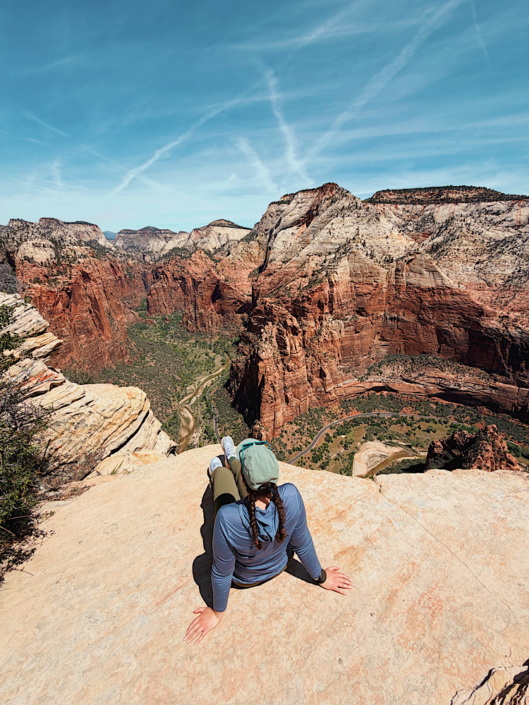
Quick Angels Landing Hike Overview
- Distance: 4.8 mi
- Elevation gain: 1,750 ft
- Difficulty: Hard
- Permit required: Yes
- Trail type: Out & back
- Best time to hike: Early morning
- Angels Landing Trail Map
I’d personally rate this harder mentally than physically. If you’re an active person and don’t mind heights, it’s a manageable challenge.
➡️ Try another popular Zion National Park trail, The Narrows. A lot of people don’t realize how far you need to hike to experience the iconic, tall canyon walls. Read my full guide.
About This Angels Landing Hike Guide
I’ve hiked Angels Landing twice. Once before permits were required and once after the lottery system was introduced. I also regularly hike exposed alpine terrain, including Colorado 14ers, where conditions are looser, more variable, and less controlled than a managed National Park trail.
This guide is based on real on-trail experience, including both crowded and permit-regulated conditions, to give you a realistic expectation of what the hike is actually like.
➡️ Discover the differences between all of Utah’s national parks to help plan your Utah trip.
What You’ll Learn in This Guide
- Whether Angels Landing is actually as dangerous as it looks
- How the permit system works (and how strictly it’s enforced)
- What the chains section is really like
- How difficult the hike feels compared to other popular trails
- Parking, shuttles, and logistics in Zion National Park
- Whether Angels Landing is worth the hype
➡️ Interested in hiking more of Utah’s National Parks? See my detailed hiking and itinerary guides:
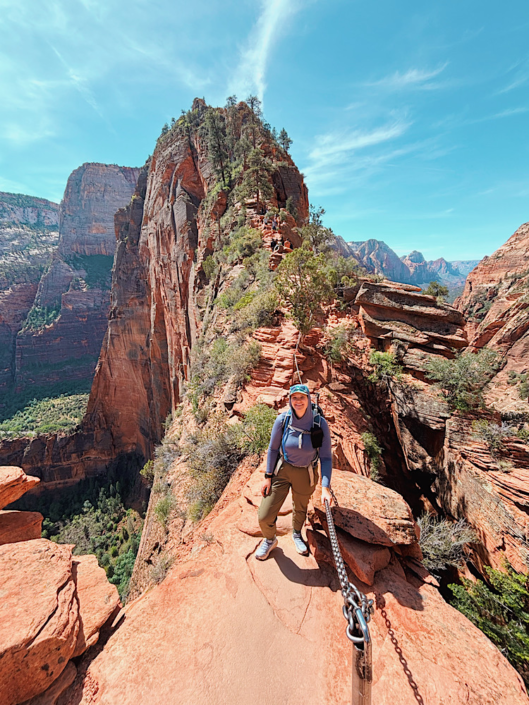
Do You Need a Permit for Angels Landing?
Yes, a permit is required year-round to hike Angels Landing beyond Scout Lookout. The permit is enforced at the chain section, and rangers regularly check both your permit confirmation and photo ID before allowing hikers to proceed.
You do not need a permit to hike the lower portion of the trail up to Scout Lookout.
Angels Landing uses a seasonal lottery system managed by the National Park Service. Permits are required in all seasons, including peak summer months and quieter shoulder seasons.
There are two main ways to obtain a permit:
- Seasonal lottery: Applied for in advance through Recreation.gov
- Day-before lottery: Limited permits released the day before your hike
Both options are competitive, especially during peak travel months like spring break, summer, and fall foliage season.
People can get disgruntled with the fact that there’s a required permit, but I view it as providing a safer and more fun experience for everyone.
➡️ Add another permitted hike, the Subway, to your Zion itinerary if you’re looking for fewer crowds than The Narrows. This is one of the more challenging hikes in Zion, but well worth the effort.
Didn’t get an Angels Landing Permit?
You can still hike to Scout Lookout in Zion National Park without an Angels Landing permit. This is also ideal for people who still want to soak in the incredible views without the risk of hiking the actual Angels Landing. I think it is very much worth the trek up, so regardless, I’d add the Scout Lookout to your Zion itinerary.
Parking and the Zion Shuttle
Parking for the Angels Landing hike in Zion National Park is a bit of a nightmare. You either have to arrive very early to secure a spot and then wait in line for the earliest shuttle bus from the visitor center, or drive around in circles waiting for someone to leave.
My advice: book nights at the campgrounds inside the park. By far, the smoothest trip to Zion I’ve ever done was because we stayed within walking distance of the Visitor Center and shuttle pickup. We stayed at the Watchman Campground and loved how easy it was to plan our days in the park.
Because of our location, we were able to take our time at camp, making breakfast and packing our backpacks for the day. We’d hop on the Zion shuttle around 9 am, long after the visitor center parking lot had filled, and hardly wait in line.
Planning a bigger Southern Utah trip? I’ve pinned over 100 hikes, viewpoints, campgrounds, and hidden gems in my interactive Southern Utah Rexby guide.
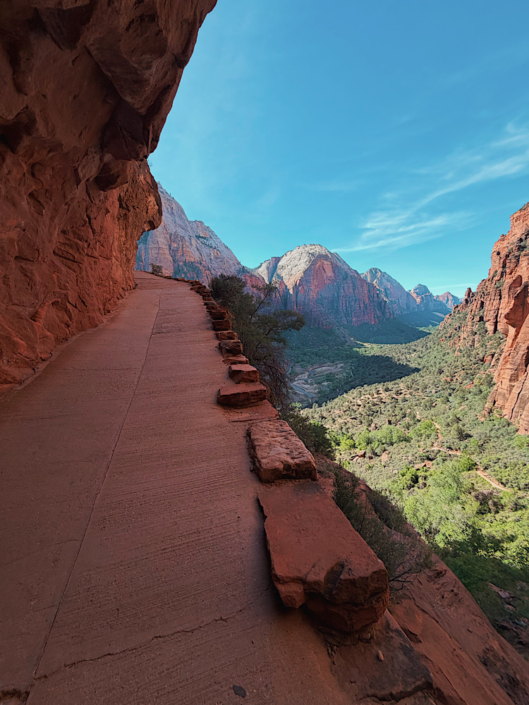
What the Angels Landing Hike is Actually Like
Start hiking in the morning if your permit allows. Much of the canyon is in the shade in the morning, which makes the switchbacks more bearable. Bring plenty of water and wear sun protection. I opt for a long-sleeve sun hoodie and lightweight pants. The pants are useful if you end up sitting on the rocks during the hike or at the top while admiring the view.
➡️ Discover the best hiking pants for curvy women if you struggle to find pants that fit.
Walter’s Wiggles and Scout Lookout
The Walter’s Wiggles section of the hike is a series of tight switchbacks that take you up to the saddle between the Scout Lookout and the start of the chain section to Angels Landing. Before that, though, you’ll walk up a steep, but paved path that offers an increasingly better perspective as you climb.
Many people stop and take photos backed up to the edge overlooking the canyon. The view from the top is the absolute best, though, so I usually refrain from taking many photos in this section.
Then, you’ll walk through Refrigerator Canyon — a tight-walled canyon with a gentle breeze and shade. Keep your voice down so you don’t scare the Mexican Spotted Owls that call the canyon home.
After conquering the Wiggles, it’s wise to use the restrooms at the saddle. There isn’t much privacy (or space!) on Angels Landing. Have a quick snack as an energy boost and show a park ranger your permit and photo ID.
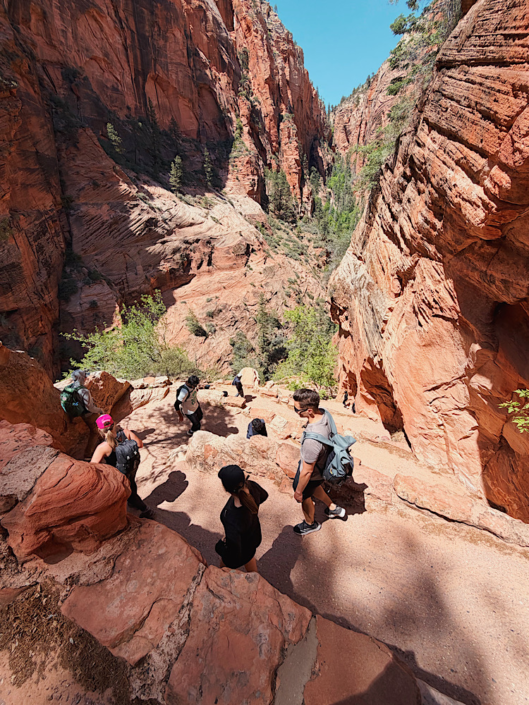
The Angels Landing Chains Section
Most of the elevation gain is actually done before you even set foot on Angels Landing. See? Told you it wasn’t that bad.
Some people bring gloves for the chain section, especially in the middle of summer when the chains can be hot. I’ve never used them, since I’ve hiked both times in the spring. Some of the chains were oily from so many hands gripping them. I didn’t find them slippery, but just always be aware of your grip.
A helpful hint: I also gripped the posts holding the chains. In some sections, the chain slack moves quite a lot as you are trying to haul yourself up. I found it easier to grip the sturdy post, knowing it wasn’t going anywhere.
At points, I’d look down from where we came from and spot the tiny people milling about on the saddle ridge. Then, look up and see where we still need to go. The desert and canyons, especially, have a way of making you feel small.
As you’re making your way up tighter and tighter sections, communication with the groups around you is crucial. Yell up your intentions, “I’ve got a group of 6 coming up. Do you have room up there for us to pass you? If not, we have room down here for you to pass.”
Decide who gets the right of way depending on how much space there is to pass and how large the groups are. Bottlenecks can create some very impatient people. You shouldn’t be in a rush when doing the Angels Landing hike. That’s when accidents happen.
Kindly talk to the people coming up and down the trail and determine a plan of movement. It’s safer for everyone. If you notice people coming up behind you quickly, just find a spot to pull over and let them pass you. They’ll appreciate it, and you won’t feel rushed.
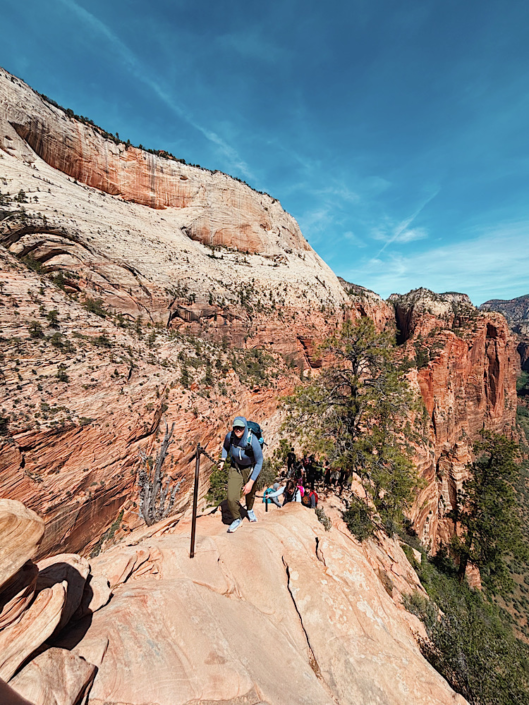
Failed Communication
For me, I’d say the crowds make the Angels Landing hike more stressful than the terrain. Some people just think they have the right of way no matter what and will barge right into you, literally.
There was a section on the way up when I had my left hand on the chain. A woman is coming down with her hand on the chain and, I kid you not, comes up to me, reaches around my arm, and continues to walk as if I wasn’t there.
I audibly said, “Whoa,” forced to let go of the chain and drop to my knees on the cliff edge. The woman never even met my eye and didn’t say a word. Then, who I presumed to be her partner, comes right up behind her.
This time, I just stay down and let him pass. They are clearly in their own world and have no regard for the people around them. Don’t be these people! It’s not difficult to wait for your turn to ensure everyone moves safely.
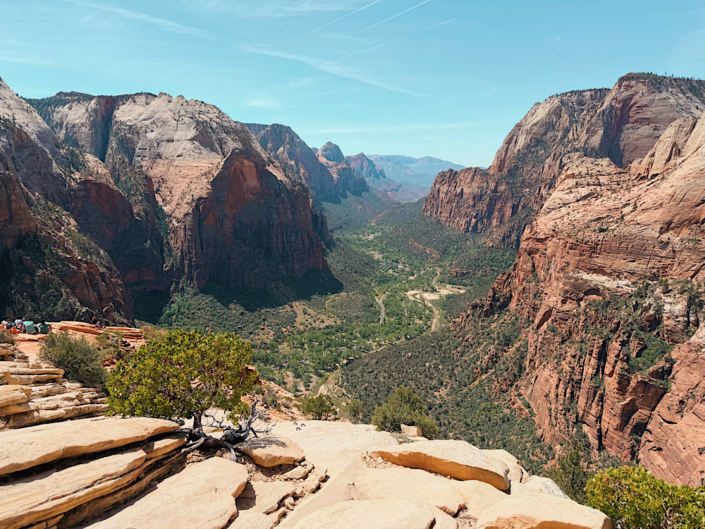
Reaching the Summit
Finally, when you reach the summit, walk along the spiny sandstone ridge and find a spot to soak it all in. Look down canyon towards the visitor center, but also don’t forget to notice the view up canyon. Watch the red shuttle buses take the winding curves far down below on the road.
Keep your eyes peeled for California Condors, the largest land birds in North America. They feature an awesome wingspan of about 9 feet. I’ve seen these large black birds soaring against the stark backdrop of the towering light-sandstone cliffs. It’s a sight nothing short of stunning.
As you’re having a break at the top of the Angels Landing hike, chipmunks and squirrels will come right up to you and beg for food. Be careful. They can chew right through your bag when you’re not looking. Don’t feed them! They can get sick and start to depend on human food. Do your best to shoo them away and don’t let their pleading eyes tempt you.
No need to descend in a hurry, just take your time as you did on the way up, and all should be fine.
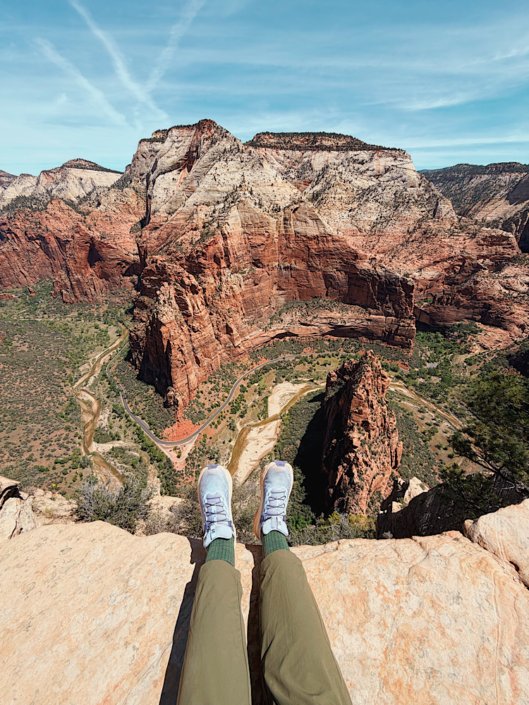
Is Angels Landing Actually Scary?
As someone who regularly hikes exposed mountain trails with loose rock and no handrails, no, Angels Landing isn’t scary for me. But that doesn’t mean the fear isn’t real for others. It all depends on your level of comfort.
I enjoy walking right up to the edge of a cliff and peering over; for others, that is a terrifying thought. Technically speaking, the trail is straightforward and doesn’t require any route-finding.
Your handholds are solid, and the sandstone provides excellent grip with the right shoes. I’d recommend leaving the old gym shoes at home for this one and opting for grippy trail runners. Check that the lugs still have some life in them, and you’re good to go.
The scariest thing on the Angels Landing hike is people in a hurry with no regard for others.
Things to Know Before You Go
- Print your permit or show it on your phone
- Bring the permit holder’s photo ID
- Bring lots of water and electrolytes
- No shade on the ridge
- Sun protection is essential
- Start early
- Wear grippy shoes
- Gloves optional
- Be patient at passing zones
- Don’t attempt in storms/high wind
You can always turn around if you feel uncomfortable. Knowing your limits makes you a smart hiker. You have nothing to prove to anyone.
Is Angels Landing Worth It?
Overhyped hikes sometimes disappoint, but the Angels Landing hike actually delivers on views and experience. The exposure can add to the excitement without needing technical climbing skills. Would I hike Angels Landing again? Yes, absolutely.
➡️ Use my comparison guide between Zion and Bryce National Park to help you decide how to split your time on your Utah trip.
📌 Pin this image on Pinterest to save this post for reference.
FAQs About the Angels Landing Hike
Do you need a permit for Angels Landing?
Yes. A permit is required year-round to hike beyond Scout Lookout onto the Angels Landing chains section.
Is Angels Landing really dangerous?
Angels Landing can absolutely be dangerous if you rush, ignore weather conditions, or aren’t comfortable with heights. However, the chains are sturdy, and the footing is generally solid. In my experience, the crowds and the lack of communication among hikers were more stressful than the terrain itself.
Can beginners hike Angels Landing?
That depends on your comfort with heights and exposure. Physically active beginners may be able to complete the hike, but people with a strong fear of heights may find the chains section overwhelming.
How long does the Angels Landing hike take?
Most hikers should plan for 3–5 hours total, depending on crowds, shuttle timing, and how long they spend at the summit.
What should you bring for the Angels Landing hike?
Bring plenty of water, sun protection, grippy shoes, snacks, and your permit confirmation with a photo ID. Gloves are optional for the chains.
Is Angels Landing harder than a Colorado 14er?
In my opinion, many Colorado 14ers feel more physically demanding and exposed than Angels Landing. The big difference is that Angels Landing has chains and defined footing throughout the steep sections.