The Maze Utah: Permits, Gear, What No One Tells You
Logistics, permits, and gear for planning a trip to the Maze Utah.
Planning a trip to the Maze Utah is not like planning a typical national park visit. This is one of the most remote areas in the entire Southwest — no services, no cell signal, and hours of rough 4WD driving just to reach your campsite.
The Maze District of Canyonlands National Park sees fewer than 1% of the park’s visitors, and for good reason. You need the right vehicle, the right gear, and a solid plan before you even think about heading out.
➡️ Want to get a feeling of what it’s like in the Maze? Canyonlands Maze District: What It’s Like in Total Isolation
After spending four days driving and hiking in the Maze, I quickly realized this isn’t a place to “wing it.” From permits and water planning to recovery gear and navigation, here’s exactly what you need to know before visiting the Maze Utah.
➡️ See my detailed 4-day Maze in Canyonlands itinerary for exact routes, drive times, and stops.
Disclosure: This post may contain affiliate links. If you purchase through these links, I may earn a small commission at no extra cost to you. I only recommend products I’ve personally used, tested, and genuinely love. Thank you for supporting Emma Gets Outside!
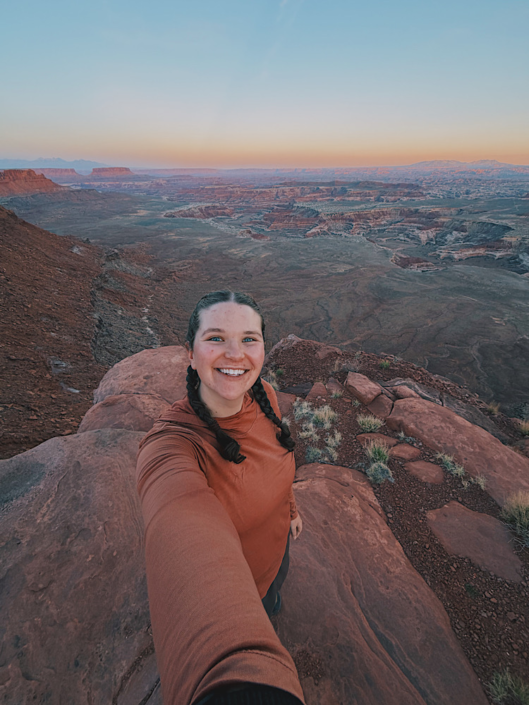
Quick Guide to the Maze Utah
- Permits required: Yes (overnight only)
- Vehicle: High-clearance 4WD with low range
- Cell service: None
- Water: Bring all of it
- Fuel: Extra gas cans required
- Waste: Pack out all waste
- Best for: Experienced off-roaders and remote camping
➡️ Discover more Utah destinations in my Utah Adventure Guide.
Best Time to Visit the Maze Utah
Spring and autumn are the best times to visit the Maze. Temperatures are manageable, and the weather is more predictable. We planned our trip for the end of March, and it was perfect. The nights were still chilly, and the days were warm.
I would avoid summer because of the heat. There isn’t much shade at the campsites or on the hiking trails. Slow driving in the summer sun would be miserable.
Note that the monsoon season is mid-June through September. Flash floods can wash away roads and create dangerous conditions for canyon hiking.
➡️ Find more of the best hikes near Moab in my full guide. Including some trails that can be hiked in summer.
How Many Days Do You Need in the Maze Utah
Minimum: 3-4 days
Ideal: 5+ days
Our trip was four days, but we wished we had more time to hike. We spent three days driving 10+ hours and one day hiking. The Maze takes so much time to get to that you need to block out more days for exploring.
Planning a bigger Southern Utah trip? I’ve pinned over 100 hikes, viewpoints, campgrounds, and hidden gems in my interactive Southern Utah Rexby guide.
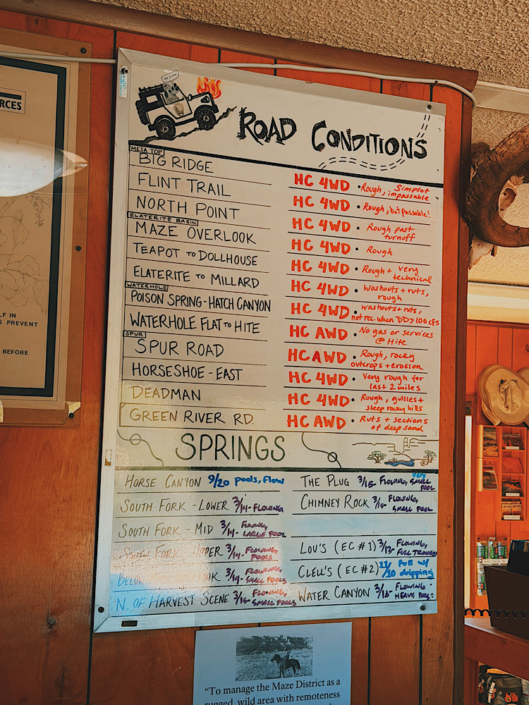
Hans Flat Ranger Station road conditions sign
Permit Process for the Maze Utah
You only need a permit for backcountry camping in the Maze. If you’re just driving through or going out and back from Panorama Point or the Maze Overlook, you don’t need a permit.
Due to the remote nature of the roads in the Maze and the fact that it takes hours to drive a few miles, visiting places like the Doll House would be impractical to attempt as a day trip. My recommendation is to take at least several days to explore the Maze.
Unlike many other backcountry permits, like Four Pass Loop and Conundrum Hot Springs, backcountry camping permits for the Maze don’t sell out within minutes. You can find last-minute bookings.
Under 10,000 people visit the Maze each year. Competition for campsites isn’t as fierce as it is in Zion National Park or other popular areas. You can even find day-of camping permits at the Hans Flat Ranger Station for available sites.
How to Get Permits
Check availability for the Maze permits on Recreation.gov. Select Maze/Orange Cliffs – 4WD/Mountain Bike as your starting area to see available campsites.
Most campsites allow 3 vehicles with up to 9 people. Be aware that there is a reservation fee, but you only need to pay that once if you’re booking consecutive nights. Each additional person on the reservation is also an extra fee.
Plan your driving route in advance to make sure you know where to book your campsites. We stayed a night at Panorama Point and two nights at Standing Rock. It took 10 hours to drive between the two sites. Understand that the driving is slow going, and you might not be able to go as far as you think in a single day.
Picking Up Permits
We picked up our permits at the Hans Flat Ranger Station. You can also go over your permit with a ranger on the phone. Just be sure to have printouts of your permit to display if you plan to do a phone check-in.
You can ask the park rangers any questions you have about road conditions or hiking when you pick up your permit. The rangers have excellent tips and recommendations.
Rangers will question you about your drinking water supply, vehicle, and waste management system. You’ll need to be completely self-sufficient out in the Maze in Utah.
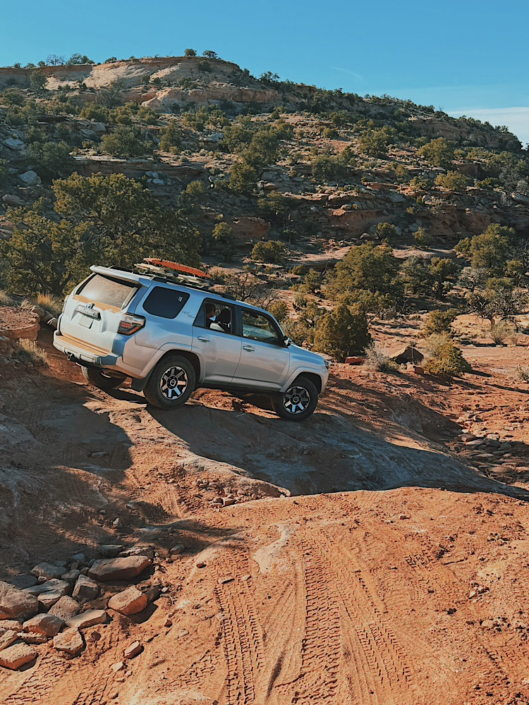
Maze Vehicle Requirements and Recovery Gear
Required Vehicle Setup
To drive in the Maze in Utah, you must have a high-clearance 4WD vehicle with low-range gearing. You’ll encounter plenty of obstacles that require clearance.
➡️ Drive Ophir Pass in Colorado for a different 4WD mountain adventure.
We took a 2018 Toyota Tacoma SR with aftermarket skid plates and a 2021 TRD Off-road 4Runner (both with new, stock-sized all-terrain tires) into the Maze. One thing I will note is that the wheelbase on the Tacoma was 18” longer than that of the 4Runner. The Tacoma scraped more often than the 4Runner and couldn’t climb up tight, steep obstacles as easily. Those after-market skid plates on the Tacoma were very necessary.
Bringing two vehicles is strongly recommended. In our case, one vehicle needed to be pulled out of an obstacle. If you’re going to bring a longer wheelbase vehicle, make sure your companion is shorter!
Essential Recovery Gear for the Maze Utah
- Tow strap or kinetic rope
- Traction boards
- Shovel
- Tire repair kit and air compressor
- Full-size spare tire
Navigation in the Maze Utah
The roads were well-marked with signs pointing to campsites and named areas. We downloaded Google Maps and AllTrails maps for hiking. It was at least helpful to know how many more miles we had left to drive so we could gauge the timing each day.
We did have a physical National Geographic Maze District Map with us, just in case. That was useful for planning our route and visualizing our drive beforehand.
Many trails in the Maze don’t have recent AllTrails reviews. Do external research and ask park rangers about trail conditions. Follow cairns while hiking to stay on-trail and Leave No Trace. We definitely needed to reference the downloaded trail map.
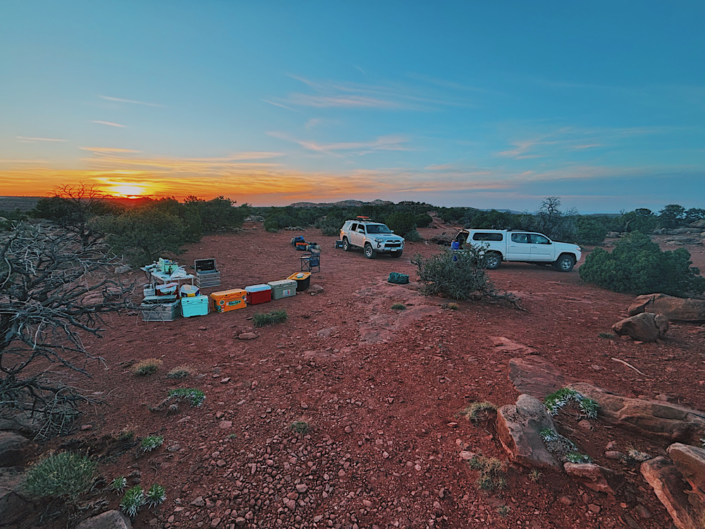
Panorama Point campsite at sunset
Camping in the Maze Utah: What to Expect
What you’ll find in the Maze:
- No amenities
- No water
- No toilets
- Total isolation
Your permit allows you to camp in designated backcountry sites. The cool thing is that our group of six was the only group at each site every night. Having your own site to spread out and enjoy is very different than camping in a campground. It was peaceful and private.
We camped at Panorama Point and Standing Rock, both campsites I’d recommend for views. The Wall campsite also had an incredible perspective when we stopped to check it out before leaving the Maze.
Each campsite is basically a designated space for you to park and pitch a tent. Don’t camp beyond the boundaries marked with wooden stakes.
Water Planning for the Maze
You must supply all of your drinking and cooking water upon entering the Maze in Utah. Bring extra! There is nowhere to fill up if you run out.
For our group of six, we brought 42 gallons of water. We ended up using 28 gallons over four days. Think about your meals (Do you need to boil water for pasta?) and your activity level. If you’re hiking all day, you’re going to imbibe more water. The weather also plays a significant role in water consumption. Do your calculations carefully.
Fuel Planning for the Maze
For our two vehicles, we brought 20 gallons of extra fuel. We filled both cars up in Green River on the way in and out. If we didn’t bring extra gas, we probably could have made it to Hanksville on a single tank, but it would have been close.
If you plan to drive for several days in the Maze, be sure to have an adequate amount of fuel. The last thing you want is to call for help deep in the remote Canyonlands backcountry.
Human Waste and Leave No Trace
There are no toilets in the Maze once you drive away from the Ranger Station. That means all human waste must be packed out. You must also pack out all trash and food waste.
An affordable option if you want a toilet to sit on is the Luggable Loo Portable Toilet. Get WAG bags to use with or without the toilet.
We brought bags and then put the used bags in a bucket lined with a trash bag and sealed with a lid. This worked excellently — no smells and easy to use.
No one wants to pull up to a campsite littered with toilet paper and trash. Do your best to Leave No Trace at your campsite as well as when you’re out exploring. Cryptobiotic Soil is present in the Maze. This living soil crust can take years to recover from a single misplaced footprint.
Let’s keep this wild place looking just as good as we found it.
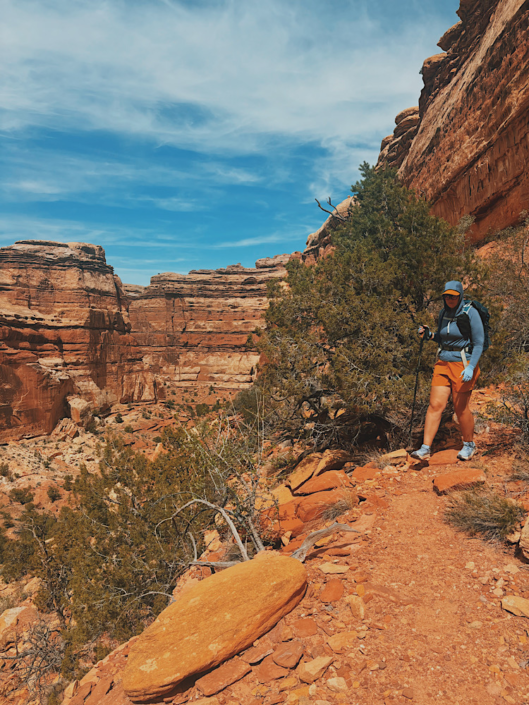
Hiking the Harvest Scene Loop
Essential Gear for the Maze Utah
I’ll cover some Maze-specific considerations for camping gear. Read my other post for a more detailed car camping checklist.
Camping Gear
Food storage is a big one. If you plan to leave your camp set up and explore for the day, you need to secure your food. We packed cold things in Yeti coolers and dry food in boxes with locked lids.
A solid block of ice lasted through the third day in our Yeti cooler. By the morning of the fourth day, it was just water, albeit still cool. If you plan to explore the Maze for longer with cold food, consider a small refrigerator you can power from a battery.
Just know that everything will be covered in dust from driving. Pack accordingly. We used duffel bags for our sleeping gear and clothing.
Bring camp chairs, as there are no picnic tables or other amenities at the campsites. We looked forward to watching the sunrise or sunset from camp each day. Chairs could be easily moved to maximize the views.
Hiking Gear
- Navigation tools (Garmin Watch)
- Downloaded maps
- Plenty of water
- Electrolytes
- Snacks
- Sun protection
- Trekking poles
- Trail running shoes
See my day hike packing list for a full guide.
Safety Gear
- First aid kit
- Headlamp
- Emergency communication device (Garmin InReach)
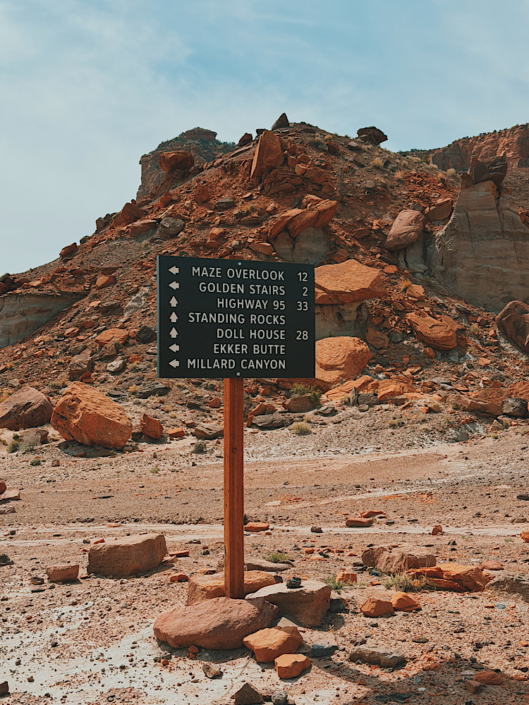
Safety Tips and Self-Reliance
When you’re in the Maze, you’re on your own. Test your gear before you have to rely on it. That includes your vehicle. Have proper recovery gear and reliable 4WD transportation.
The weather can change quickly during the monsoon season. Flooding can make roads impassable and dangerous. You don’t want to be caught in a canyon during a flash flood.
Driving fatigue is real. These roads are no joke. Rotate drivers and spotters to keep fresh eyes on obstacles.
Who Should (and Shouldn’t) Visit the Maze Utah
Worth it if you:
- Have off-road experience
- Enjoy remote travel
- Are prepared and self-sufficient
Not worth it if you:
- Are new to 4WD
- Want quick viewpoints
- Are short on time
➡️ Interested in exploring all Utah’s Mighty Five national parks? Read my comparison guide based on first-hand experience spending years hiking and camping in each park.
The Maze Utah FAQ
Do you need a permit for the Maze Utah?
You only need a permit for overnight backcountry camping in the Maze Utah. Day trips to areas like Panorama Point or the Maze Overlook do not require a permit.
What kind of vehicle do you need for the Maze Utah?
A high-clearance 4WD vehicle with low-range gearing is required. The roads are rough, steep, and technical, with obstacles that require careful wheel placement.
How much water do you need in the Maze Utah?
You must bring all of your own water. A general recommendation is at least 1 gallon per person per day, but more is often needed due to heat, hiking, and cooking.
How many days do you need in the Maze Utah?
Most visitors should plan at least 3–4 days. Due to slow driving speeds and long distances, it’s difficult to explore the area in less time.
📌 Pin this image on Pinterest to save this post for reference.
Is the Maze Utah Worth It?
Driving into the Maze Utah is one of the most remote and demanding adventures you can take in the Southwest. It requires planning, patience, and the right gear, but that’s exactly what makes it so rewarding.
If you come prepared, you’ll experience a side of Canyonlands National Park that very few people ever see. Empty campsites, rugged landscapes, and complete silence are hard to find these days.
Take the time to plan your permits, test your gear, and familiarize yourself with the terrain. The Maze Utah isn’t easy — but that’s exactly why it’s worth it.