Things to Bring on a Hike: My Complete Day Hike Packing List
Not sure what things to bring on a hike? After years of hiking everywhere from Colorado 14ers to exposed desert trails in Utah, I’ve learned that a good day hike packing list isn’t about carrying everything you own. It’s about being prepared for the conditions you might actually encounter.
Even on a day hike, I carry enough water and food, extra layers, navigation, sun protection, a small first aid kit, and a few emergency essentials. I adjust the rest depending on the trail, weather, season, and how far I’ll be from help.
Below are the things I bring on a hike, including the 10 Essentials and a few extras I’ve found genuinely useful after years on the trail.
Disclosure: This post may contain affiliate links. If you purchase through these links, I may earn a small commission at no extra cost to you. I only recommend products I’ve personally used, tested, and genuinely love. Thank you for supporting Emma Gets Outside!
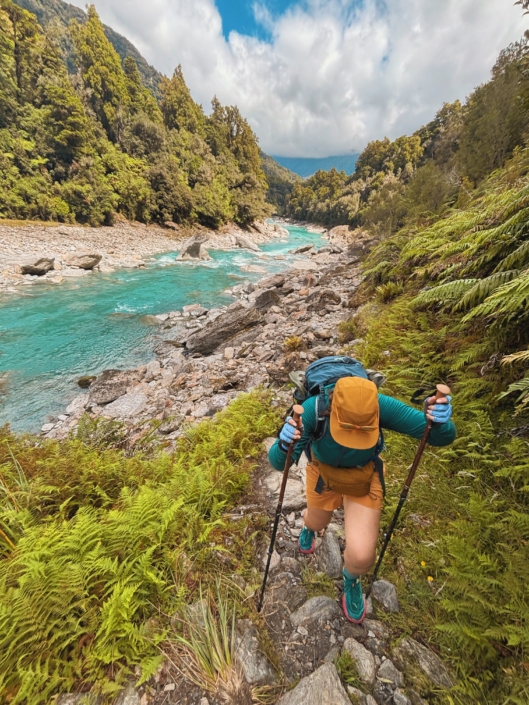
Things to Bring on a Hike: Quick Packing List
If you just want the checklist, these are the hiking essentials I consider when packing for a day hike:
- Water and electrolytes
- Food and extra snacks
- Navigation
- Extra layers
- Rain and wind protection
- Sun protection
- First aid kit
- Headlamp
- Emergency shelter
- Fire starter
- Knife or multitool
- Satellite communicator for remote hikes
- Phone
- Bathroom and hygiene supplies
- Trail-specific gear such as trekking poles, microspikes, or bear spray
This list includes the 10 Essentials, a group of emergency and safety items recommended for outdoor recreation. But your exact packing list should change depending on where you’re hiking and how long you’ll be on the trail.
Emma’s Tip: I don’t pack exactly the same way for every hike. What I carry on a short, popular trail is very different from what I bring on a Colorado 14er or an all-day desert hike. Use this day hike packing list as a starting point, then adjust it for the weather, terrain, distance, and remoteness of your hike.
➡️ See my picks for the best hiking daypacks for light loads, long mountain days, travel, and more.
1. Water and Electrolytes
Water is one of the first things I think about when packing for a hike. How much I carry depends heavily on the weather, trail length, elevation, exposure, and whether there are reliable water sources along the way.
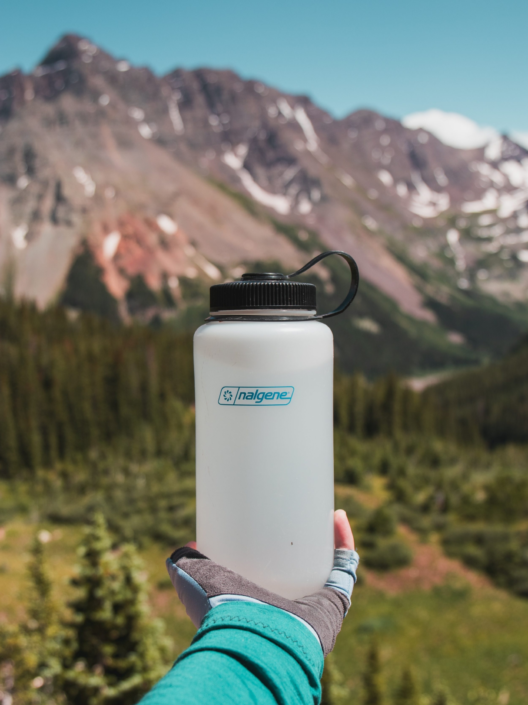
I usually carry water in reusable bottles, a hydration bladder, or a combination of both. I’m a fan of lightweight Nalgene bottles because they weigh very little and have survived years of abuse.
For long hikes, I like having more than one water container. This gives me extra capacity, and if one container leaks or breaks, I won’t be left without all my water.
Don’t assume you’ll be able to refill along the trail. Research water availability beforehand, and remember that backcountry water generally needs to be properly treated before drinking.
Don’t Forget Electrolytes
I also bring electrolytes on longer, hotter, or more strenuous hikes.
I’m a salty sweater. I regularly finish hikes with salt rings on my clothes and a gritty layer of salt on my face. On those days, plain water isn’t the only thing I want in my pack.
Depending on the hike, I might carry an electrolyte drink mix, SaltStick tablets, energy chews, or gels. I don’t necessarily use all of them, but I like having options that are easy to eat or drink when I’m working hard.
➡️ Read Next: Best Electrolytes for Hiking — I break down the powders, gels, chews, and tablets I’ve actually used on the trail.
2. Food and Extra Snacks
Don’t underestimate how hungry hiking can make you.
I like carrying a mix of salty and sweet foods, plus more food than I expect to eat. My hiking snacks usually include pretzels, dried fruit, energy chews, gels, and other easy-to-eat foods.
For a longer day, I’ll add something more substantial so I’m not trying to fuel an all-day hike entirely on snacks.
I especially like foods I can eat without stopping for long. Sometimes I’ll sit down for lunch, but other times I’m perfectly happy grabbing a snack from my pack and continuing down the trail.
Pack a little extra in case the hike takes longer than planned. A wrong turn, injury, weather delay, or slower-than-expected pace can turn a few hours outside into a much longer day.
3. Navigation
Even on a well-established trail, I download my route before leaving.
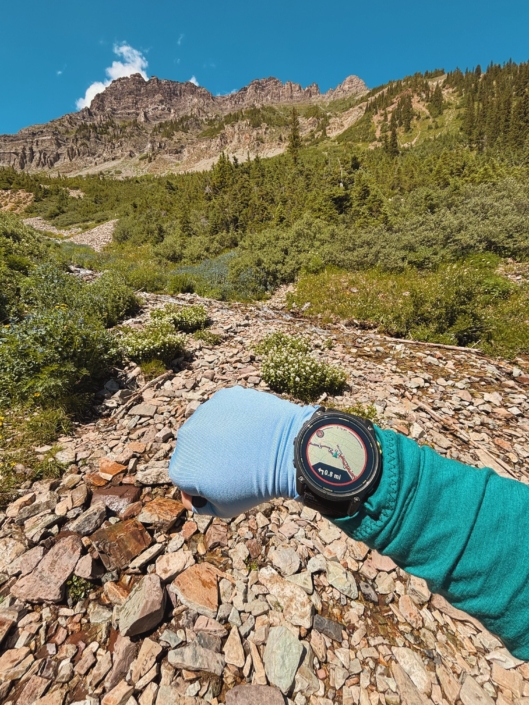
I use AllTrails Plus to download offline maps on my phone and send a GPX file to my Garmin Enduro 3. Most of the time, I navigate from my Garmin because I can quickly glance at my wrist instead of constantly pulling out my phone. My downloaded phone map acts as my backup.
Whatever navigation method you choose, make sure it works without cell service. Don’t wait until you’re standing at an unmarked trail junction to discover that your map won’t load.
I also recommend looking over the route before you start hiking. Pay attention to trail junctions, elevation gain, mileage, water crossings, and anything else that could complicate navigation.
Your phone is incredibly useful on a hike, but I wouldn’t make cell service your emergency plan.
4. Extra Hiking Layers
Even when I don’t expect to wear them, I regularly carry extra layers.
This is especially important when I’m hiking at elevation. I’ve experienced Colorado mountain days that went from sunshine to snow and crazy winds incredibly fast.
A simple hiking layering system includes:
- Base layer: Sits against your skin and helps manage moisture
- Insulating layer: Adds warmth when temperatures drop
- Outer layer: Protects you from rain and wind
I love merino wool for my base layers. On mountain hikes, I often pack my Patagonia Nano Puff and a rain shell, even if I start the day without either.
Most of the time, those extra layers spend hours stuffed in my pack. That’s okay. I’d much rather carry a jacket I never use than wish I had one when the weather unexpectedly changes.
➡️ Read Next: Learn more about cold weather hiking and the layers I use when temperatures really drop.
5. Sun Protection
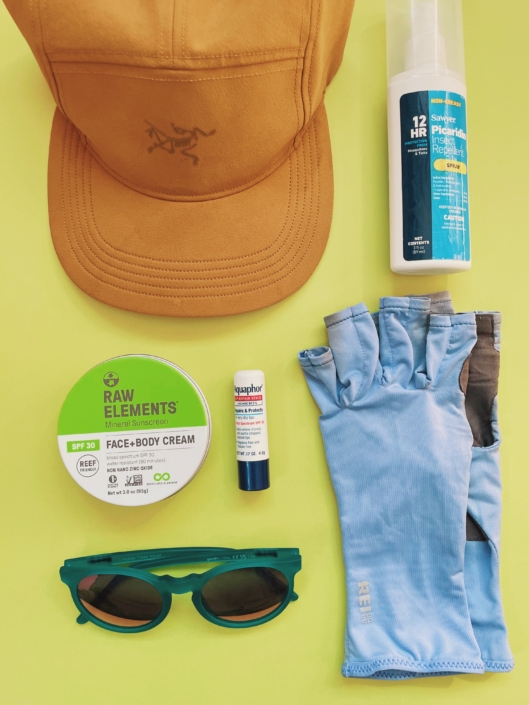
Sun protection is always part of my day hike packing list, but I pay even more attention to it when I’m hiking in the desert or at high elevations.
I typically bring:
- Sunglasses
- Hat
- Sunscreen
- SPF lip balm
- Sun-protective clothing
- Sun gloves when I’ll be using trekking poles
Sun gloves might sound excessive until you’ve burned the tops of your hands while holding hiking poles all day. I’ve done exactly that.
Now I regularly wear sun gloves on exposed hikes. Besides protecting my hands, I actually prefer the grip I get on my trekking poles when my palms are sweaty. They also add a tiny bit of warmth during chilly alpine starts.
Bug spray also makes its way into my pack when I’m hiking somewhere or during a season when insects are a problem.
6. First Aid Kit
A small first aid kit is one of those things I hope stays buried in the bottom of my backpack. But I still bring one.
You don’t need to carry an entire medicine cabinet, but your kit should fit your hike and group. At minimum, I want supplies to handle common trail problems such as cuts, scrapes, and blisters, along with any personal medications I might need.
I use a compact hiking first aid kit rather than building a huge one from scratch.
The farther I am from the trailhead or help, the more important self-sufficiency becomes.

7. Emergency Gear
Some of the least exciting things on my day hike packing list are also the things I would be extremely grateful to have if something went wrong.
Headlamp
Bring a headlamp like a rechargeable Black Diamond even if you have absolutely no intention of hiking in the dark.
I learned this one from experience.
Once I went on a group hike without my headlamp; we got a little lost, and suddenly we were still hiking well after sunset. I ended up stumbling along using my weak phone flashlight.
I haven’t forgotten my headlamp since.
A headlamp weighs almost nothing and is much easier to use than hiking while holding your phone in one hand.
Emma’s Tip: Put your headlamp in your pack before the hike, rather than deciding whether you’ll need it. You probably won’t. That’s the point. It’s there for the day that doesn’t go according to plan.
Emergency Shelter
I carry a lightweight emergency blanket that takes up very little space in my backpack.
You don’t need to bring a tent on every day hike, but some form of emergency shelter can provide protection if an injury, weather, or another problem unexpectedly keeps you outside.
Fire Starter and Repair Tool
A small lighter or fire starter and a knife or multitool round out my basic emergency kit.
Again, I don’t expect to use these on an average hike. They’re there for situations when an average day hike stops being average.
Satellite Communicator
For remote hikes without reliable cell service, someone in my group carries a satellite communicator.
I use a Garmin inReach Mini 2 on backcountry adventures. A satellite communicator becomes much more valuable when you’re miles from a trailhead and can’t depend on your phone to call for help.
I don’t think every person needs one for every two-mile hike around town. I do think it’s an important piece of safety gear when you’re heading somewhere remote.
Phone
My phone is my backup navigation tool, camera, and another potential way to contact someone in an emergency. Putting your phone in airplane mode when you don’t have service can help preserve the battery.
8. Bathroom and Hygiene Essentials
If you’re hiking for hours, there’s a decent chance you’ll eventually have to pee outside.
My basic hiking bathroom kit includes:
- Kula Cloth
- Hand sanitizer
- Toilet paper
- A bag for packing out waste when necessary
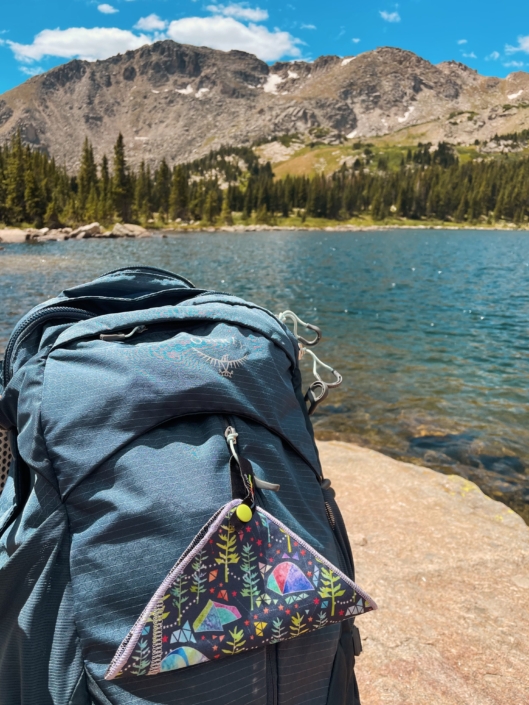
I’ve been using a Kula Cloth for years. I was skeptical about reusable pee cloths at first, but now I prefer mine over using toilet paper for pee breaks, and it’s especially convenient when I’m backpacking.
I still carry some toilet paper in a small reusable bag. It stays clean and dry and is there if I need it.
Always check the waste-disposal rules for the area where you’re hiking. Regulations can differ by environment and land manager, and some places require you to pack out human waste.
➡️ A Kula Cloth is also part of my ultralight backpacking hygiene kit.
9. Trail-Specific Hiking Gear
The 10 Essentials are a starting point, not the end of your packing decisions.
Before every hike, I think about what makes that particular trail different.
Trekking Poles
I’m a huge trekking pole convert.
At first, I didn’t think I needed them, but now I use poles regularly for Colorado 14ers, steep descents, long hikes, and water crossings. They’re especially helpful for taking stress off my legs on sustained downhill sections.
I don’t bring them on every easy hike, but if I know the terrain is steep or rough, they’re probably coming with me.
Bear Spray
Whether you should carry bear spray depends on where you’re hiking.
Research the wildlife and current recommendations for the area rather than assuming every hiking destination requires the same precautions. If bear spray is recommended where you’re going, keep it somewhere you can access quickly, not buried at the bottom of your backpack.
Microspikes
Snow and ice can completely change a trail.
If there’s a possibility of packed snow or icy terrain, I check recent trail conditions and bring traction when appropriate.
Don’t assume that a warm, sunny day at the trailhead means the entire route will be snow-free, especially at higher elevations or on shaded slopes.
Bug Protection
Mosquitoes and other insects can go from nonexistent to relentless depending on the location and season. I’ll add insect repellent when conditions call for it rather than carrying it year-round.
Extra Water Capacity
Desert hikes are another situation where my packing list changes significantly.
Water sources can be nonexistent, shade may be limited, and exposed trails can get brutally hot. I make sure I have enough carrying capacity for the conditions rather than relying on the amount of water I’d normally bring on a cooler mountain hike.
What I Pack for Different Types of Day Hikes
You don’t need to throw every piece of hiking gear you own into your backpack every time you leave the trailhead.
This is roughly how I adjust my packing list depending on what kind of hike I’m doing.
Short Front-Country Hikes
For a short hike on a familiar, popular trail, I’ll keep things pretty simple.
I’ll have water, a snack, navigation on my phone, sun protection, and whatever layers make sense for the weather. I still pack basic safety gear, but I’m not bringing as much food, water, or emergency equipment as I would for a remote all-day adventure.
The important distinction is risk, not just mileage. A short hike through remote desert terrain with no cell service deserves more preparation than an equally short trail around town.
Long or Remote Day Hikes
Once I’m heading several miles from the trailhead or somewhere without cell service, I become much more conservative about what I pack.
I’ll bring the full 10 Essentials, plenty of food and water, extra layers, a headlamp, emergency shelter, first aid supplies, navigation, and usually a satellite communicator.
I also leave room for the possibility that the hike takes significantly longer than planned.
Colorado 14ers
Colorado 14ers are a perfect example of why a day hike packing list needs to account for more than mileage.
I usually start early, spend hours above treeline, gain thousands of feet of elevation, and deal with temperatures and weather that can be completely different from conditions at the trailhead.
For a 14er, I pay extra attention to:
- Rain and wind protection
- Warm layers
- Gloves
- Sun protection
- Plenty of water and electrolytes
- Food
- Headlamp
- Navigation
- Trekking poles
- Emergency gear
I’ve hiked more than fifteeen Colorado 14ers, and the gear that seems unnecessary at the trailhead can feel very necessary once you’re exposed above treeline.
➡️ Planning your first one? Start with my guide to the easiest 14ers in Colorado.
Desert Hikes
Desert hiking requires a different approach.
My biggest considerations are water, electrolytes, sun exposure, and temperature. I carry more water in hot and exposed conditions and make sure I have enough capacity rather than counting on finding water along the trail.
I also prioritize a hat, sunglasses, sunscreen, sun gloves or other sun-protective clothing, salty snacks, and electrolytes.
And don’t assume the desert is always hot. Temperatures can change dramatically throughout the day, so layers still matter.
➡️ Read my complete hiking in the desert guide for more about preparing for heat, sun, dry conditions, and limited water.
📌 Pin this image on Pinterest to save this post for reference.
Things to Bring on a Hike FAQs
What are the most important things to bring on a hike?
At minimum, plan around the 10 Essentials: navigation, sun protection, insulation, illumination, first aid, fire, repair tools, nutrition, hydration, and emergency shelter.
Then adjust your gear for the trail, weather, season, distance, terrain, wildlife, and how remote you’ll be.
For me, the items that almost always in my hiking pack include water, food, navigation, extra layers, sun protection, first aid supplies, and a headlamp.
What should I bring on a short hike?
For a short hike, bring water, a snack, navigation, sun protection, and appropriate clothing at a minimum, then consider what additional safety gear makes sense for the trail.
Don’t base your packing list on distance alone. A short remote hike in extreme heat or unpredictable mountain weather can require considerably more preparation than a short urban trail.
How much water should I bring on a hike?
There isn’t one amount of water that’s right for every hiker and every trail.
How much you need depends on factors including temperature, sun exposure, elevation, exertion, hike duration, your individual needs, and whether you’ll have access to water you can safely treat.
Research the trail and conditions before you leave and carry extra water when you’re hiking somewhere hot, exposed, or without reliable water sources.
What food should I bring hiking?
Bring foods that are easy to eat and that you’ll actually want when you’re hiking.
I like a combination of salty and sweet snacks such as pretzels, crackers, dried fruit, energy chews, and gels. For longer hikes, I bring more substantial food in addition to snacks.
I also pack a little more than I expect to eat in case I’m outside longer than planned.
Do I need a headlamp on a day hike?
Yes. A headlamp is one of the few things I bring even when I’m positive I’ll finish before dark.
Plans change. Hikes take longer than expected. People get injured. Trails get confusing.
I’ve personally ended up hiking after dark without a headlamp, and trying to navigate by my phone flashlight was enough to convince me never to make that mistake again.
What shouldn’t I bring on a day hike?
Avoid packing unnecessary weight just because an item appears on someone’s hiking gear list.
You probably don’t need multiple heavy water bottles when lighter containers will work, several redundant jackets, or emergency equipment that isn’t appropriate for your environment.
At the same time, don’t cut weight by leaving behind basic safety equipment.
The goal isn’t to have the lightest backpack possible. It’s to carry what you realistically need for that hike.