Four Pass Loop Colorado: Permits, Parking, 4-Day Backpacking Itinerary
This is your Four Pass Loop Colorado backpacking guide, with everything you need to plan a successful trip.
Four Pass Loop Colorado is one of the most iconic backpacking trails in the state. This 26+ mile loop in the Maroon Bells-Snowmass Wilderness climbs over four high mountain passes, delivers nonstop alpine views, and explodes with wildflowers in summer.
➡️ Discover more Colorado backpacking routes on my CO adventure page.
But hiking the Four Pass Loop isn’t as simple as just showing up at the trailhead.
Backpacking this route requires securing camping permits months in advance, reserving overnight parking at Maroon Lake, carrying a bear canister, and planning your daily mileage carefully.
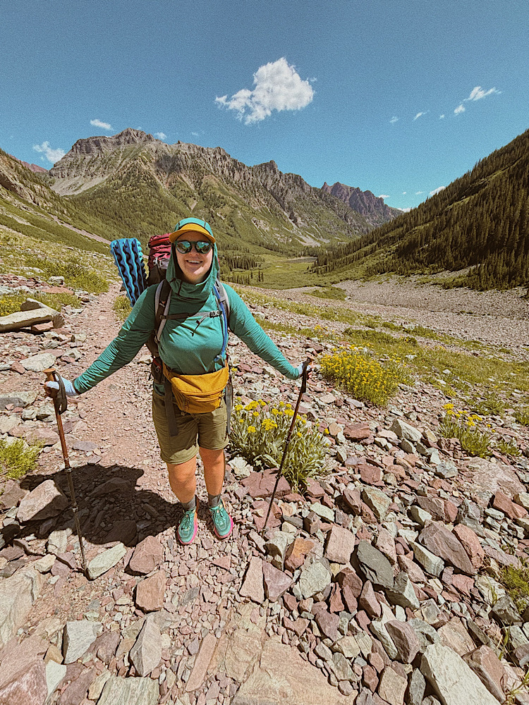
Many hikers complete the loop in three days, but my partner and I chose to backpack the Four Pass Loop Colorado in four days for a more relaxed pace.
➡️ Check out another iconic Colorado spot for hiking: Great Sand Dunes National Park
Disclosure: This post may contain affiliate links. If you purchase through these links, I may earn a small commission at no extra cost to you. I only recommend products I’ve personally used, tested, and genuinely love. Thank you for supporting Emma Gets Outside!
In this guide, I’ll cover:
- Four Pass Loop Colorado trail stats and map
- How to get camping permits
- How to secure Maroon Bells parking reservations
- Clockwise vs counterclockwise direction
- The best time to hike
- A detailed 4-day itinerary with real mileage from my Garmin
- What to pack for alpine conditions
- How difficult Four Pass Loop Colorado really is
- Frequently asked questions
If you’re planning to backpack the Four Pass Loop in Colorado, this post will help you prepare confidently.
Four Pass Loop Colorado Overview
Four Pass Loop Trail Stats
Mileage: 26.9 mi
Elevation Gain: 7,801 ft
Difficulty: Hard
Mileage and elevation gain recorded on my Garmin watch: 29.21 mi and 8,419 ft gain.
Four Pass Loop Map
Quick Planning Summary for Four Pass Loop Colorado
- Distance: 26+ miles
- Elevation gain: 7,800+ ft
- Permit required? Yes (backpacking only)
- Bear canister required? Yes
- Parking reservation required? Yes
- Best time: Late June-September
Four Pass Loop Permits (Camping Zones)
Do You Need a Permit for Four Pass Loop Colorado?
You only need a permit if you are backpacking. The permit is for each camping zone to ensure there aren’t too many people camping in the same area each night. If you’re completing the whole loop or hiking part of the loop in a single day, you don’t need a permit.
How to Reserve a Four Pass Loop Permit on Recreation.gov
You’ll find the Maroon Bells-Snowmass Wilderness Overnight Permits on Recreation.gov.
Each zone has a limited number of permits and a group-size requirement. Read the allowed number of people per group carefully if your party has more than four people. All the details are on the permit listing. I’ll explain more later about each camping zone we picked.
You’ll also see permits for Conundrum Hot Springs on the page listing and campsite map.
➡️ Read my backpacking guide to Conundrum Hot Springs to complete another classic Colorado backpacking trip.
| Permit Date Range | Release Date |
|---|---|
| April 1 to July 31 | February 15 at 8:00 am Mountain Time |
| August 1 to November 30 | June 15 at 8:00 am Mountain Time |
| December 1 to March 31 | October 15 at 8:00 am Mountain Time |
Tips for Securing Permits (Weekend vs Weekday Strategy)
Originally, we wanted to start hiking on Thursday and go through Sunday, but the permits were snatched up so quickly. We secured camping permits for Sunday through Wednesday. Keep that in mind when planning your Four Pass Loop backpacking trip. Weekdays are easier to get a permit than weekends.
➡️ Want a backcountry adventure with easier to secure permits? Try driving to the Maze in Utah. You’ll find remote hiking trails with no one on them!
Four Pass Loop Camping Zones Explained
Refer to this PDF map with the Four Pass Loop camping zones.
When you book your permit, you will need to know which zone you want to camp in each night. Determine the direction you want to go and the number of miles you want to hike per day. You can start from several trailheads, not just Maroon Lake.
Popular zones have designated campsites that you can book, while the other zones have dispersed camping. We avoided the popular areas and camped wherever there were flat spots along the trail within our permitted zones.
Maroon Bells Parking Reservations for Four Pass Loop
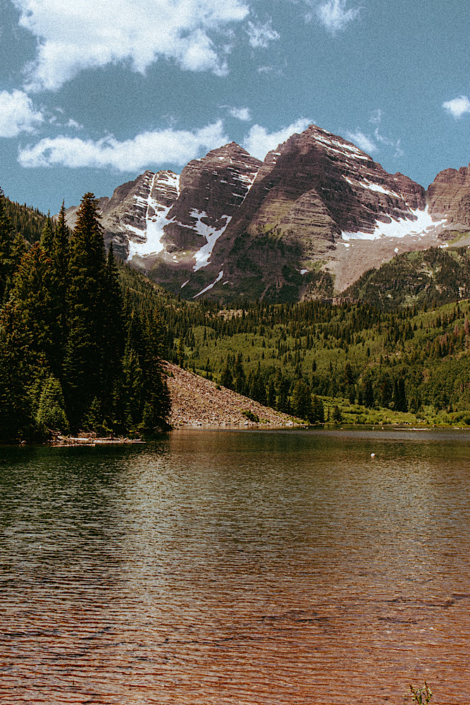
Reserving your Maroon Bells parking permit is extremely critical. To park at Maroon Lake, you need to book an overnight parking permit. Alternatively, you could have a friend drop you off and pick you up at the trailhead or at the Maroon Bells Welcome Center.
How to Reserve Overnight Parking
Get your Maroon Bells overnight parking permit.
If you don’t want too book a parking permit, you can take the shuttle bus to and from the Welcome Center. I explain more details about the shuttle in my post about hiking the Maroon Bells Crater Lake Trail.
Maroon Creek Road Details
The seasonally operated road to the Maroon Bells is only open to incoming vehicle traffic before 8 am and after 5 pm from mid-May to mid-October. If you decide to get an overnight parking permit, you should arrive before 8 to drive on the road.
Maroon Bells Parking Reservation Dates
As with camping permits, these bookings fill up quickly. Be ready on the exact day and time the permits are released. If you don’t get a parking permit, check the website regularly for cancellations. You can get lucky; we did with our parking permit.
| Permit Date Range | Release Date |
|---|---|
| Mid-May to July 31 | Mid-February at 8:00 am Mountain Time |
| August 1 to October 31 | Mid-June at 8:00 am Mountain Time |
Clockwise vs Counterclockwise Four Pass Loop
Clockwise:
- Steeper descents
- Easier ascents
- Save the best views for last
Counterclockwise:
- The “standard” route
- Steep initial climb
- Easier descents
Hiking Counterclockwise (Standard Route)
Hiking the Four Pass Loop clockwise or counterclockwise really makes for different experiences. My husband and I chose the “standard” route counterclockwise. The interesting thing, though, was that practically every person we saw on the trail was going the OPPOSITE direction. We saw only 3-4 groups over 4 days heading in the same direction we were.
I thought this was odd, and maybe we were doing the trail “wrong.” But we confirmed that this was the way AllTrails recommended. After completing the loop, we considered whether going clockwise would have been better.
Which Direction is Better?
We decided that counterclockwise was the best for numerous reasons. Experienced hikers know that steep descents can be much worse than steep ascents. We also appreciated getting the steepest day out of the way first, while we were still fresh.
The last day wasn’t much for views, and we were excited to get back to the car anyway. When we spoke to a Forest Service ranger, she said counterclockwise was her favorite direction as well, having completed the trail both ways.

Snow at the top of Buckskin Pass
Best Time to Hike Four Pass Loop Colorado
Snow Conditions and Trail Accessibility
As the name suggests, you will be hiking over four mountain passes on this loop. Depending on the snow year, some sections of the trail may be impassable in the early season.
We hiked in early July, and there was a section of snow around Buckskin Pass that we had to bypass, and another patch above Snowmass Lake that we had to maneuver around. Check real-time trail conditions by calling the Aspen-Sopris Ranger District at 970-963-2266.
Wildflowers vs Fall Colors
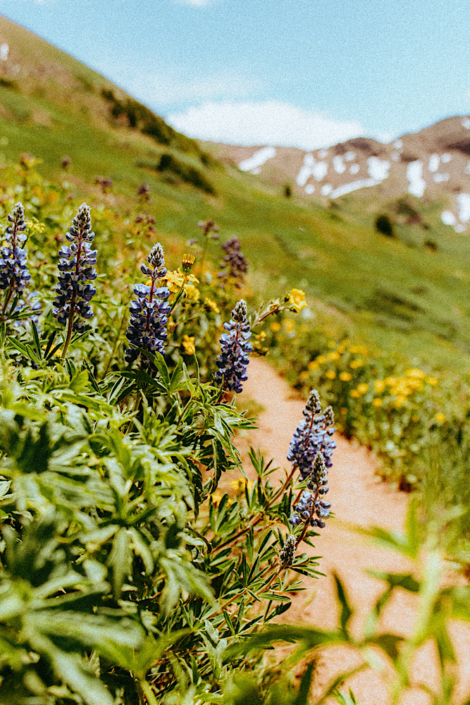
My husband and I specifically picked early July to hike the Four Pass Loop so we could admire the thousands of blooming wildflowers at their peak. The flowers on this trail were the best I had ever seen on a hike in Colorado.
If you plan to hike the trail to see fall colors, please note that the weather can be unpredictable and you may encounter snow. Personally, I think the Four Pass Loop is better for wildflowers than fall colors because you hike above the trees and across meadows for much of the trail.
Weather and Afternoon Storms
Summer afternoon rainstorms are practically daily occurrences in the Colorado mountains. Get started hiking early each day to avoid being on top of a pass in the case of a storm.
We got caught in a microburst of sleet and snow on the top of Frigid Air Pass. The wind was so strong I sat down on the trail for fear of toppling over. Then, 15 minutes later, the sky was perfectly blue, and it was like it didn’t even happen.
It’s a smart idea to carry a device like a Garmin inReach so you can pull a weather report without cell service.
➡️ A Garmin satellite device is on my day hike packing list.
Four Pass Loop Itinerary (3-Day vs 4-Day Options)
Can You Hike Four Pass Loop in 3 Days?
You can absolutely hike the Four Pass Loop in three days. I would consider three days to be the most aggressive backpacking timeframe. A lot of people that hike it in three days say they wished they had four days instead.
Why We Chose 4 Days
We chose to hike it in four days, so our mileage each day was more manageable, and we had time to drive back to Grand Junction after getting off the trail on the last day.
Most of the people we spoke with completed the loop in three days, but four days allowed for a more relaxed pace. Use five days to complete the trail if you really want to take your time.
I want to return to this area to backpack to Geneva Lake. There are many offshoot trails from the main loop, so you can spend considerable time exploring.
Our 4-Day Four Pass Loop Backpacking Itinerary Overview
We decided to get overnight parking reservations at Maroon Lake and hike the Four Pass Loop counterclockwise.
All these distances and elevation gains were measured with my Garmin watch, so consider them with a grain of salt.
Day 1: Buckskin Pass
Distance: 7.02 mi
Elevation gain: 3,081 ft
Camping Zone: Upper Snowmass
Day 2: Trail Rider Pass
Distance: 8.05 mi
Elevation gain: 2,021 ft
Camping Zone: North Fork
Day 3: Frigid Air and West Maroon Pass
Distance: 8.73 mi
Elevation gain: 3,071 ft
Camping Zone: Maroon
Day 4: No Passes
Distance: 5.36 mi
Elevation gain: 246 ft

Pointing at Buckskin Pass
Day 1: Maroon Lake to Buckskin Pass
Funny story, my husband and I didn’t realize that we needed to arrive before 8:00 am to drive the road to Maroon Lake. We left Grand Junction the morning of our first night on the trail.
There is a ranger station on Maroon Creek Road where you are required to show your permits and bear canister. The ranger allowed us to drive the road because we had backpacking and parking permits, but warned us not to arrive so late again.
We started hiking around 12:30 in the afternoon. Lucky for us, there wasn’t any afternoon rain in the forecast, and we had a pleasant afternoon hiking. Follow the rules and arrive before 8:00 am to drive the road if you have parking permits.
The loop part of the trail begins right around Crater Lake. Our camping permits required us to go counterclockwise, away from Crater Lake.
Optional Detour to Willow Lake
It is a steep ascent to Buckskin Pass, but I was glad we were covering so much elevation gain on day one while we were fresh. As we trekked up, we saw people coming down from a different direction. They were day hikers who went to Willow Lake.
You don’t need a permit to camp at Willow Lake, and it can be a long day hike if you don’t want to walk with a heavy pack. We didn’t have time for the detour, but I’d like to return and do it as a one-night backpacking trip.
There was a patch of snow we had to circumvent at the top of Buckskin Pass, but there was a clear trail to follow. The view from the top of Buckskin Pass was arguably my favorite. You can see Snowmass Mountain and Snowmass Lake nestled below it, surrounded by trees. The view seemed so expansive.
We camped below Buskskin Pass in the Upper Snowmass Zone — one of the less popular areas.
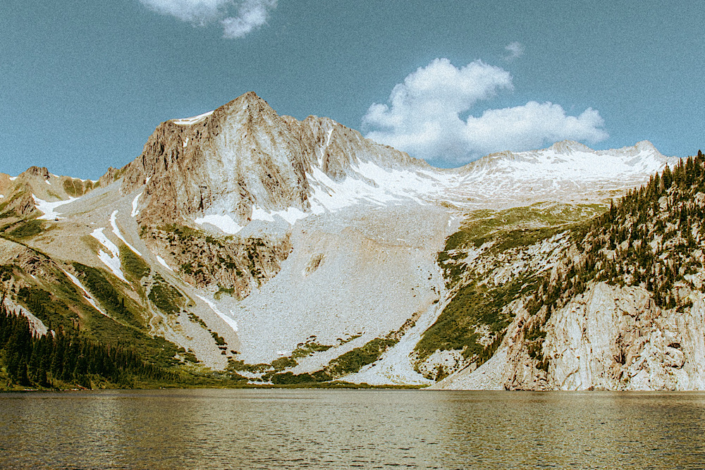
Snowmass Lake
Day 2: Snowmass Lake to Trail Rider Pass
We started the day by continuing our descent to Snowmass Lake. The trail was considerably less steep and practically flat when we approached the lake. We enjoyed a snack at the water’s edge and chatted with a man who attempted to summit the 14er, Snowmass Mountain, that morning.
He said it was really sketchy and thought it best to turn around. A good example of knowing your limits and being safe!
➡️ Want to summit your first 14er? See my beginner’s guide on hiking 14ers to know what to expect.
The approach to Trail Rider Pass was dotted with Columbine flowers, and the view of Snowmass Lake kept getting better as we hiked higher. I thought the descent of Trail Rider was the worst part of the trail.
It was steep and seemed to keep going forever. There is a small lake visible from the top of the pass, where we stopped to filter water. Further down the trail, we encountered a couple who told us about a significant water crossing ahead.
We weren’t sure if we were going to hike that far before camping for the night in the North Fork Zone. Once we were down in the flat valley, we found an empty spot to camp for the night and hadn’t yet come across the water crossing.
Right as we were getting ready to go to bed, a porcupine started wandering around our camp. We kept our distance and got into the tent. The next morning we discovered the porcupine dragged my hiking pole clear across camp and chewed part of the cork handle off.
You never know what kind of wildlife you’ll encounter!
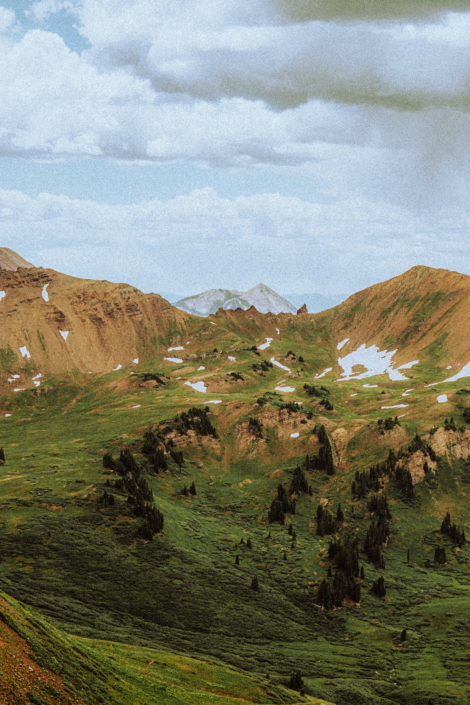
View of Mount Crested Butte from Frigid Air Pass
Day 3: Frigid Air and West Maroon Pass
When we started hiking on the third day, the aforementioned water crossing wasn’t far down the trail. We removed our shoes to cross barefoot.
➡️ An extra pair of shoes is on my list of what NOT to bring backpacking.
There is an impressive waterfall you’ll encounter not much further, so keep a lookout. This morning’s hike was pretty flat and refreshing. The ascent of Frigid Air was probably the easiest of the four passes.
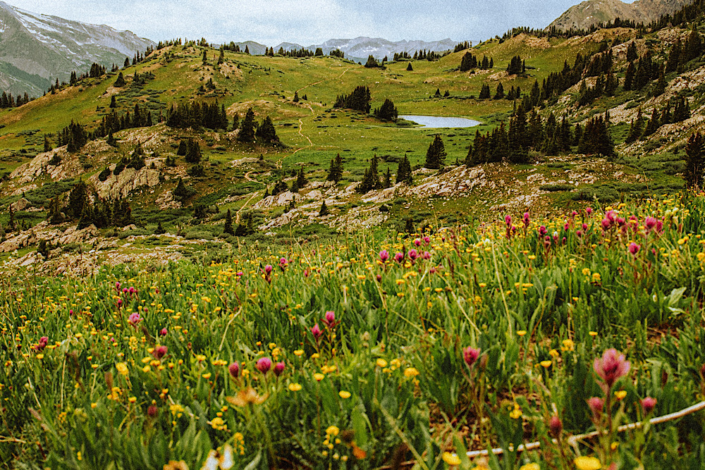
You can see Mount Crested Butte from the top of Frigid Air. I thought that was super cool. The wildflowers on the ridge between Frigid Air and West Maroon were also spectacular.
We took a break to filter water from a spring between passes. The ascent of West Maroon was grueling, as we had already climbed one pass. The descent of West Maroon was steep and rocky.
Altitude Sickness Awareness
We passed a couple who were struggling up the pass on the other side. By the looks of it, they weren’t having a great time. We asked them if they were alright, and the wife mentioned the altitude.
She was feeling dizzy and was likely dehydrated. I offered my electrolyte applesauce, and she gratefully took it. This was their first day on the trail, and I was a bit worried about the rest of their trip.
When you’re hiking at altitude, you must stay hydrated and keep replenishing your body’s electrolytes to help it process water. If you’re coming from a lower elevation, you might experience shortness of breath. Take it slow.
If you have time in your schedule, plan to spend a few days at a higher altitude before embarking on a difficult hiking trail. Your body will appreciate the extra time to adjust. Know the symptoms and treatment for altitude sickness before you’re in the backcountry.
We made camp in the Maroon Zone as soon as we found a spot in the trees. The camping area had slim pickings, and we were mere feet from the main trail.
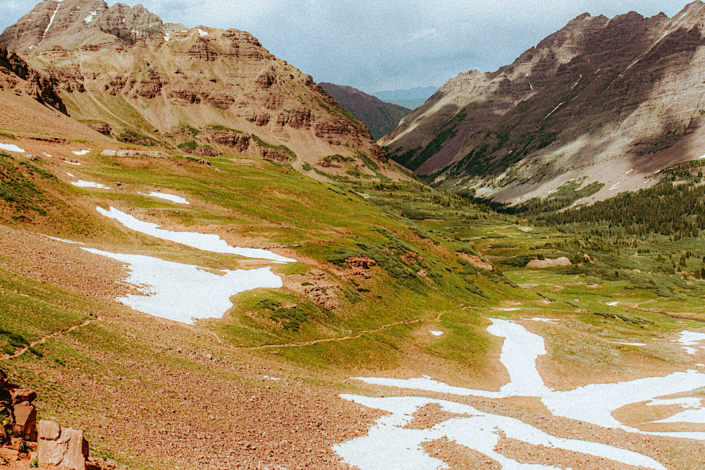
View from the top of West Maroon Pass
Day 4: Return to Maroon Lake
Our last day was short and easy compared to the rest of the trip, all downhill over not very technical terrain. This section of the trail was dominated by willow bushes and offered limited views.
The ground was also muddy, and we walked in puddles with our shoes on. We didn’t care about getting our shoes wet since it was our last day and the parking lot was just a few miles away.
There was a significant water crossing that we also had to walk in wearing our shoes. I was pleased this was our last day on the trail, not our first. We didn’t feel the need to stop often. The lack of wildflowers and open vistas on this part made for quick hiking.
We stopped at Crater Lake for a snack. Having hiked to Crater Lake before as a day hike, we didn’t stay long and made it back to the car at a reasonable time.
Some people might argue that saving the best views for last makes for a better trip because of the anticipation, but I believe the opposite. When you’re at the end of several days of hard hiking, you won’t stop to take in the beauty as much as you would when you’re first starting.
I was glad to have appreciated the best scenery when I was energized and was able to walk faster through the sections with less to look at towards the end.
What to Pack for the Four Pass Loop
Backpacking Gear Essentials
I packed everything from my gear to bring backpacking list for hiking the Four Pass Loop. You’ll also want to review my ultralight backpacking hygiene kit post to assemble your backpacking toiletries.
Required Bear Canister
A bear canister is required for backpacking around the Maroon Bells. See this Forest Service PDF if you have further questions about bear canister rules for backpacking around the Maroon Bells-Snowmass Wilderness.
You can buy a bear canister at REI in Glenwood Springs. Remember, ALL your food, trash, and smelly items must fit in the canister.
Water Sources and Filtration
Check with the local ranger station about water sources on the trail if you’re unsure. We encountered numerous creeks and springs for refilling. Always make sure you have plenty of water when you start your day and before attempting a mountain pass.
My husband and I like a water filter that we can squeeze or hang to drip. The LifeStraw 3 L filter is excellent and doesn’t clog.
Clothing for Alpine Conditions
I only brought one outfit for hiking and one outfit for sleeping with a fresh change of socks and underwear each day. Merino is my go-to fabric for outdoor apparel.
➡️ Is merino wool moisture wicking? Learn why merino is the best for hiking clothing in my detailed post.
I brought a warm mid-layer (fleece) and a warm synthetic coat and water proof rain coat. The mountains can be hot and sunny one minute and cloudy and snowing the next. It’s best to be prepared for a wide range of conditions.
How Difficult Is the Four Pass Loop?
Four Pass Loop is a challenging route. Each pass is over 12,400 ft in elevation and most of the trail is above 10,000 ft. You should feel good hiking at high elevation over the course of a few days.
That being said, this is a well-maintained trail with little to no route finding. The off-shoots are well marked.
Who Should Attempt to Backpack the Four Pass Loop?
You should be in decent physical shape to attempt the Four Pass Loop. This is not an easy beginner backpacking trail. I had gone on several multi-night backpacking trips before this one and was glad I had experience with packing my bag.
Beginners often overpack, and carrying extra weight up all these passes would have been torture. You should feel confident in the backcountry. This is a popular trail, so you will run into people along the way, but there were periods when we went hours without seeing a soul.
Training Tips for Four Pass Loop
You should feel strong hiking 8-10 miles per day with at least 2,000 feet of gain. Hit the stair master while wearing a full pack to simulate the trail conditions. Don’t attempt this hike without at least some training.
Is the Four Pass Loop Worth It?
Absolutely! The wildflowers were incredible and the views were excellent. Four Pass Loop isn’t an easy trail, but it’s well worth the effort. Don’t let the permit process scare you off from this iconic hike.
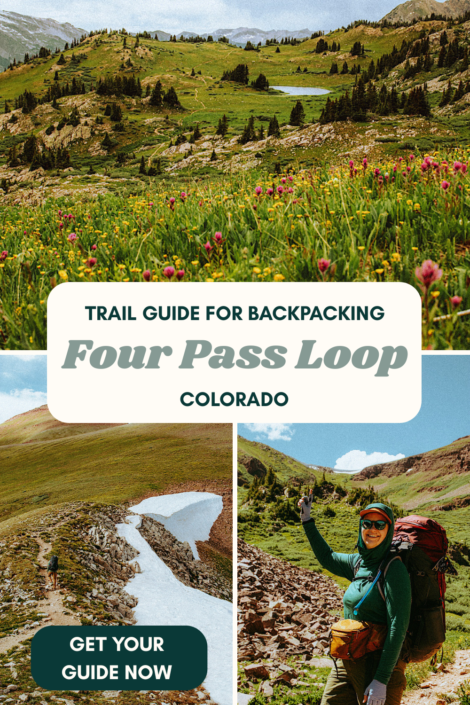
📌 Pin this image on Pinterest to save this post for reference.
Four Pass Loop Colorado FAQs
Do you need a permit for Four Pass Loop Colorado?
Yes, a permit is required if you are backpacking overnight in the Maroon Bells–Snowmass Wilderness. Day hiking the Four Pass Loop does not require a permit. Overnight permits are assigned by camping zone and must be reserved in advance on Recreation.gov.
Do you need a parking reservation for the Four Pass Loop?
Yes. If you plan to park at Maroon Lake, you must reserve an overnight parking permit in advance. Without a parking reservation, you must use the shuttle or arrange drop-off at the trailhead.
How long is the Four Pass Loop?
The Four Pass Loop is approximately 26–29 miles depending on your GPS device. My Garmin recorded 29.21 miles with 8,419 feet of elevation gain.
How hard is the Four Pass Loop?
Four Pass Loop is considered a hard backpacking trail. Each mountain pass exceeds 12,400 feet in elevation, and hikers should be comfortable hiking 8–10 miles per day with significant elevation gain at high altitude.
Is Four Pass Loop better clockwise or counterclockwise?
Both directions are popular. Counterclockwise is considered the standard route and gets the steepest climb out of the way first. Clockwise has steeper descents but saves certain views for later in the hike.
When is the best time to hike Four Pass Loop?
The best time to hike is late June through September. Early July offers peak wildflower season, while fall brings cooler temperatures and possible snow at higher elevations.