Are Trekking Poles Worth It? My Honest Experience Hiking With and Without Them
Are trekking poles worth it? It took me years of hiking to realize that trekking poles are an underrated tool in a hiker’s gear kit.
I think most people are skeptical about starting hiking with trekking poles. They are under the impression that poles are more hassle than they’re worth.
I know that I didn’t believe they would help me much before I tried them. But after I did, I now grab my poles whenever the trail terrain calls for it. I even flew halfway across the world to New Zealand with trekking poles in my checked bag.
There are numerous real benefits to hiking with trekking poles, especially on steep or uneven terrain. After reading about my experiences, you can decide for yourself: Are trekking poles worth it?
Disclosure: This post may contain affiliate links. If you purchase through these links, I may earn a small commission at no extra cost to you. I only recommend products I’ve personally used, tested, and genuinely love. Thank you for supporting Emma Gets Outside!
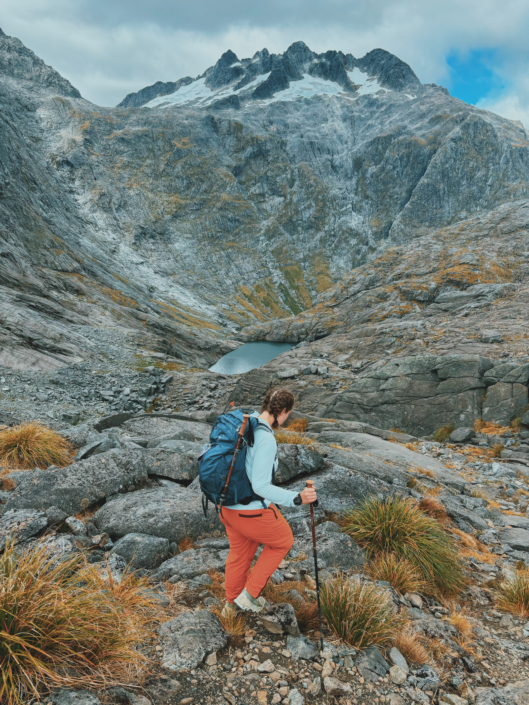
Are Trekking Poles Worth It for Hiking?
Long story short, yes, trekking poles are worth it for most hikers, but they make the biggest difference on steep, long, or technical trails. In this guide, I’ll cover:
- What trekking poles help with
- Scenarios when trekking poles are useful
- When trekking poles aren’t useful
- Why you need sun gloves
- What to look for when buying trekking poles
Do Trekking Poles Actually Help?
I remember going on a backpacking trip in Colorado with friends and absolutely slogging up the muddy, rooted terrain. There was a dusting of snow already in the mountains that October. When footing gets slippery, I tend to slow down significantly. My friend offered up his trekking poles, and I hesitantly took them in hand.
➡️ Looking for an autumn adventure in Colorado? See my guide to driving Ophir Pass from Silverton to Telluride for the best fall vistas.
After hiking a distance with the poles, I noticed how much more confident my steps were on the slippery sections. I barely felt them in my hands. My pace was much faster with the poles’ stability. Pleasantly surprised after this trip, I got my own trekking poles.
From then on, I brought my trekking poles on backpacking trips, long hikes, and technical terrain. My balance, confidence, and overall fatigue levels improved exponentially.
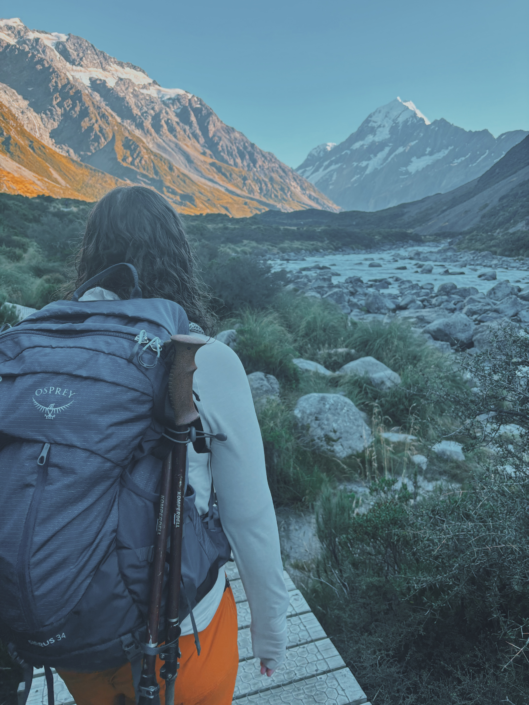
Hyper-mobility and Trekking Poles
I do want to note here that I am hyper-mobile, meaning my ligaments are weak and my joints can stretch farther. Because of that, I struggle with proprioception (the body’s ability to sense its position in space) and poor balance.
The brain of people with hyper-mobility receives less precise signals because the joints are overstretching. This leads to poor spatial awareness. The body compensates with muscle strength to get the joints to move properly.
I’ve found that yoga and strength training have improved my balance immensely. Trekking poles provide that bit of stability I found lacking. I always wondered how people could jump from one slippery rock to the next in a stream while carrying a heavy pack and make it look effortless. Meanwhile, I trip over air and lose my balance on flat ground.
If you’re hyper-mobile or have poor proprioception, you’ll find trekking poles are very worth it.
Knee Pain
Hiking downhill can put 3-10 times your body weight in force on your knees. Weak hips and ankles, plus tight muscles, can really put a strain on your knees.
➡️ Learn more about ankle flexibility in my post on hiking boots vs trail runners. Strengthening exercises might change the way you hike!
One of the biggest benefits of hiking with trekking poles is that they can reduce the force on the knees by up to 20-25%. That sounds like a pretty good deal to me — No gym training required.
After a tough day of descending with poles, my upper arms and shoulders can feel sore rather than my knees. I’ll count that as a win. After all, your knees only have so much padding. Knee cartilage doesn’t regenerate well after damage.
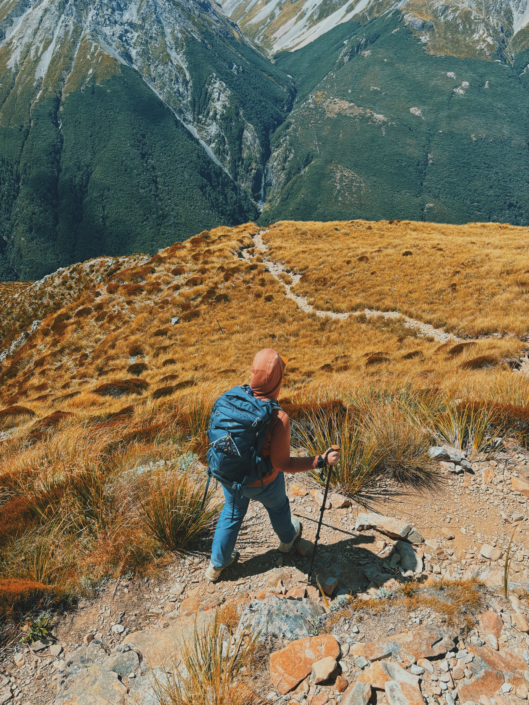
When Trekking Poles Are 100% Worth It
After using trekking poles on everything from backpacking trips to steep alpine hikes, I’ve found there are very clear situations where they’re worth it — and a few where they’re not.
Steep Descents and Ascents
As I mentioned before, one of the benefits of trekking poles is that they take pressure off your knees on descents. When hiking in Colorado, or any mountainous region for that matter, you might be hiking downhill for hours. Even a 10% difference in knee pressure will be noticeable for that long a time.
Trekking poles also reduce overall effort on ascents. By transferring some of the power to your arms, your leg muscles don’t need to work quite as hard. Trekking poles help keep you upright, making breathing feel easier at higher elevations. Breathing above 8,000 feet becomes more difficult if you spend most of your time at sea level.
Hiking 14ers and High-Alpine Terrain
I don’t attempt a 14er without my trusty hiking poles. Even if I need to collapse and put them away for scrambling sections, they are still useful for most of the hike.
➡️ Looking for 14ers for beginners? I’ve climbed over a dozen and compiled the easiest 14ers guide, full of beginner-friendly, informative information. Learn more about hiking 14ers in my safety guide.
Talus and scree slopes (loose rocks set on steep faces) are my worst nightmare. Using my trekking poles while traversing such terrain aids my balance. I’ve definitely caught myself more than a few times thanks to my poles.
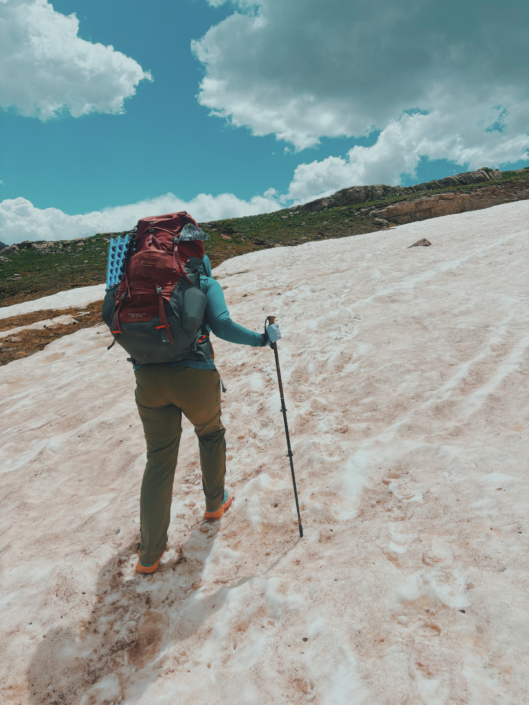
Hiking on snow on the Four Pass Loop
Backpacking and Carrying Weight
Combine high alpine terrain with backpacking, and you’ve got the Four Pass Loop in Colorado. I used my poles every day while summiting mountain passes on this famous loop.
When I first started backpacking, I didn’t use poles, but now I bring them on every backpacking trip. It’s wild how much of a difference you can feel right away. Some of the weight is transferred to your arms, and your legs are much less fatigued at the end of a long backpacking day.
After years of backpacking with trekking poles, I’ve noticed the biggest difference in my stamina.
Water Crossings
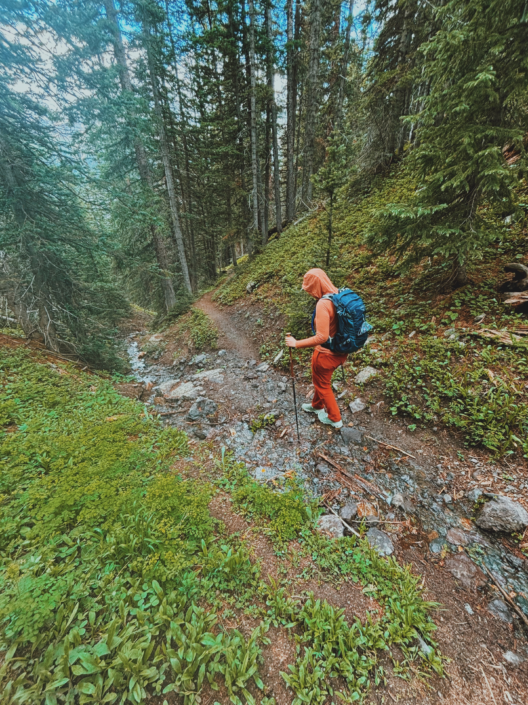
Balancing with trekking poles during water crossings is probably my favorite use-case scenario. Before, I found it really intimidating to commit and go from rock to rock at a stream crossing. My fear of slipping and falling was palpable.
Digging my poles into the stream bed and using them to swing myself along is much more fun. I don’t hesitate nearly at all anymore because I know I can catch myself with the poles.
Even in deep-water crossings, when my feet are submerged, I lean on my poles. Currents can be strong in little streams. If you’re carrying weight on your back, your footing can easily become unstable in quick-moving water.
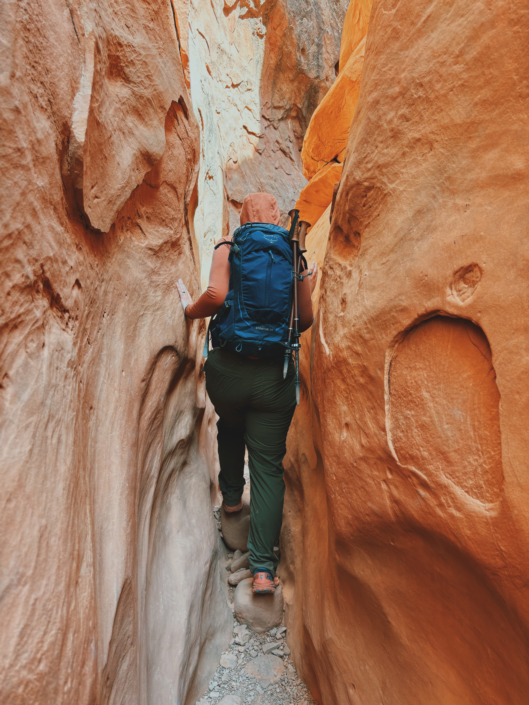
Put away my trekking poles for the slot canyon section
When Trekking Poles Aren’t Worth It
Let’s talk about times when poles are more annoying than worth it.
Flat Trails
If you’re hiking mostly flat, well-maintained trails, you probably don’t need trekking poles. On flat sections, sometimes I just end up hovering my poles above the ground while I walk.
Scrambling
Trying to hold poles while using your hands for scrambling doesn’t work out well. In tricky sections, I’ve tossed my pole away and then had to retrieve it. If you know you’re approaching a scrambling section and you’re wearing a hiking backpack, did you know you can attach your poles to the bag?
This is an extremely handy feature on hiking backpacks that I’ve taken advantage of before. If you’re hiking with a friend, just ask them to secure your poles, and you never even have to take off your pack.
Deep Sand
Hiking in deep sand can be exhausting. I’ve hiked at Great Sand Dunes National Park, and boy-oh-boy, that took some effort. My first pair of hiking poles didn’t come with a basket attachment, so sticking them in deep sand just resulted in expending more energy pulling them back out with every step.
If your trekking poles have a basket attachment, or you can find a separate attachment that will fit your pole threading, then your poles will sit on top of the sand. You can use your poles for hiking in snow or mud with a basket attachment as well.
Don’t worry if your poles don’t come with baskets — I still used mine for years without them.
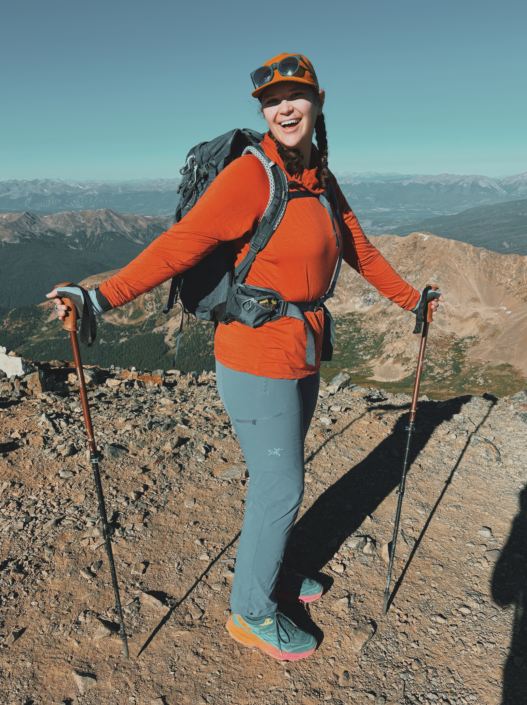
Wear Sun Gloves with Trekking Poles
There was a time when, after completing a 14er, I looked at the tops of my hands and realized I had gotten sunburnt. My hands were so red and dry. Even the thickest lotions left a gruesome burning sensation afterward.
Holding my hiking poles for so many hours above tree-line in the direct sun left my hands very exposed. Not to mention other times I had gotten tiny blisters on my hands after backpacking with poles for a few days.
I really didn’t want to slather sticky sunscreen on my hands all the time, and also wanted to prevent blisters. The solution: sun gloves. If you’re going to use trekking poles regularly, I actually think sun gloves are just as important as the poles themselves.
These thin, fingerless gloves absorb sweat, improve your grip, and protect your hands from the sun and friction. They also keep your hands cleaner as a side bonus, no more dirty palms from holding poles.
Sun gloves might look a little silly, but I love them. Such a small piece of gear that really improved my time in high alpine conditions, especially. I have the REI Active Pursuit Sun Gloves. They’ve held up after years of wear.
What to Look For When Buying Trekking Poles
If you decide trekking poles are worth it for you, here’s what I’d look for when choosing a pair.
As with most hiking gear, weight matters. Lighter-weight trekking poles mean less energy is needed to lift them. Be careful, though, depending on the material, lightweight doesn’t always equal better quality.
Are carbon fiber trekking poles worth it?
You might be sacrificing durability for weight. Aluminum trekking poles are more durable than lightweight carbon fiber, which can snap. You might find yourself with a bent aluminum pole, but it’s better than a pole broken in two.
While folding poles can look cool and shed some ounces, telescoping poles are going to be sturdier. Also, look for poles with replaceable tips to keep trekking for years to come.
I prefer trekking poles with cork handles because they feel less slippery when my hands are sweaty. Some poles have foam padding around plastic handles, but I’ve seen people on the trail show me how their foam handles are rubbing away and falling apart.
Much of hiking pole design is up to your personal preference and how you plan on using your trekking poles. I started with a less expensive pair and have since upgraded. REI is an excellent place to buy your first trekking poles. Use them for a hike or two and decide if they meet your criteria. You have a year to return gear at REI.
I personally use the Black Diamond Alpine Carbon Cork trekking poles after upgrading from a more basic pair. They are very lightweight but still rated for rugged conditions.
Who Should Use Trekking Poles
- Beginners who want more stability
- Hikers doing steep or technical trails
- Backpackers
- Anyone with knee pain
- People hiking in alpine or rocky terrain
FAQ: Are Trekking Poles Worth It?
Do you need trekking poles for hiking?
No, you don’t need trekking poles for every hike. Many people hike without them just fine. But for steep or technical hikes, trekking poles can make a noticeable difference in comfort, stability, and endurance.
Are trekking poles worth it for backpacking?
Yes, trekking poles are very useful for backpacking. They help distribute weight, reduce fatigue, and improve balance when carrying a heavy pack over long distances or uneven terrain.
Are trekking poles worth it for beginners?
Yes, trekking poles are especially helpful for beginners. They provide extra stability on uneven terrain and can help you feel more confident on the trail, especially on descents or rocky sections.
Do trekking poles actually reduce knee pain?
Trekking poles can reduce the impact on your knees, especially when hiking downhill. By distributing some of the load to your upper body, they help take pressure off your joints and can make long descents much more comfortable.
When should you not use trekking poles?
Trekking poles aren’t very useful on flat trails, short hikes, or scrambling sections where you need your hands. In those cases, they can feel more like a hassle than a benefit.
📌 Pin this image on Pinterest to save this post for reference.
Are Trekking Poles Worth It? Final Verdict
So, are trekking poles worth it? For most hikers, yes, absolutely.
After using trekking poles on everything from steep Colorado hikes to backpacking trips and even traveling with them to New Zealand, I’ve found they make the biggest difference on long descents, uneven terrain, and when carrying weight.
They improve balance, reduce strain on your knees, and make technical sections feel much more manageable. That said, they’re not necessary for every hike. If you’re sticking to short, flat, well-maintained trails, you probably don’t need trekking poles.
But if you’re hiking in the mountains, tackling steep trails, or dealing with loose rock, water crossings, or a heavy pack, trekking poles are 100% worth it. They’ve become a regular part of my hiking setup, and I rarely head out on a big hike without them.
If you’re on the fence, try them. You might be surprised how much of a difference they make.