Colonnade Arch: A Hidden Utah Hike Most People Never Find
Discover what it is like to hike to Colonnade Arch, a true hidden gem.
Colonnade Arch (aka Five Hole Arch) in Utah is one of the most impressive natural rock formations I’ve seen. And I’ve extensively explored Arches National Park and much of southeast Utah.
The reason this place isn’t crawling with tourists is because it’s hard to get to. You need to drive miles of dirt road and acquire some decent route-finding skills to get to the arch. The AllTrails map to Colonnade Arch is more of a suggestion, and walking up steep sandstone is required.
If you’re willing to invest the time to get there, Colonnade Arch does not disappoint. Glimpse a sliver of the Green River beyond towering canyon walls and the La Sal mountains on the horizon. Hike along a cliff edge and peer over if you dare. Plus, there’s another fascinating formation along the Colonnade Arch trail (if you can find it).
In this guide, I’ll explain how to get to the Colonnade Arch trailhead, what to expect on-trail, and how to prepare so you can find these hidden gems.
➡️ Find more Utah hiking and off-road adventures with my Utah outdoor guide.
Disclosure: This post may contain affiliate links. If you purchase through these links, I may earn a small commission at no extra cost to you. I only recommend products I’ve personally used, tested, and genuinely love. Thank you for supporting Emma Gets Outside!
Where is Colonnade Arch?
Colonnade Arch is located in Utah near the Maze District of Canyonlands and Horseshoe Canyon. My husband and I actually added this hike to our Horseshoe Canyon visit and had no idea what to expect. Neither of us had heard of Colonnade Arch before.
➡️ See my Canyonlands Maze District 4-Day Itinerary to plan a remote off-road trip
Another popular nearby attraction is Goblin Valley State Park. Plan several days in this area to hike and camp. Getting to and from Colonnade Arch isn’t a quick stop. Take your time and venture out into the many canyons of this region.
Planning a bigger Southern Utah trip? I’ve pinned over 100 hikes, viewpoints, campgrounds, and hidden gems in my interactive Southern Utah Rexby guide.
How to Get to Colonnade Arch
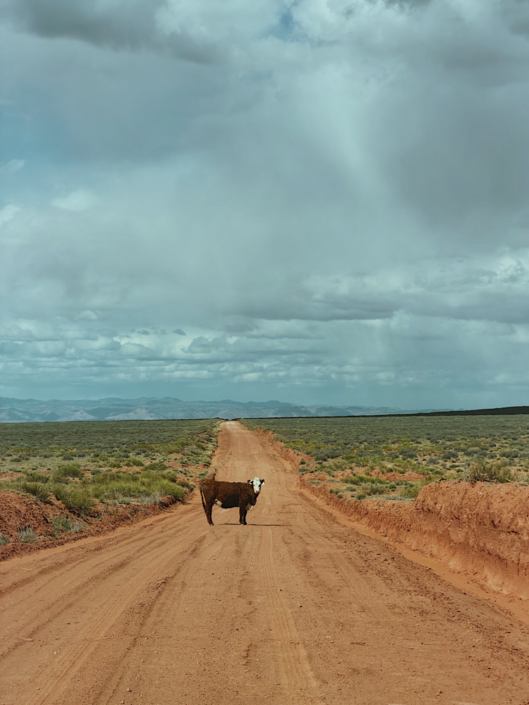
There are two ways to access Colonnade Arch: from Hanksville (54.9 miles) and from Green River (42.4 miles). Much of the route is on dirt, but it was pretty well maintained, besides a few wind-blown sand dunes that overtook the road.
➡️ If you’re coming from Hanksville, make a stop at Goblin Valley State Park and hike the Goblin’s Lair.
From Hanksville, you turn off of Utah State Route 24 at a sign indicating Horseshoe Canyon and access to the Maze District of Canyonlands. If you have several days and a highly capable off-road vehicle, add the Maze in Canyonlands to your bucket list. Another remote area that is well worth the effort.
➡️ Learn how to book a permit to camp in the Maze District.
Alternatively, get off i70 in Green River to access the dirt road to Colonnade Arch. Eventually, you end up on S Lower San Rafael Road. Regardless of the direction you choose to come from, make sure the Google Map area is downloaded so you don’t lose your directions. There isn’t any cell service. We almost missed the unmarked turnoff to the Colonnade Arch trailhead.
Use this Google Map location to drive to the Colonnade Arch trailhead.
I’d drive from Green River if you are worried about road conditions. You could take a Subaru down from that direction without much issue. The washboarding on the road was deep in some parts, but manageable. At no point either direction did we need 4WD, but the road was dry. Check the weather before you go and call the Maze District Hans Flat Ranger Station if you want up-to-date road conditions.
Colonnade Arch Trail Overview
- Distance: 2.3 miles
- Elevation gain: 200-700 ft
- Route type: Loop with route-finding
- Difficulty: Moderate
- Colonnade Arch Trail Map
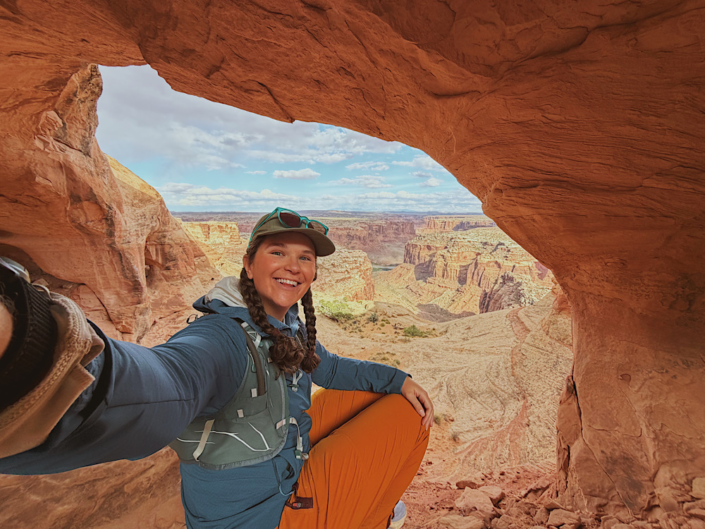
AllTrails rates the Colonnade Arch hike as “easy,” but I felt that moderate would be a more accurate description. There is definitely route-finding required as well as some steep sandstone walking to get to the arch. It was not 200 feet of gain as AllTrails suggested. You walk up and down constantly on the way back to the parking lot via the sandstone.
➡️ Try the Grandstaff Canyon trail near Moab if you want a more front-country experience that’s also dog-friendly with a year-round creek.
What the Hike to Colonnade Arch is Actually Like
The Colonnade Arch hike is located in the Labyrinth Canyon Wilderness Area, well-known for its rafting on the Green River. You can bring dogs to Wilderness Areas but no bikes or drones (nothing motorized or mechanical are allowed in Wilderness Areas).
➡️ Mary Jane Slot Canyon is another dog-friendly hike near Moab. Easier to access than Colonnade Arch, and features very refreshing water hiking in warmer months.
At the trailhead, you’ll see a sign labeled “Labyrinth Canyon Wilderness” and rocks outlining the acceptable parking area. There are some established campsites off the road before you reach the trailhead if you’re looking to stay the night nearby. As always, please Leave No Trace while camping and hiking. Pack out all trash and human waste.
Starting the Colonnade Arch Hike
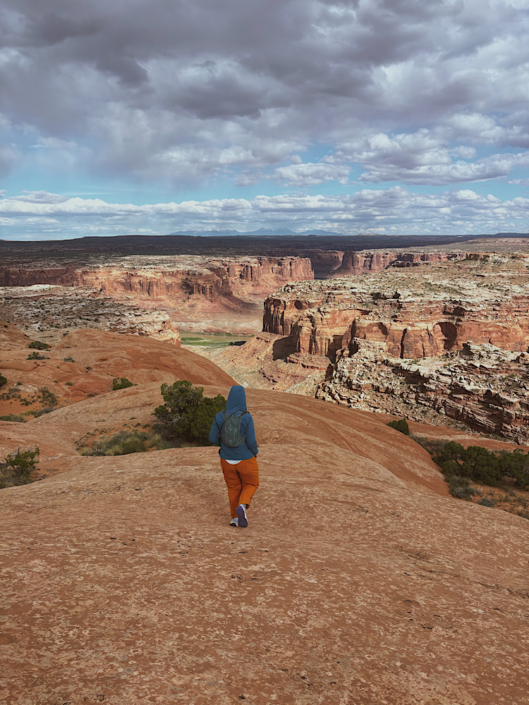
Clearly, at one point, cars drove in what is now designated wilderness, as the first part of the loop follows an old two-track trail. This is the easiest part of the hike to follow, just use the tracks! Some cairns help guide you after leaving the two-track.
AllTrails technically doesn’t include the spur out to the arch on its 2.3-mile official trail, so I tracked around 2.6 miles total. You’ll see a camera icon on the AllTrails map at the end of the spur; that’s where Colonnade Arch is.
Route-Finding and Terrain Changes
From the two-track, Colonnade Arch was easy enough to find. I did reference my map and the cairns. It’s slightly around a corner that you must descend a bit to get there. Have grippy shoes to walk up and down the slickrock.
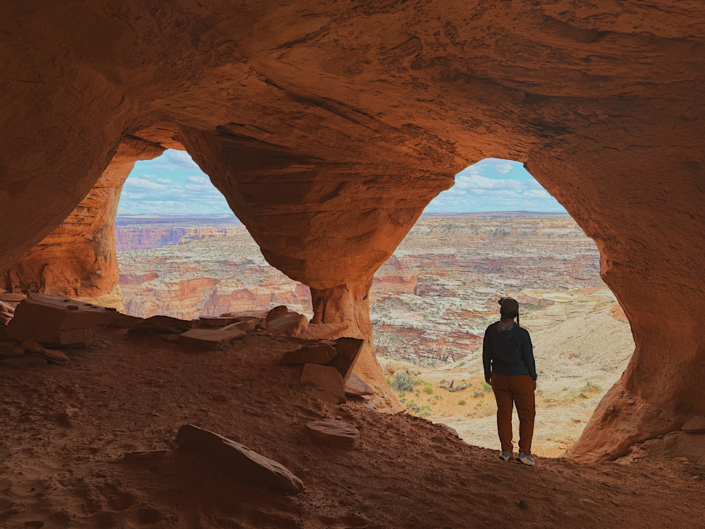
The scale of Colonnade Arch (or should I say archES) doesn’t completely come into view until you’ve fully rounded the corner. It is massive. My jaw dropped at the sight. I had no idea what was back here and hadn’t seen any pictures beforehand. There’s a reason it’s also called Five Hole Arch.
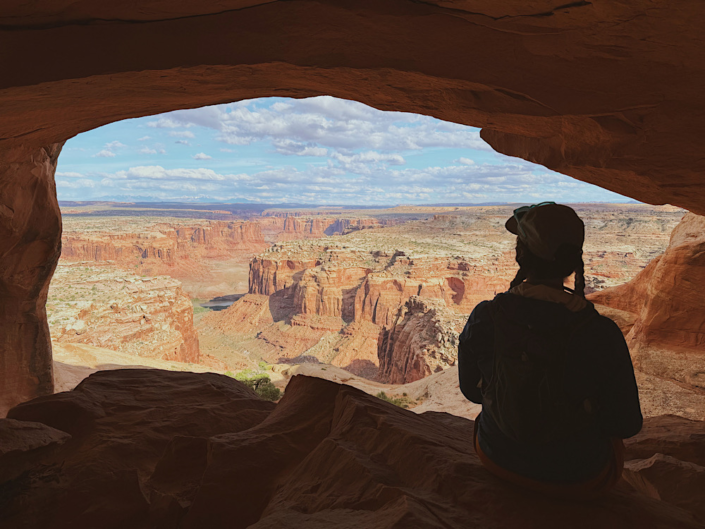
For the best vantage point and to appreciate the arches’ scale, scramble up inside. Look out at the Green River and La Sal mountains through the various window arches. I could have spent hours taking pictures and admiring the way the light filters in from the ceiling and sides of this impressive formation. Take your time to explore all parts of Colonnade Arch.
Now you understand why it’s called “Colonnade.” The vertical columns hold up the top section of rock. It’s like there are separate rooms to wander in.
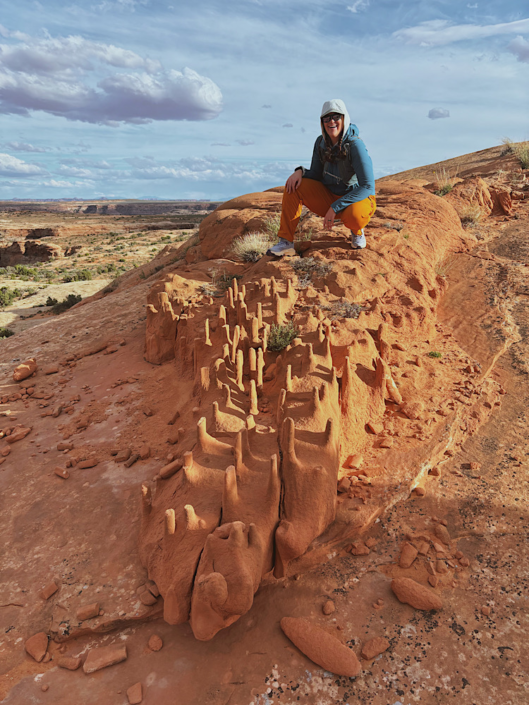
Don’t Miss Crocodile Rock
After thoroughly exploring Colonnade Arch, pick your own adventure and meander over to Crocodile Rock. I’m warning you, this wasn’t easy to find. In fact, some reviewers on AllTrails reported never finding it.
This is where the “trail” becomes nonexistent, and you really need to rely on the map. Hiking on slickrock doesn’t leave footprints to follow. We hiked up and down several rocky bumps until Crocodile Rock finally came into view. It really does resemble a Crocodile.
Please don’t touch the spires on its back and leave them for others to marvel at. There was a smattering of broken pieces on the ground around the Crocodile. I’d like to believe that was purely erosion, but some people feel the need to leave their mark. Be a kind and respectful human.
After hiking uphill for a while, reconnect with the loop and find your way back to the parking lot.
Things to Know Before You Go
This is a remote area with no cell service or amenities. There isn’t a pit toilet at the Colonnade Arch trailhead. Come prepared with a downloaded trail map and pack out all trash.
You won’t find a lick of shade as you’re hiking. It can get quite hot in the summertime as the heat reflects off the rocks, essentially baking you. Even though this hike was short, I still brought water with me.
I’d plan enough time to hike to the arch, but also build in time to explore more of the slickrock surroundings on your way back. Avoid stepping on cryptobiotic soil and stick to hiking on the sandstone. Keep your eyes peeled for additional small arches. Again, I could have spent all day on this one trail just admiring the hidden features and vistas.
Do You Need 4WD for Colonnade Arch?
You don’t necessarily need 4WD to reach Colonnade Arch in dry conditions, especially from the Green River direction. However, road conditions can change quickly after rain, so high clearance is recommended. Always check conditions before heading out.
Is Colonnade Arch Worth the Effort?
If you relish solitude, route-finding, breathtaking views, and remote experiences, then Colonnade Arch is for you.
If you’re a beginner hiker, I’d recommend checking out Goblin Valley State Park or Horseshoe Canyon, as the route finding in those areas isn’t as extensive.
Tips for Visiting Colonnade Arch
I’d recommend camping nearby, either before or after exploring the arch, so you’re not driving 80+ miles of dirt road in one day. There’s much to see and do along this road from either direction, so definitely consider planning a longer trip than just visiting Colonnade Arch.
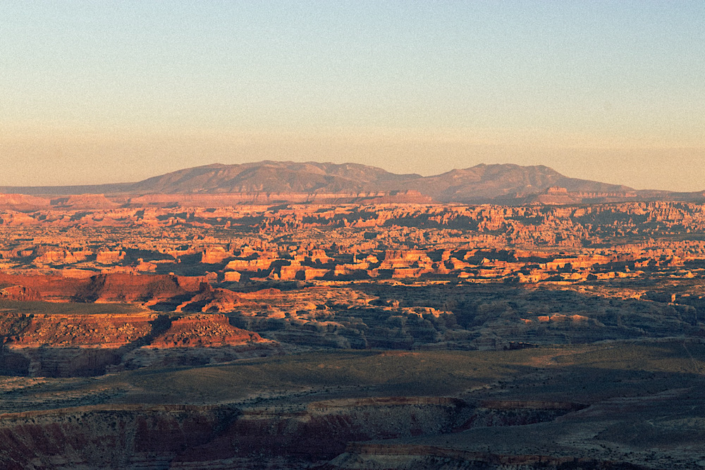
View from Panorama Point in the Maze District
Other Nearby Spots to Check Out
- The Canyonlands Maze District
- Panorama Point
- The Maze Overlook
- Horseshoe Canyon
- Goblin Valley State Park
- The Goblin’s Lair
- The San Rafael Swell
- Little Wildhorse Canyon
➡️ What is it like in the Canyonlands Maze District? Find out by reading my first-hand account of this difficult journey.
📌 Pin this image on Pinterest to save this post for reference.
FAQs About Colonnade Arch
Do you need 4WD to get to Colonnade Arch?
4WD isn’t always required in dry conditions, especially from Green River, but high-clearance is recommended. Roads can become impassable when wet.
Is Colonnade Arch hard to find?
Yes, route-finding is required. The trail is not well marked, and the AllTrails map should be used as a guide rather than a strict path.
Is the Colonnade Arch hike difficult?
The hike is moderately difficult due to slickrock navigation, elevation changes, and lack of a defined trail.
Can beginners hike to Colonnade Arch?
It’s not ideal for beginners due to route-finding and terrain. More straightforward hikes nearby in Horseshoe Canyon and Goblin Valley.
Is Colonnade Arch worth visiting?
Yes—if you enjoy remote hikes, solitude, and unique rock formations, Colonnade Arch is absolutely worth the effort.