What Not to Bring Backpacking: 19+ Items to Leave Behind
Ever wondered about what NOT to bring backpacking? Leave all the items on this list at home to save weight and space in your pack.
As a new (or even experienced) backpacker, it can be tempting to bring extra things “just in case.” I packed more than I needed a fair share of times, and by the end of the trip, I always regretted bringing certain items.
➡️ Get my comprehensive list of gear to bring backpacking.
After years of backpacking, I’ve dialed in my gear and said goodbye to an overstuffed pack. Once I started carrying only what I truly needed, I realized all the unnecessary backpacking gear was just weighing down my pack for no reason. I didn’t need a bunch of stuff to be comfortable.
➡️ Learn how to create your own ultralight backpacking hygiene kit. No more full-sized toiletries!
Now, this list of what not to bring backpacking applies to trips of five days or less. If you’re backpacking for a week or two, you might want some of these items. I’ve found that, for a few nights, you can get away with much less than you think.
Prepare to lighten your load and follow this list of what not to bring backpacking.
Disclosure: This post may contain affiliate links. If you purchase through these links, I may earn a small commission at no extra cost to you. I only recommend products I’ve personally used, tested, and genuinely love. Thank you for supporting Emma Gets Outside!
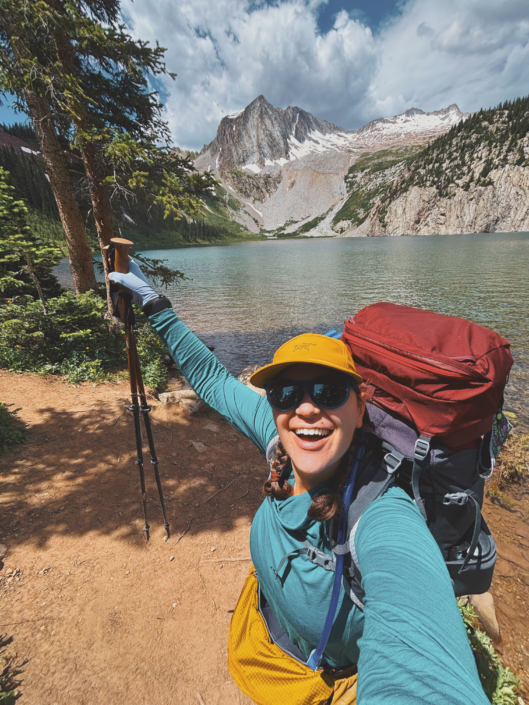
Clothing Not to Bring Backpacking
It’s really easy to throw an extra shirt or two in your bag. Many beginner backpackers pack far more clothing than they actually need. Trust me, once I started bringing fewer clothes, I didn’t understand why I had packed so many in the first place.
An Extra Shirt and Bra
When I started backpacking, I brought at least two hiking shirts, plus sometimes two bras. Then I switched to a merino hiking shirt and bra, and everything changed.
When I wore a synthetic-blend shirt for multiple days in a row, it started to smell less than pleasant by the end of day one or two. By day four or five, it was unbearable. A merino hiking shirt allows sweat to evaporate and naturally resists trapping odors.
➡️ Learn everything about why merino wool hiking clothes are superior.
I can now wear the same merino hiking shirt for five days without wanting to throw it away by the end of the trip. The same goes for bras. Peeling off a sweaty bra at the end of the day and putting it back on in the morning to sweat in it again made me cringe a bit.
Then, I invested in a merino bra and never looked back. I can happily wear my Branwyn bra for a week, and it stays much fresher than any synthetic or cotton bra.
An Extra Pair of Pants and Shorts
As a first-timer, I brought two pairs of pants for just a one-night trip. I would also pack a pair of shorts if the weather was warm. Now, I stick to one pair of sturdy zip-off hiking pants for trips of five days or less.
Don’t waste weight and space on another piece of clothing when you can wear one piece that does double duty. Zip-off hiking pants are a versatile addition to any outdoor wardrobe.
➡️ Struggling to find pants that fit a curvy body? Read my post about the best hiking pants for curvy women.
An Extra Pair of Shoes
I used to bring a pair of “camp shoes” to change into after a day of hiking. After a few times of hauling Chacos up long and rough trails, I decided they weren’t worth the weight. If your shoes or boots are so uncomfortable that you can’t wait to get them off when you get to camp, there might be another issue there.
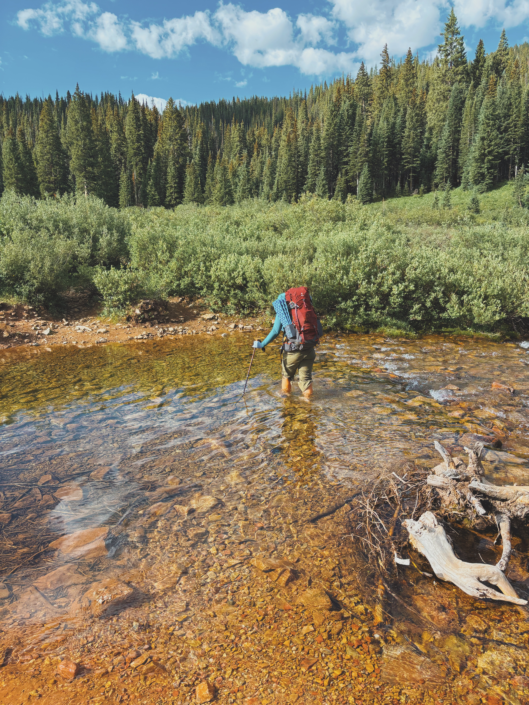
What about water crossings? Yes, it can be nice to have a pair of sandals for water crossings, but again, the cost doesn’t outweigh the benefit for me. I’ve crossed my fair share of streams barefoot.
➡️ I didn’t bring extra shoes for backpacking Four Pass Loop in Colorado.
Or, if I want more grip, I’ll cross while still wearing my trail runners. Non-waterproof trail running shoes are designed to dry quickly and allow water to flow in and out. Obviously, waterproof boots or shoes do the opposite.
If you cross a stream while wearing waterproof boots, you’ll find yourself dumping out the lake of water they collected afterwards. Plus, they won’t dry nearly as fast, leaving you with soggy socks the rest of the day.
Don’t Bring a Swimsuit Backpacking
A dip in an alpine lake or cool stream can be irresistible on a hot summer day. Instead of packing a swimsuit, a merino bra and underwear serve the same purpose. Merino dries quickly and can be ready to wear the next day.

Gear Not to Bring Backpacking
Everyone has their own gear kit they swear by. These are a few common backpacking items to leave behind.
Inflatable Lantern
On my first several backpacking trips, I brought a little inflatable lantern to hang in my tent. Once I realized, though, that my headlamp served the same purpose, the lantern became extra weight to ditch. An inflatable lantern can be fun to bring camping, but on a backpacking trip, a headlamp works just fine.
Paper Map and Compass
Let’s be honest here. If you were really lost, could you find your way with a paper map and compass? How often do you embark on a trail so difficult to follow that you get helplessly turned around?
I’m not saying don’t be prepared, just that I don’t think these items come in as handy as you might think. Study a map before you start hiking any trail. Know where path splits are and where to expect them. Download a map to your phone or GPS device. Relying on technology as a backup isn’t the end of the world.
➡️ Wondering what items should be on your day hike packing list? See my post for more details.
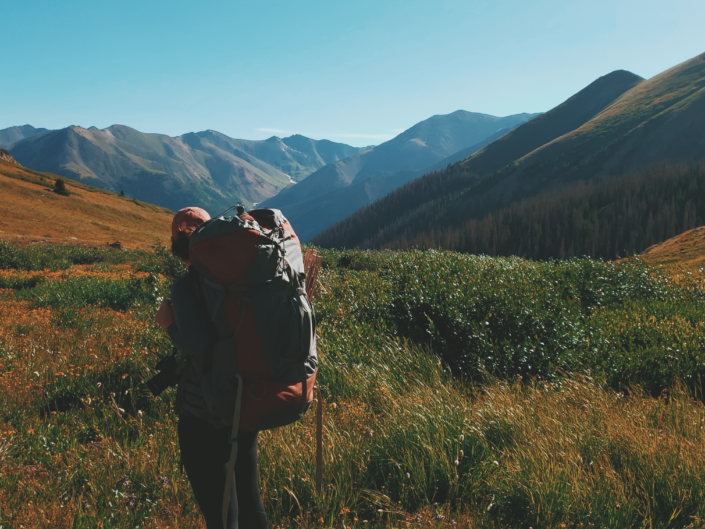
A lot has changed since my first backpacking trip in 2019. I shoved my rented 100 L pack so full.
Battery Pack and Chargers
This might be controversial and totally depends on your usage. When I’m backpacking, I turn my phone to airplane mode, low battery mode, AND fully shut it down whenever I am not using it.
Even with an older phone, a single charge lasts for days, and I don’t need to bring a battery pack. I mostly use my camera to take pictures, and sometimes I never turn my phone on at all on the trail.
When I had an Apple Watch, I would bring a battery pack and charger to juice it up overnight. The battery would hardly last a whole day if I were tracking a hike, sometimes dying before I reached camp.
When I switched to a Garmin Watch, this problem no longer occurred. I can track hours of hiking across multiple days in a row on a single charge with my Garmin Enduro 3.
Too Many Stuff Sacks
Not everything needs to be in a bag in your pack. I get it, staying organized on a backpacking trip helps keep me sane, but too many stuff sacks and tiny bags add up to significant weight.
I use a compression sack for my sleeping bag, a bag for my inflatable sleeping pad, a sack for hanging food, and a tiny ultralight dry bag for toiletries.
My clothes get stuffed around larger items, filling out the bag. I used to bring a stuff sack for clothing, but the weight distributes better when things are dispersed throughout.
Do Not Bring Your Wallet
Don’t pack your entire wallet, including all your credit cards, into your backpacking bag. I choose to bring my driver’s license, one credit card, and maybe some cash with me on the trail. One time, a friend lost his wallet on the trail and had to replace everything in it.
Leave your wallet at home or lock it in your car. The last thing anyone wants to do is spend time calling credit card companies and replacing important documents.

Kitchen Items Not to Bring Backpacking
My backpacking kitchen setup consists of a JetBoil for boiling water, a lightweight mug, a double-sided spoon and fork, and a water filter. That’s it. I eat backpacking meals right out of the bag. If I want something in a hard-sided container, I’ll use my mug for drinks or as a bowl.
Unnecessary Backpacking Kitchen Gear:
- Fork, knife, and spoon kit — These look super cute, but aren’t very practical
- Bowls and plates — Not very useful, and you have to clean them
- Dish soap — Cleaning my mug and spork with warm water is all I ever need
- Heavy insulated mug — Get a backpacker’s mug
Oversized Propane Canister
If you’re going on a short backpacking trip, you likely don’t need a huge propane canister. Even a small canister can last multiple trips for two people.
Toiletries Not to Bring Backpacking
Over the years, my backpacking toiletry kit has evolved immensely. I started out packing full tubes of toothpaste and sunscreen, and now I bring a fraction of that.
Full-size Toiletries
You don’t need full-size toiletries on a short backpacking trip. Even travel-sized toiletries are often too much. Instead, I’ve devised a system for backpacking toiletries that I’ll share in my post about backpacking hygiene.
Toiletry Bag
I used to bring a tiny toiletry bag for all my toiletries. It helped organize my jumble of items, but when I started packing less, the bag weighed more than the items it contained. Now, I use a 3 L ultralight dry bag, and that does the trick.
Don’t Bring a Whole Roll of Toilet Paper Backpacking
Do bring some toilet paper (and don’t forget to pack it out), but you really don’t need the entire roll. Do I need to say more?
📌 Pin this image on Pinterest to save this post for reference.