Best Moisture Wicking Hiking Clothes: Why I Wear Merino
Good moisture wicking hiking clothes can make the difference between feeling comfortable on the trail and spending the rest of your hike in a damp, sweaty shirt.
After years of hiking, backpacking, skiing, and camping in everything from synthetic shirts to merino wool, merino has become the fabric I reach for most often.
I especially notice the difference on multi-day backpacking trips. I used to hike in synthetic shirts, but after several days, the smell was awful. Now I usually bring just one merino shirt for hiking and another for sleeping, and I can wear the same hiking shirt for days without feeling gross.
Merino isn’t necessarily the best choice for every piece of outdoor clothing, but for anything sitting directly against my skin: shirts, base layers, underwear, bras, and socks, it’s hard to beat.
In this guide, I’ll explain why I prefer merino wool for hiking, when synthetic fabrics can actually be the better choice, and the moisture wicking hiking clothes I personally use.
Disclosure: This post may contain affiliate links. If you purchase through these links, I may earn a small commission at no extra cost to you. I only recommend products I genuinely believe are worth considering. Thank you for supporting Emma Gets Outside!

Why Merino Wool Works So Well for Hiking
There are plenty of moisture-wicking fabrics designed for outdoor clothing, and synthetic materials like polyester and nylon can work extremely well. But after trying both, I prefer merino wool for most of the clothing that sits directly against my skin.
Here’s why.
Merino Wool Handles Sweat Well
Sweating while hiking is inevitable, especially when you’re climbing uphill with a backpack against your back.
Merino wool helps move moisture away from your skin while remaining breathable, which makes it much more comfortable than hiking in something like cotton.
Cotton can absorb a lot of moisture and take a long time to dry. That’s uncomfortable on a hot day, but it can become a bigger problem when temperatures drop and you’re still wearing damp clothing.
This is one of the reasons I avoid cotton for serious hikes and backpacking trips.
Merino Wool Works Across a Huge Range of Temperatures
One of my favorite things about merino is its versatility.
I’ve worn lightweight merino while hiking in the desert and thicker merino base layers while skiing and winter hiking in Colorado. The key is choosing the appropriate fabric weight for the conditions.
Lightweight merino is breathable enough for warm-weather hiking, while heavier merino makes an excellent base layer when temperatures drop.
That also makes merino especially useful in the mountains, where temperatures can change dramatically throughout the day.
Merino Doesn’t Get Stinky Nearly as Fast
This is probably the biggest reason I became a merino convert.
On my first multi-day backpacking trip, I wore a synthetic hiking shirt. By day three, it smelled so bad that I never wanted to backpack in it again.
Once I switched to merino, the difference was dramatic.
I routinely wear the same merino hiking shirt for several days on backpacking trips. It won’t magically stay pristine forever, but in my experience, merino develops noticeably less odor than the synthetic shirts I’ve used.
That’s why I usually pack just one hiking shirt and one sleeping shirt for a multi-day backpacking trip. Packing clothing this way is also one of the easiest ways I avoid carrying unnecessary weight. Something I talk about more in my post what not to bring backpacking.
➡️ Planning an overnight trip? Check out my complete gear to bring backpacking guide for everything else I pack.

Best Moisture Wicking Hiking Clothes I Actually Wear
I don’t think you need an entirely merino hiking outfit from head to toe. Instead, I prioritize merino for the pieces that sit closest to my skin and are most likely to get sweaty.
These are the types of merino hiking clothes that have earned permanent spots in my outdoor wardrobe.
Moisture Wicking Hiking Shirts
If I could only choose one merino item for hiking, it would probably be a shirt.
I generally prefer long-sleeve hiking shirts with a hood, especially when I’m hiking at high elevations or in the desert. Covering my arms, shoulders, and neck gives me additional sun protection without constantly reapplying sunscreen everywhere.
➡️ A good hiking shirt is just one part of what I carry on the trail. My day hike packing list covers the clothing, safety gear, water, food, and other essentials I bring with me.
Smartwool Active Ultralite Hoodie
The Smartwool Active Ultralite Hoodie is one of my favorite shirts for hot, exposed hikes. It’s extremely thin and lightweight, so this is the merino hoodie I tend to grab when I’m hiking in the desert.
It isn’t the most durable merino shirt I own. Mine developed a small hole underneath one arm from regular wear, but I still use it and would buy another because I like the fabric and performance so much.
Best for: Hot-weather hiking, desert hiking, exposed trails, and anyone who wants a very lightweight long-sleeve layer.
Melanzana Merino Base Hoodie
When temperatures are cooler, I love my Melanzana Merino Base Hoodie.
It’s heavier than my Smartwool Ultralite Hoodie, which makes it better suited to mountain hiking, backpacking, and climbing Colorado 14ers. I also like it when I know I’ll be hiking through changing temperatures.
Melanzana is based in Leadville, Colorado, and most of its clothing requires an appointment to shop in-store, although availability varies by product.
Best for: Mountain hiking, backpacking, cool weather, and shoulder-season adventures.

Merino Wool Base Layers
Once temperatures drop, I switch from lightweight hiking shirts to heavier merino base layers.
Unlike a hiking sun hoodie, I generally prefer my cold-weather base layers without a hood. They’re easier to stack underneath fleeces, jackets, and other winter layers without adding bulk around my neck.
➡️ Read my cold weather hiking tips to stay comfy on the trail.
Smartwool Classic Thermal Merino Base Layer
The Smartwool Thermal Merino Base Layer is one of the merino tops I reach for when I’m skiing, camping, or spending time outside in colder weather.
It has a closer fit that works well underneath a fleece or insulated jacket. If you prefer a looser-fitting base layer, I’d consider sizing up.
I also like packing a warmer merino top specifically for sleeping when I’m backpacking or camping at high elevations.
Best for: Skiing, cold-weather hiking, camping, and layering.
➡️ I use merino throughout the winter. See everything else I bring in my Ski Trip Packing List.
Merino Wool Base Layer Bottoms
Merino isn’t just useful on your upper body. I also wear merino base layer bottoms for skiing, winter activities, and sleeping while camping in cold weather.
My Smartwool Classic Thermal Merino Base Layer Bottoms are my favorite for sleeping during high-alpine or cold-weather camping trips. They’re warm and comfortable enough that they’ve basically become my cold-weather camping pajamas.
For skiing, I prefer my Smartwool Intraknit Thermal Merino Base Layer Bottoms because they’re slightly thinner and stretchier. I can also roll them up above my ski boots so I don’t have extra fabric bunching around my lower legs.
Merino Wool Underwear and Hiking Bras
Merino underwear was one of those upgrades I didn’t realize I needed until I tried it.
I now wear merino underwear for hiking, backpacking, traveling, and skiing because it handles sweat much better than the cotton underwear I used to wear.
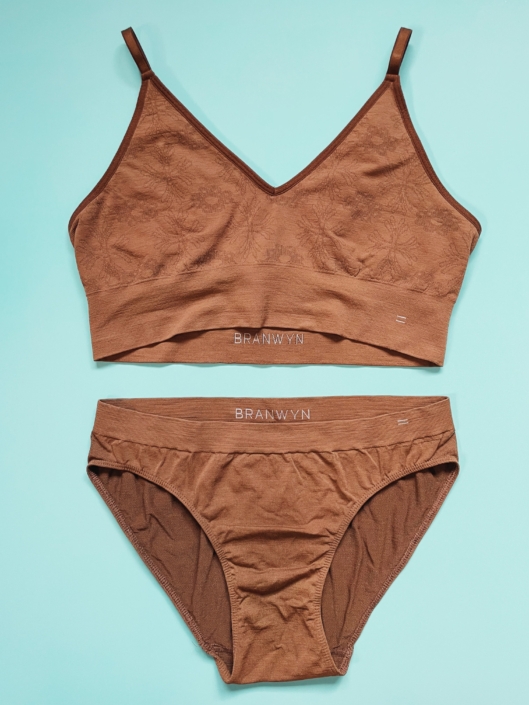
Branwyn Essential Bralette
After trying and returning several hiking bras, I finally landed on the Branwyn Essential Bralette.
It’s comfortable enough that I barely notice I’m wearing it, and it’s currently the only bra I pack for backpacking trips.
I’m between sizes and personally prefer sizing up in Branwyn’s bras and underwear.
Branwyn Essential Bikini
The Branwyn Essential Bikini has also become one of my favorite pieces of hiking underwear.
It helps prevent that damp, sweaty feeling on long hikes, but one of the unexpected benefits has been winter warmth. My bum used to get so cold sitting on ski lifts. Merino underwear has genuinely made chairlift rides more comfortable.
Best for: Hiking, backpacking, skiing, and travel.
Merino Wool Hiking Socks
I honestly can’t remember the last time I went hiking in cotton socks.
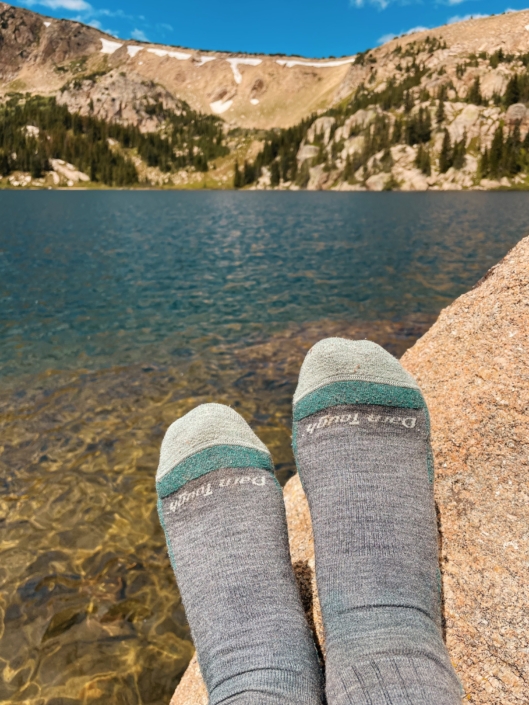
I’ve worn both Smartwool and Darn Tough socks across different weights and styles, and merino is now my default for hiking, backpacking, and skiing.
They’re especially helpful when my feet get damp. If I’m crossing a shallow creek, I don’t always bother taking off my trail runners and socks because I’d rather keep moving and let everything dry afterward.
For most hiking, I prefer some cushioning underneath my feet. I also match the height of my socks to my shoes: micro-crew or crew socks with hiking boots and shorter socks with trail runners.
My most-used options are:
- Darn Tough Hiker Micro Crew Cushion Socks — my all-around choice for hiking boots.
- Darn Tough Light Hiker Socks — a lighter option for warmer hikes.
- Smartwool Light Cushion Ankle Socks — another brand I’ve put plenty of miles on and regularly keep in my rotation.
Merino Accessories for Cold Weather
I don’t think every hiking accessory needs to be merino, but there are two that I use regularly in winter.
The Smartwool Thermal Merino Reversible Headband keeps my ears warm without making my head feel as hot as it does when I hike in a beanie.
I also use a lightweight merino Buff around my neck while skiing, winter camping, and hiking in cold or windy conditions. It’s an easy layer to pull over my neck and face when the wind picks up.
Merino Wool vs Synthetic Moisture Wicking Hiking Clothes
Merino wool isn’t the only good fabric for hiking.
Synthetic materials such as polyester and nylon can also wick sweat effectively, and there are situations where I actually prefer them.
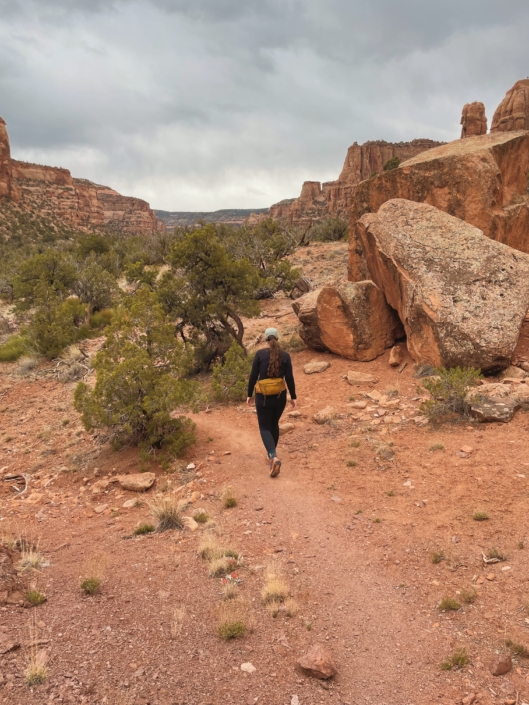
Merino wool is my preference when I care most about odor control, temperature regulation, and comfort against my skin. That’s why I especially like it for backpacking, base layers, underwear, and socks.
Synthetic clothing makes sense when I want something extremely lightweight, quick-drying, durable, or less expensive. I still own and hike in synthetic clothing, particularly during day hikes when odor isn’t much of a concern.
➡️ My favorite hiking shorts and pants are synthetic. If you’re a curvy woman and need bottoms recommendations, see my gear guides on hiking pants and hiking shorts.
Merino can also be more delicate. My ultralight Smartwool hoodie developed a small hole through normal use, while many of my synthetic hiking shirts have taken considerably more abuse.
For me, the decision usually comes down to the trip:
Day hiking: Merino or synthetic
Hot-weather hiking: Lightweight merino or synthetic
Backpacking: Usually merino
Cold weather: Merino base layers
High-abrasion activities: Often synthetic or a merino blend
I don’t think you need to replace every synthetic piece in your closet with wool. I certainly haven’t.

How to Choose Merino Wool for Hiking
Not all merino clothing feels or performs the same. One of the most important things to look at when shopping is the fabric weight, which is commonly measured in grams per square meter (gsm).
As a general guideline:
- Around 150 gsm: Lightweight and best suited to warm weather, high-output activities, and summer hiking.
- Around 180–200 gsm: A versatile middle ground for hiking, backpacking, and layering.
- Around 250 gsm: Warmer and better suited to winter activities and cold-weather base layers.
These aren’t rigid rules. How warm you run, the weather, wind, sun exposure, and what you’re layering over the garment all make a difference.
I also pay attention to fabric blends. A garment doesn’t have to be 100% merino wool to be useful. Adding synthetic fibers can improve stretch and durability while still retaining many of the qualities I like about merino.
For lightweight hiking shirts in particular, that extra durability can be worthwhile.
Is Merino Wool Worth the Price?
Merino wool hiking clothes aren’t cheap, and I don’t think you need to build an entirely new wardrobe at once.
If you’re trying merino for the first time, I’d start with the items where you’ll notice its benefits the most.
For hiking, I’d prioritize a good shirt and socks. For backpacking, I’d add merino underwear because you’re wearing the same clothing for much longer. And for skiing or winter hiking, a merino base layer is one of my favorite upgrades.
I’ve owned some of my merino pieces for years, so I’m willing to pay more for items I know I’ll wear repeatedly.
At the same time, merino isn’t indestructible. Lightweight wool can develop holes faster than durable synthetic fabrics, so I wouldn’t buy it expecting every piece to last forever.
For me, the comfort and odor resistance make the higher price worthwhile, especially for backpacking and multi-day trips.
➡️ You can find more products I’ve personally used in my Favorite Outdoor Gear guide.
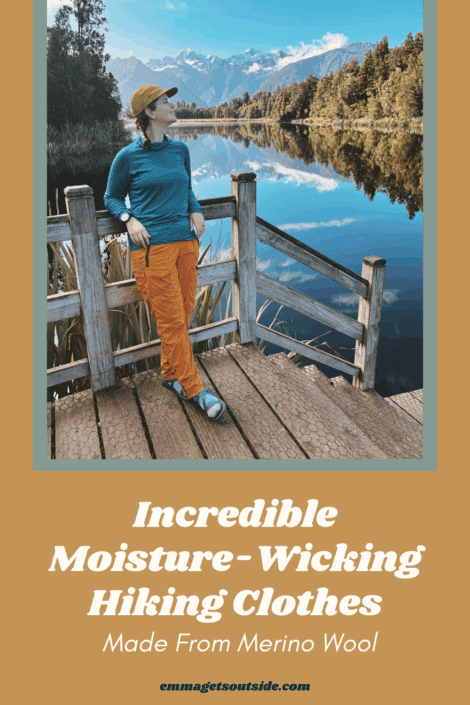
📌 Pin this image on Pinterest to save this post for reference.
Moisture Wicking Hiking Clothes FAQs
What is the best moisture wicking material for hiking?
There isn’t one material that’s best for every situation. Merino wool and synthetic fabrics such as polyester and nylon can both work well for hiking.
I personally prefer merino for shirts, base layers, socks, and underwear because of its comfort, temperature regulation, and odor resistance. Synthetic fabrics can be a better choice when durability, fast drying, or price is the priority.
Is merino wool good for hiking?
Yes. Merino wool is one of my favorite materials for hiking because it handles moisture well, works across a wide range of temperatures, and doesn’t develop odor as quickly as many synthetic garments I’ve worn.
The key is choosing an appropriate fabric weight for the conditions.
Is merino wool good for hot-weather hiking?
Lightweight merino can work extremely well in hot weather. I personally wear an ultralight merino hoodie for desert hiking because it’s lightweight and gives me additional coverage from the sun.
For especially hot conditions, look for lightweight merino or a merino blend rather than a heavy base-layer fabric.
Is merino wool or synthetic better for hiking?
Both can be excellent hiking fabrics. I tend to choose merino for backpacking and trips where I’ll wear the same clothing repeatedly because odor resistance matters more. Synthetic clothing can be excellent for day hikes and situations where I prioritize durability and quick drying.
Does merino wool smell after hiking?
Eventually, yes. No hiking shirt stays fresh forever.
However, I’ve found that my merino shirts develop significantly less odor than the synthetic shirts I’ve worn on multi-day backpacking trips. That’s why I can usually bring one merino hiking shirt for several days on the trail.
How many merino shirts do I need for backpacking?
I normally bring one merino shirt for hiking and one shirt for sleeping on a multi-day backpacking trip.
Wearing the same hiking shirt for several days saves space and weight in my pack, while keeping a separate sleeping shirt gives me something clean and dry to change into at camp.