Merino Wool Hiking Socks: My Practical Buying Guide
Merino wool hiking socks are one of those small gear upgrades that make a surprisingly big difference on the trail.
A good pair of hiking socks doesn’t get nearly enough credit. Once you start shopping for merino wool hiking socks, you’ll quickly run into different weights, cushion levels, heights, and fabric blends. It’s not always obvious which ones you actually need.
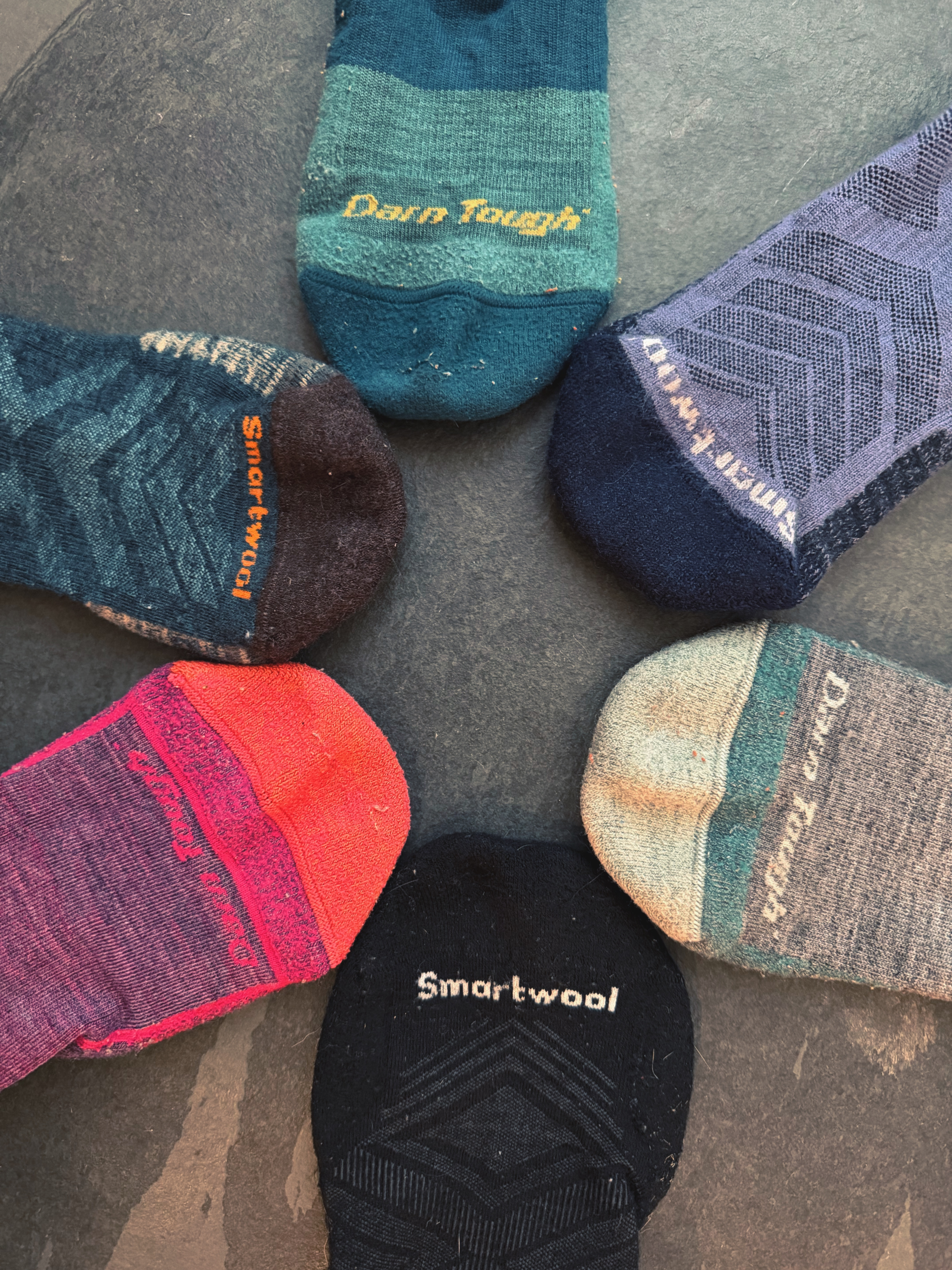
I wear merino socks year-round, from hot desert hikes to cold mountain mornings, and I’ve built up quite a collection from Darn Tough, Smartwool, and REI.
I’ll break down the differences I’ve noticed, share the socks I actually wear, and help you figure out which weight, cushion, and height will work best for your hiking.
Disclosure: This post may contain affiliate links. If you purchase through these links, I may earn a small commission at no extra cost to you. I only recommend products I genuinely believe are worth considering. Thank you for supporting Emma Gets Outside!
Merino Wool Hiking Sock Quick Picks
Not sure where to start? These are my top picks based on how and where you’re hiking:
- Best for Hiking Boots: Darn Tough Micro Crew Midweight with Cushion
- A versatile midweight sock with extra coverage that’s comfortable in hiking boots most of the year.
- Best for Trail Runners: Smartwool Hike Light Cushion Ankle Socks
- Soft, stretchy, and fully cushioned without the extra height of a crew sock.
- Best for Hot Weather: Darn Tough Run Quarter Ultralightweight with Cushion
- My pick when I want the lightest sock possible without giving up cushioning.
My Favorite Merino Wool Hiking Socks
I’ve owned all of my Darn Tough and Smartwool socks for at least a year, with many pairs much longer. More recently, I tried a pair of REI merino wool socks to see how they compare.
Over the years, I’ve experimented with different heights, weights, and cushion levels. Some have become everyday favorites, while others only come out for hot summer hikes or cold winter days.
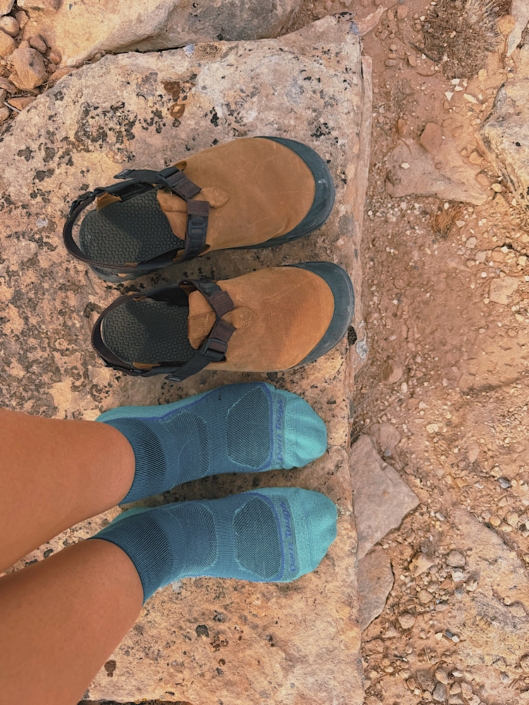
Darn Tough Hiking Socks
Darn Tough was one of the first brands I tried when I switched to merino wool hiking socks.
Darn Tough Crew & Micro Crew Socks
Micro Crew Midweight with Cushion
59% Merino Wool, 39% Nylon, 2% Lycra Spandex
The Darn Tough Micro Crew are some of the first merino wool hiking socks I ever bought. I’ve worn them with hiking boots and trail runners alike.
The midweight construction works well for me most of the year, although I prefer a lighter sock when I’m hiking in the desert or other warm environments.
Light Hiker Micro Crew Cushion
54% Nylon, 43% Merino Wool, 3% Lycra Spandex
I actually didn’t realize these were mostly nylon until I checked the fabric content for this post! I have a pair that I like to use for summer hiking. If you prefer a higher sock but don’t want the thickness of a midweight hiking sock, these are a good option. Even though they’re lightweight, the cushion is still noticeable.
Boot Socks Midweight Full Cushion
69% Merino Wool, 27% Nylon, 4% Lycra Spandex
These are too warm for me for most hiking. I prefer them for snowshoeing, as camp sleep socks, or for casual wear on a cold winter day.
They are thick, noticeably thicker than the Micro Crew socks with cushion. If you live somewhere cold or tend to have cold feet, these could work well. I wouldn’t choose them for high-output activities in hot weather.
Darn Tough Quarter Hiking Socks
Quarter Lightweight with Cushion
52% Nylon, 44% Merino Wool, 4% Lycra Spandex
These fall between the Hiker Midweight and the ultralight socks and are probably my favorite Darn Tough quarter-length sock. They’re very versatile for hiking in different weather conditions and comfortable enough for daily wear.
Hiker Quarter Midweight with Cushion
59% Merino Wool, 39% Nylon, 2% Lycra Spandex
These are essentially the same as the Micro Crew Cushion socks, just shorter. I love them for everyday wear and hiking in my trail runners.
They’re thick enough to keep my feet warm while starting a 14er before sunrise, but not so thick that I can’t wear them on warmer days.
Darn Tough Running Socks
Run Quarter Ultralightweight with Cushion
50% Merino Wool, 45% Nylon, 5% Lycra Spandex
These are the thinnest cushioned Darn Tough socks I own, and I reserve them mostly for hiking in hot weather. Even though they’re thin, they’ve held up well over the few years I’ve had them.
Quarter Ultralightweight Run Sock
53% Nylon, 40% Merino Wool, 7% Lycra Spandex
Personally, I like cushion in my socks, but if you want the benefits of merino wool without the extra bulk, these no-cushion running socks do the trick. They’re mostly nylon, but the 40% merino wool content still gives you some of wool’s benefits.
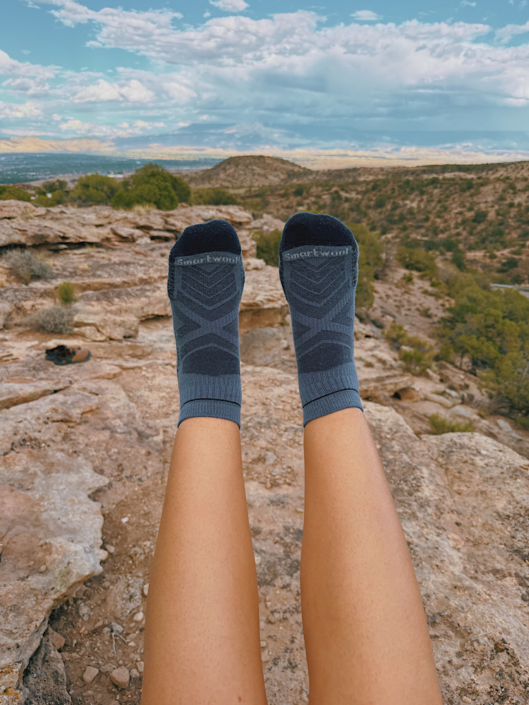
Smartwool Hiking Socks
Smartwool is the other brand I wear all the time. Compared with my Darn Tough socks, I find my Smartwool socks feel a little stretchier, and some styles have an especially soft, cushioned feel.
Smartwool Crew Hiking Socks
Hike Light Cushion Crew
58% Merino Wool, 33% Recycled Nylon, 6% Nylon, 3% Elastane
These have the same cushioned feel I like in the ankle version below, just in a crew height. I reach for the crew version when I’m wearing hiking boots or simply want more coverage.
Smartwool Ankle Hiking Socks
Hike Light Cushion Ankle Socks
57% Merino Wool, 35% Recycled Nylon, 6% Nylon, 2% Elastane
These are the cushiest-feeling socks I own, and they feel stretchier to me than my Darn Tough socks. If I could only wear one pair of socks for the rest of my life, these would be it.
Hike Targeted Cushion Ankle Socks
54% Merino Wool, 37% Recycled Nylon, 6% Nylon, 3% Elastane
These add cushioning around the heel and ball of the foot rather than across the entire bottom. I prefer full cushioning for long hiking days, but targeted cushioning is a nice option when you want less bulk.
Smartwool Running Socks
Run Targeted Cushion Ankle Socks
54% Merino Wool, 32% Recycled Nylon, 11% Nylon, 3% Elastane
These are very lightweight socks that I like to wear for daily use and hiking on warm days. The targeted cushioning adds a little extra padding without making the sock feel thick.
Run Zero Cushion Ankle Socks
47% Merino Wool, 50% Nylon, 3% Elastane
If you want a very lightweight sock and don’t care about cushioning, these are about as minimal as I would go. I personally prefer some cushioning under my feet, but these are a good option for hot weather or anyone who dislikes bulky hiking socks.
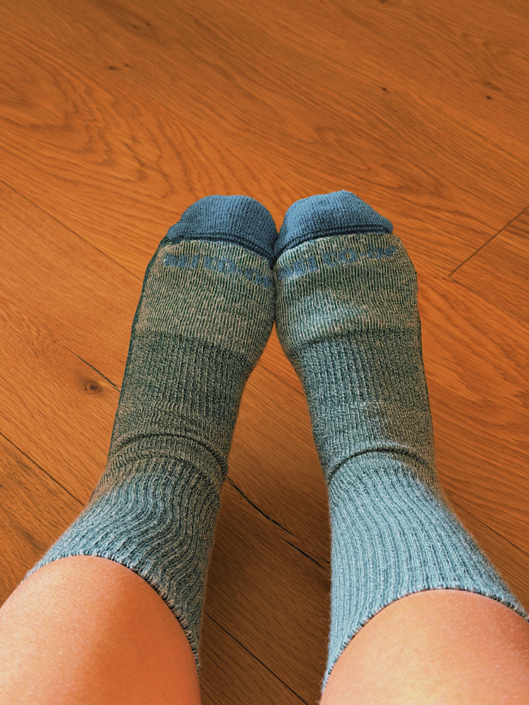
REI Merino Wool Hiking Socks
If you’re looking to save a few bucks, REI merino wool hiking socks are another option. I wouldn’t rank the pair I’ve tried as my favorite hiking socks, but if you’re buying multiple pairs, the savings can add up.
One thing that surprised me is how thick the Mountain Merino socks feel despite being labeled lightweight.
REI Crew Socks
Mountain Merino Wool Lightweight Crew Socks
72% Merino Wool, 26% Nylon, 2% Lycra Spandex
These feel much thicker to me than most of my Darn Tough and Smartwool socks. I’d say they feel more like my Darn Tough Boot Socks than the other brands’ lightweight cushioned hiking socks.
I’ll wear them for snowshoeing, camping, and with my casual boots during fall and winter, but I don’t see myself pulling them out for regular hiking very often.
REI Quarter Hiking Socks
Mountain Merino Wool Lightweight Quarter Socks
72% Merino Wool, 26% Nylon, 2% Lycra Spandex
These are essentially the shorter version of the Mountain Merino Lightweight Crew socks above. They have the same surprisingly thick feel, so although the quarter height works well with trail runners, I still prefer them for cooler conditions rather than hot-weather hiking.
Darn Tough vs. Smartwool Hiking Socks
I love both Darn Tough and Smartwool hiking socks, and honestly, the differences between them aren’t huge.
My Darn Tough socks tend to feel a little denser and less stretchy. I especially like their thicker socks for camping, backpacking, and colder weather.
My Smartwool socks feel softer, stretchier, and cushier. I prefer their full-cushion hiking socks, although they also offer targeted cushion options when you want less bulk.
I don’t think you can go wrong with either brand. I’d choose based on the weight, cushion, and height you prefer, not the brand name alone.
How to Choose Merino Wool Hiking Socks
When I first switched to merino wool hiking socks, I had no idea what the different cushion levels and fabric weights actually meant for my feet. I ended up buying several different styles over the course of years before figuring out what I liked.
Cushion vs. No Cushion
Cushion is a non-negotiable for me. I have fairly flat feet, which puts more pressure across the bottom of my foot, and I notice significantly less foot fatigue after a long hiking day when I wear cushioned socks. You might not like the bulk of the cushion, but for me, I only buy cushioned socks now.
Some socks also use targeted cushioning only under high-impact areas like the heel and ball of the foot. I prefer cushioning across the entire bottom of my foot, but targeted cushioning reduces some of the bulk.
Ultralightweight vs. Lightweight vs. Midweight Merino Socks
Ultralight: The thinnest socks I own. I prefer these for especially hot hikes and other times when I want minimal bulk.
Lightweight: My other go-to for warm-weather hiking. They offer a little more substance than ultralight socks without feeling overly warm.
Midweight: The most versatile option and probably where I’d steer someone who has no idea what they want.
I like both my lightweight and midweight socks. Just be aware that weights aren’t exactly consistent across brands; my “lightweight” REI socks feel more like my Darn Tough midweight socks.
Crew vs. Ankle Hiking Socks
Crew and micro crew socks work excellently with hiking boots, while I usually pair ankle or quarter socks with trail runners or hiking shoes. If you’re deciding between footwear styles, I break down the differences in my trail runners vs. hiking boots guide.
When I’m hiking in pants, I usually pick a taller sock, even when I’m wearing trail runners. They help keep my ankles cleaner and give them a little extra protection from brush along the trail.
When I’m hiking in shorts, I’m likely going to pick a shorter ankle sock.
How Should Hiking Socks Fit?
Hiking socks should be snug without constricting. You don’t want extra fabric bunching up when you walk. That can increase friction and contribute to blisters.
Always try your socks on with your shoes before embarking on a big hike. You don’t want to realize 3 miles in that your socks are making your shoes too tight.
Socks are easy to overlook when you’re getting your gear together. Check out my day hike packing list for everything else I bring on the trail.
When I buy new hiking boots and shoes, I make sure to wear the socks I like when I try them on. That way, I know they’ll fit properly.
Merino Wool Hiking Socks for Hot Weather
It surprises a lot of people that I wear wool socks year-round, even in the dead of summer. I don’t wear my thickest socks; that’s for sure. But I find lightweight merino comfortable even when I’m hiking in the desert.
Merino’s appeal isn’t just warmth. Moisture management, odor resistance, and comfort make lightweight merino useful in summer.
I tend to grab my lightweight socks with cushion or my ultralight running socks for particularly hot hikes.
Why I Hike in Merino Wool Socks
They Stay Comfortable When Wet
Wool keeps insulating when damp and doesn’t give you that soggy-cotton feeling. I’ve worn my merino socks on hikes when I’m literally walking in water.
Mary Jane Slot Canyon near Moab has a long section where you’re hiking continuously in Professor Creek. In late spring, the water wasn’t frigid, but not necessarily warm either. Even after spending so much time walking through the creek, my feet stayed comfortable in my merino socks.
Merino Wool Helps Manage Sweat
You know when you peel cotton socks off your feet after a long day in your shoes, and your feet feel damp? Yeah, that doesn’t happen to me anymore with merino wool socks. I don’t remember the last time I hiked in cotton socks.
Managing moisture can also help reduce some of the conditions that contribute to blisters. Funny enough, despite all the miles I’ve hiked, I’ve never really struggled with blisters. I can’t credit merino wool socks alone (I also make sure my hiking shoes fit properly), but wearing comfortable, moisture-wicking socks certainly doesn’t hurt.
I have an entire post about merino wool hiking clothes and how I wear them for backpacking, skiing, and day hikes. Backpacking in a merino sun hoodie is a game changer.
They’re Surprisingly Durable
I’ve had some of the same Darn Tough and Smartwool socks for five years and put some hard miles on them. I’ve eventually worn holes in a couple of pairs, but far fewer than I would expect considering how often I wear them.
Are Merino Wool Hiking Socks Worth It?
The initial sticker shock of merino wool hiking socks can deter some people. A single pair is not cheap compared to a six-pack of cotton socks.
I started out buying just a couple of pairs and grew my collection from there. It’s not like I went out and bought a full drawer of merino wool hiking socks in one go.
So for me, yes, they are worth it. When I consider how many years I’ve gotten out of some of my pairs, the cost is easier to justify.
Merino socks also make an excellent gift. Giving someone socks might sound stereotypically boring, but a really nice pair of merino hiking socks is different! I included them in my list of practical gifts for hikers because hikers will actually use them.
Men’s vs. Women’s Merino Wool Hiking Socks
I own both men’s and women’s merino wool hiking socks and haven’t noticed a meaningful difference for my feet beyond sizing. I’ve occasionally bought the men’s version simply because I liked the color better.
Rather than worrying too much about the label, check the brand’s size chart against your shoe size.
How I Wash My Merino Wool Hiking Socks
I don’t do anything special to wash my merino wool hiking socks. They go into the washing machine with the rest of my clothes and then into the dryer. I’ve never babied mine, although I still recommend checking the care instructions for your specific socks.
📌 Pin this image on Pinterest to save this post for reference.
Merino Wool Hiking Socks FAQs
What percentage of merino wool is best for hiking socks?
Merino wool hiking socks are usually a blend, not 100% wool. The socks I own range considerably in merino content, with nylon and elastane added for durability, stretch, and fit.
I wouldn’t choose hiking socks based on merino percentage alone. Some of my favorite socks actually have less merino than other pairs I own. I pay more attention to fit, cushion level, and whether the weight works for the conditions I’m hiking in.
Do you need to wear two pairs of socks when hiking?
One pair of properly fitting merino wool socks gives me all the comfort and moisture management I need.
Some hikers wear a thin liner sock under their hiking socks to help with friction or blisters, but I’ve never needed to.
How many pairs of hiking socks do you need for backpacking?
This depends on the length of your trip and how comfortable you are rewearing socks. For a short backpacking trip, you don’t necessarily need a fresh pair for every day because merino wool handles odor and moisture better than cotton.
I also like having a separate pair of thicker merino socks for sleeping at camp. Keeping my sleep socks dry means I always have something warm to change into at the end of the day.
Are merino wool socks itchy?
I don’t find my merino wool hiking socks itchy. Merino fibers are much finer than the wool you might associate with an old-fashioned itchy sweater, and all of the hiking socks I wear are blended with materials such as nylon and elastane.
Sensitivity varies from person to person, though, so try one pair before buying an entire sock drawer.
Do merino wool hiking socks shrink?
I haven’t had a noticeable problem with my merino hiking socks shrinking, even though I machine wash and dry mine with my regular clothes. Care instructions can vary by brand and individual sock, so check the label on your specific pair before washing and drying them.