Hiking in the Desert: Tips for Safety, Comfort, and Hydration
If you’re going hiking in the desert, you’ll want to know these hot tips on how to stay cool and comfortable.
Desert temperatures can change dramatically throughout the day. You might start a hike in a jacket on a chilly morning and be sweating a few hours later when the sun is high. But heat isn’t the only challenge.
Hiking in the desert can mean intense sun, limited shade, dry conditions, exposed terrain, steep climbs out of canyons, and dramatic temperature swings. I’ve spent a lot of time hiking around Moab, Grand Junction, and Southern Utah in general, including on some very exposed and remote desert trails.
Over time, I’ve learned that desert hiking requires a little more planning than simply checking the day’s high temperature. Here’s how I prepare for hiking in the desert in every season, including what I wear, how I decide how much water to carry, and how I determine whether a trail is a good idea in hot weather.
Disclosure: This post may contain affiliate links. If you purchase through these links, I may earn a small commission at no extra cost to you. I only recommend products I’ve personally used, tested, and genuinely love. Thank you for supporting Emma Gets Outside!
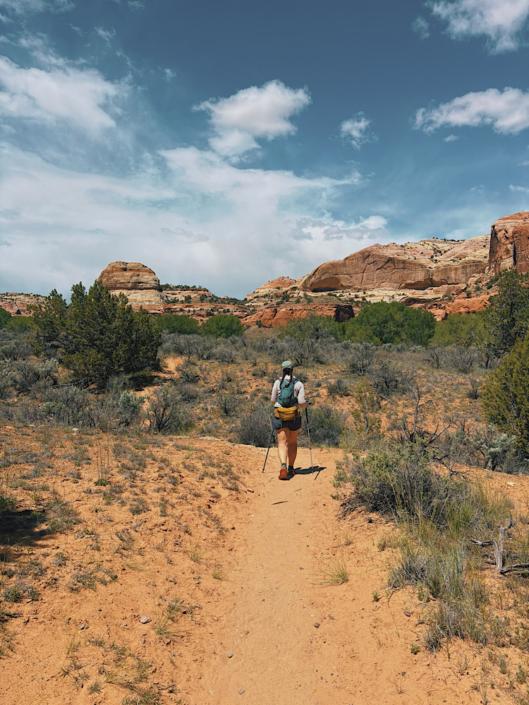
How Do You Stay Safe While Hiking in the Desert?
Start early, protect yourself from the sun, carry enough water, and know when to change your plans because of heat or weather.
The most critical things to remember are:
- Start early and check the hourly forecast.
- Wear layers and protect yourself from the sun.
- Carry enough water for the trail and conditions.
- Pay attention to shade, exposure, storms, and your own limits.
The most important thing I’ve learned is that the temperature alone doesn’t tell you how difficult a desert hike will feel. A shaded slot canyon and an exposed slickrock trail feel completely different at the same temperature.
What Makes Hiking in the Desert Different?
Desert hiking has some challenges that aren’t always obvious when you’re looking at a trail’s mileage and elevation gain.
Intense Sun
The desert often has very little shade, and you’re exposed to direct sunlight for hours. I’ve even been burned on relatively short walks around Grand Junction when I underestimated how much sun I was getting.
Now, covering up is one of my first lines of defense. A lightweight long-sleeve shirt, hat, sunglasses, and sunscreen are much easier than dealing with a bad sunburn halfway through a trip.
Limited Shade
A five-mile hike through a shaded canyon is a very different experience from a five-mile hike across exposed sandstone.
Before a hot-weather hike, I look at the trail itself, not just the mileage. How much of the route is exposed? Are there places to stop in the shade? Is the trail in a canyon or on open slickrock? Those details can make a huge difference.
Elevation Change
Some desert trails involve descending into a canyon and then climbing all of that elevation back out when you’re tired, and the sun is higher.
Horseshoe Canyon in Canyonlands National Park is a good example of why I pay attention to terrain, remoteness, and elevation, not just distance. This hike starts high on the rim and has you hiking back up in the heat of the day.
Water Availability
Desert maps can be deceptive. A creek, spring, or river shown on a map isn’t necessarily a reliable water source.
Water can be seasonal, difficult to reach, contaminated, or completely dry. For most desert day hikes, I plan to carry the water I need rather than assuming I can refill along the way.
Temperature Swings
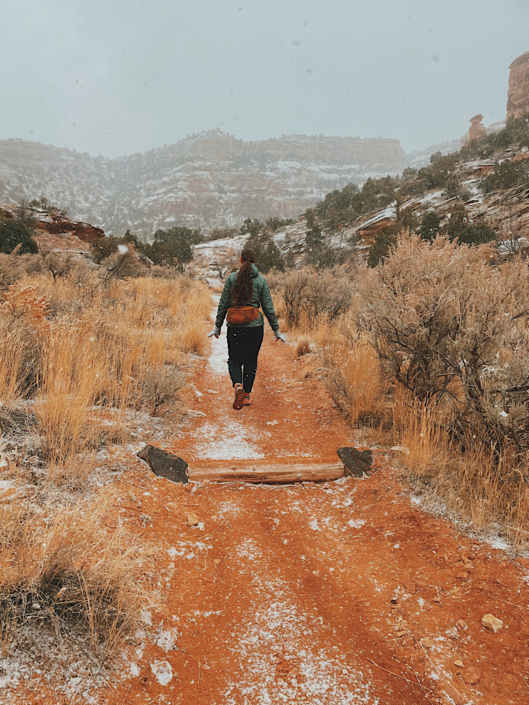
This is one of the most surprising things I find about desert hiking. I’ve started desert hikes in November wearing a coat and mittens and finished several hours later in my single base layer.
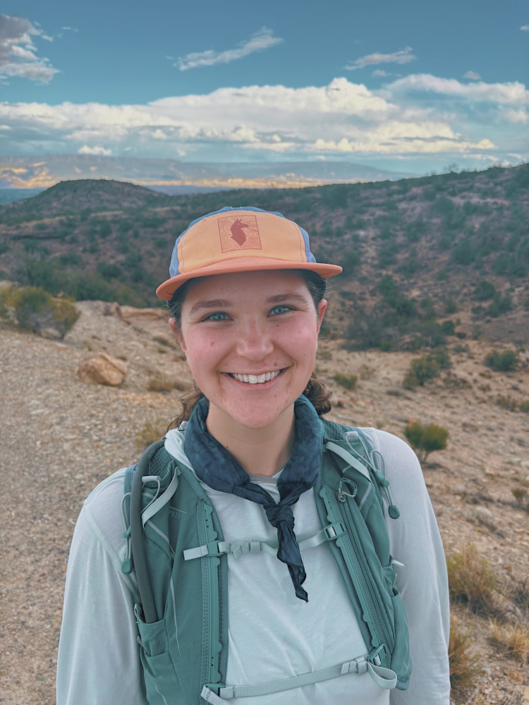
Wearing a Kool Tie
How to Stay Cool While Hiking in the Desert
Start Early
Starting early is one of the easiest ways to make a hot desert hike more manageable. You don’t necessarily need to avoid summer hiking altogether. Instead, consider whether you can finish the most exposed portion of the trail before the hottest part of the day.
An early start does come with one catch: it can be surprisingly cold. That’s why layers matter.
Dress for the Temperature Swing
Depending on the season, I’ll hike in lightweight hiking pants or shorts, a sun hoodie, a fleece or lightweight jacket, and even gloves or mittens in colder months.
As the sun comes up, I’ll shed layers and put them in my pack. This is especially important in winter and shoulder seasons. A desert hike can genuinely require both a puffy jacket and shorts on the same day.
Wear Breathable, Sun-Protective Clothing
In hot, exposed desert terrain, covering your skin can actually be more comfortable than leaving it exposed to direct sunlight. I look for clothing that is lightweight, breathable, moisture-wicking, comfortable while moving, and sun-protective.
Merino wool is my go-to natural fiber, even for year-round hiking. You can learn more in my guide on merino hiking clothes.
Use Shade Strategically
In the desert, shade is valuable. It can feel 10-20º F cooler in the shade, making it an excellent place to eat, drink, and take a break. If you’re planning a hot-weather hike, look at the route ahead of time and consider where you’ll actually be able to get out of the sun.
Try a Cooling Neck Gaiter
For particularly hot hikes, I’ve started using a Kool Tie. You soak it in water, and the crystals inside expand and stay cool while you hike. I’ve found it works best when there’s airflow around my neck. If I have my hood pulled up tightly, it doesn’t cool as effectively.
A Kool Tie is not a substitute for shade, water, or sensible planning, but I like wearing it on very hot days.
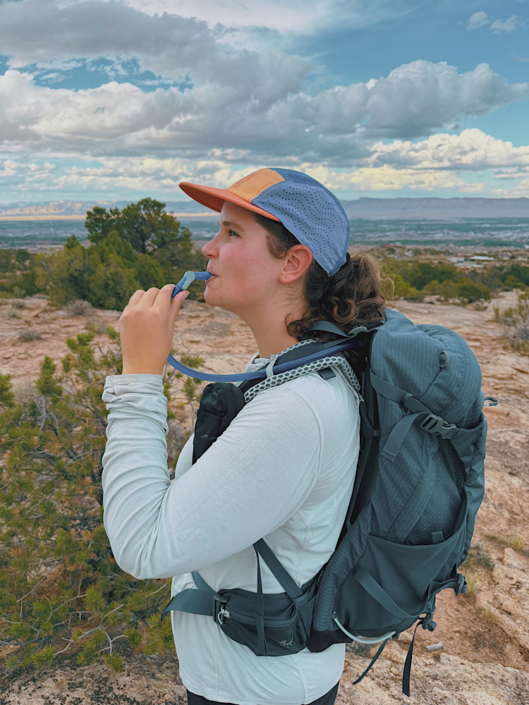
How Much Water Do You Need for a Desert Hike?
There isn’t one magic number of liters that works for every desert hike.
Your water needs depend on:
- Temperature
- Hike length
- Elevation gain
- Difficulty
- Shade
- Your individual sweat rate
- How much time you’ll spend in direct sun
A short, exposed hike in 90°F weather can require very different hydration planning than a longer hike on a cool spring morning. I pay particular attention to how exposed the trail is and how long I’ll be away from reliable water.
For remote desert hikes, I would rather carry extra water than risk running out.
Drink Consistently
Don’t wait until you’re desperately thirsty to realize you haven’t been drinking. I try to drink regularly throughout a hike, especially when it’s hot or exceptionally dry.
How much you need will vary from person to person, so pay attention to your own hydration needs rather than following someone else’s exact water amount.
Do You Need Electrolytes for Desert Hiking?
Not necessarily. Electrolytes can be useful during long, hot, strenuous hikes, particularly if you’re sweating heavily.
For a short, easy hike in mild weather, you may not need an electrolyte supplement at all. I go into more detail about when electrolytes can be useful and the products I personally like in my guide: Electrolytes for Hiking: When You Need Them & My Favorite Products.
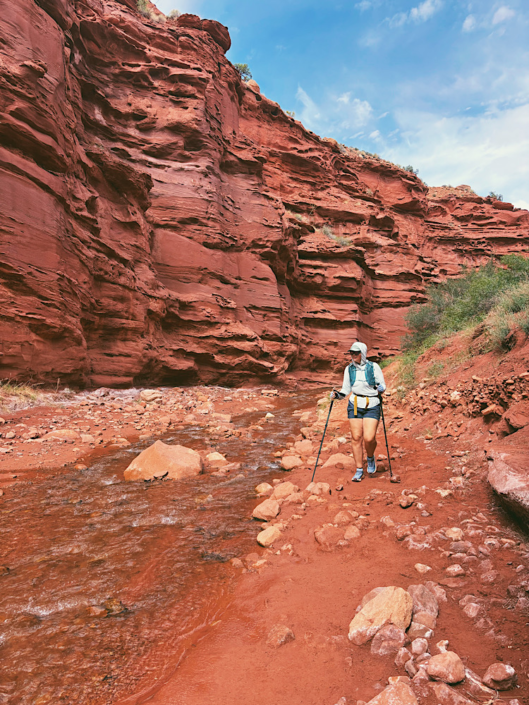
What to Wear Hiking in the Desert
Hiking Pants or Shorts
Most of the time, I hike in lightweight pants. When the weather is extremely hot, or I know I’ll be hiking through water, I’ll often switch to shorts.
If you’re a curvy woman who struggles to find hiking bottoms that actually fit, I’ve tested a lot of options. Check out my guides to Hiking Pants for Curvy Women and Hiking Shorts for Curvy Women.
Sun Shirt
A lightweight long-sleeve sun shirt can be surprisingly comfortable in the desert. Rather than leaving your skin exposed to hours of direct sunlight, a good sun shirt gives you another layer of protection without necessarily making you feel hotter.
The Smartwool Active Ultralite Hoodie is the lightest merino hiking hoodie I’ve tried.
Socks and Footwear
Desert trails can range from smooth sandy paths to rough slickrock, loose rock, steep canyon trails, and scrambling. I prioritize comfortable footwear with enough protection and traction for the specific terrain.
Not sure whether you need trail runners or hiking boots? See my guide to Trail Runners vs. Hiking Boots.
For socks, Darn Tough merino socks are my favorite. The cushioning keeps my feet comfortable on long hiking days, and merino helps regulate moisture and temperature.
Hat and Sunglasses
A breathable hat can make a surprisingly big difference when you’re spending hours in direct sun. The Cotopaxi Tech Plus 5 Panel Hat is one of the most breathable hiking hats I’ve found. It has ventilation holes along the sides that allow air to reach your scalp. I like Goodr sunglasses because they’re polarized and relatively affordable.
What to Pack for a Desert Hike
Your exact gear list will depend on the season, trail length, remoteness, and weather, but I generally consider:
- Plenty of water
- Electrolytes when appropriate
- Sun-protective clothing
- Hat
- Sunglasses
- Sunscreen
- Navigation
- Extra layer
- Food and snacks
- First-aid kit
- Headlamp
- Emergency communication device for remote hikes
The more remote the trail, the less comfortable I am relying on my phone alone. Most of the time, I don’t have cell service when I’m out exploring, so I download hikes on AllTrails and save them to my Garmin watch before I leave home.
Desert Hiking in Every Season
Desert hiking isn’t just a summer activity. In fact, some of my favorite desert hiking happens when temperatures are cooler.
Spring
In spring, conditions can change quickly, but it can be one of the most comfortable times to hike in the desert. Expect cold mornings, rapid warming, comfortable daytime temperatures, unpredictable weather, and potentially muddy trails.
Mud deserves special attention in parts of the Southwest. A trail that looks perfectly hikeable can become a mess after precipitation, and walking through soft desert soils can cause lasting damage.
Summer
I pay the most attention to timing and exposure in summer. Expect very high temperatures, intense sun, and more careful water planning. Earlier starts become much more important, and monsoon thunderstorms can also bring flash-flood risk. Some exposed hikes simply aren’t worth doing in the middle of a hot summer afternoon.
Fall
Daytime temperatures can be excellent, but autumn mornings can already be surprisingly cold. Expect comfortable hiking temperatures, cold mornings, and large temperature swings. Layers are still important.
Winter
Winter desert hiking can be fantastic, particularly when the crowds thin out and daytime temperatures are comfortable. But don’t assume “desert” means warm. Mornings can be freezing, daylight is shorter, and higher-elevation areas may have snow or ice. Shaded canyons can stay cold even when the sun is strong.
I’ve started winter desert hikes bundled up and ended them much warmer than expected once the sun was overhead.
How Hot Is Too Hot for Desert Hiking?
When I’m deciding whether to hike in hot weather, I look at the trail’s exposure, shade, elevation gain, water availability, and how long I’ll be outside. A 90°F forecast for an exposed slickrock trail is very different from 90°F on a shaded canyon hike where you’re walking through water.
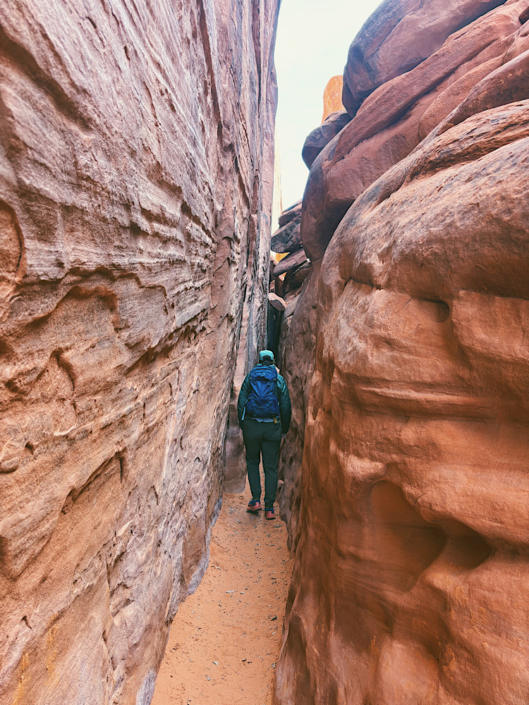
Mary Jane Slot Canyon near Moab is a good example of a desert hike that can be enjoyable even on a hot day. You’re walking through water and in a canyon for most of the trek. Don’t judge a desert hike by the temperature alone.
Desert Hiking Safety Tips
Check the Hourly Forecast
Don’t just look at the day’s high. Before a desert hike, I check the hourly forecast for temperature, wind, precipitation, and thunderstorm potential. This is particularly important during the monsoon season.
Understand Flash-Flood Risk
Flash floods are one of the most important desert hazards to understand. Rain doesn’t have to fall directly on you for flooding to become a problem. Storms upstream can send water through washes, canyons, and slot canyons even when the weather above you looks relatively dry.
If thunderstorms are forecast, pay particular attention to canyon and slot canyon routes. When conditions aren’t right, changing your hiking plans is much easier than trying to outrun water.
For example, in Zion National Park, The Narrows closes when flash-flood risk is too great. No hike is ever worth your life.
Don’t Underestimate Short Hikes
A short hike isn’t necessarily an easy hike in the desert. A one- or two-mile trail can still involve steep climbs, deep sand, exposed slickrock, or relentless sun.
I’ve learned to look at the terrain and exposure rather than assuming a short distance means it’s easy.
Know When to Turn Around
A crucial skill I’ve learned from desert hiking is knowing when to change my plan. If conditions are getting worse, you don’t have enough water, a storm is approaching, or you’re struggling with the heat, turning around isn’t failing. It’s good judgment.
If you develop concerning symptoms such as confusion, fainting, severe weakness, or loss of coordination, stop hiking and seek help rather than trying to push through.
How to Leave No Trace in the Desert
Desert landscapes can look tough and indestructible, but many of the things you’re walking past are surprisingly fragile. Some desert environments take years, decades, or even longer to recover from a single shortcut or careless step.
Stay on Established Trails
Sticking to established trails helps protect the soil, vegetation, and fragile desert landscape around you. Avoid creating new social trails, even when a shortcut seems harmless.
Don’t Step on Cryptobiotic Soil
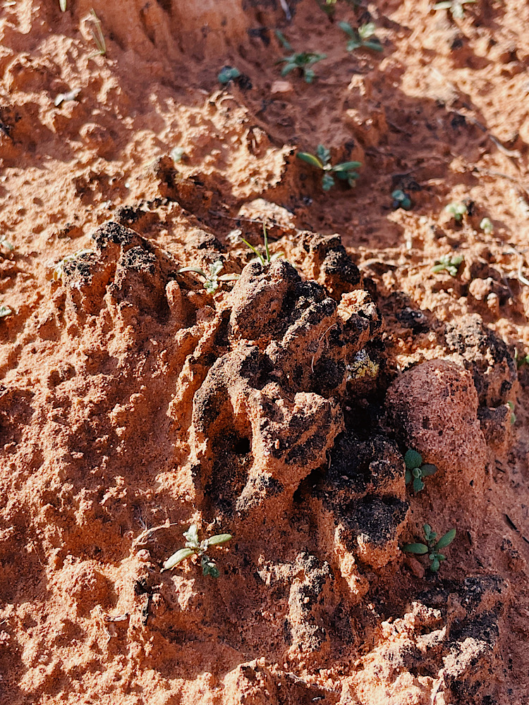
If you’ve spent time hiking around the Southwest, you’ve probably seen dark, bumpy patches of soil alongside the trail. This is cryptobiotic soil, or biological soil crust.
It might not look like much, but it is alive and plays an important role in desert ecosystems. Once crushed, it can take years to recover.
Stay on the trail or on durable rock and don’t step off-trail simply to pass another hiker, take a photo, or find a shortcut.
Don’t Touch Petroglyphs or Pictographs
The desert Southwest is home to countless archaeological sites, including petroglyphs and pictographs. Petroglyphs are images carved or pecked into rock, while pictographs are painted onto rock surfaces.
As tempting as it can be to get a closer look, don’t touch, climb on, trace, or otherwise mark them. These sites can be thousands of years old, and even seemingly minor damage can be permanent.
Some of the coolest things I’ve found while hiking in Southern Utah are also the things I feel most strongly about leaving alone.
Leave the Desert as You Found It
Don’t take rocks, artifacts, pottery fragments, plants, or other natural and cultural objects home with you.
And please don’t add anything to the landscape, either. Carving names into rock, stacking unnecessary cairns, or leaving behind trash changes the experience for everyone who comes after you.
The best souvenir from a desert hike is a photo, not a piece of the desert.
Some of My Favorite Desert Hikes Near Moab
I’ve spent a lot of time exploring the desert around Moab, both inside and outside the national parks.
If you’re planning a desert hiking trip to the area, these are some of my favorite guides:
📌 Pin this image on Pinterest to save this post for reference.
FAQs About Hiking in the Desert
What should you wear hiking in the desert?
Wear lightweight, breathable clothing that protects you from the sun. A long-sleeve sun shirt, hiking pants or shorts, hat, and sunglasses are good choices. Bring layers if you’re hiking early in the morning or during spring, fall, or winter because desert temperatures can change dramatically throughout the day.
How much water should you bring hiking in the desert?
There isn’t one amount of water that works for every desert hike. Your needs depend on the temperature, trail length, elevation gain, shade, difficulty, and your individual sweat rate. For remote hikes, don’t assume that a water source shown on a map will be reliable.
What temperature is too hot for hiking in the desert?
There isn’t a universal temperature cutoff. Consider the trail’s exposure, shade, elevation gain, water availability, difficulty, and how long you’ll be outside. A 90°F hike on exposed slickrock can be much more demanding than a shaded canyon hike at the same temperature.
Is it safe to hike in the desert in summer?
Yes, but summer desert hiking requires more planning. Start early, check the hourly forecast, carry enough water, protect yourself from the sun, and avoid highly exposed trails during the hottest part of the day. During monsoon season, also pay close attention to thunderstorm and flash-flood risk.
What is the best season for desert hiking?
Spring and fall often offer some of the most comfortable daytime temperatures, while winter can also be excellent for desert hiking when conditions are favorable. Summer can be challenging because of the heat, but early-morning hikes and shaded canyon routes can still be enjoyable.
Can you hike in the desert in winter?
Yes. Winter can be a great time to hike in the desert, but don’t assume desert means warm. Mornings can be freezing, shaded canyons can stay cold, and higher-elevation areas may have snow or ice. Bring layers and be prepared for large temperature swings.