Great Basin National Park: An Underrated 2-Day Adventure
Tucked away in eastern Nevada, Great Basin National Park is one of the most underrated national parks I’ve visited.
My husband and I spent two full days here, hiking Wheeler Peak, walking among ancient bristlecone pines, and exploring Lehman Caves. I was surprised by just how much variety this remote park packed into a short visit.
If Great Basin has been sitting somewhere near the bottom of your national park list, I think it deserves a bump up.
Disclosure: This post may contain affiliate links. If you purchase through these links, I may earn a small commission at no extra cost to you. I only recommend products I genuinely believe are worth considering. Thank you for supporting Emma Gets Outside!
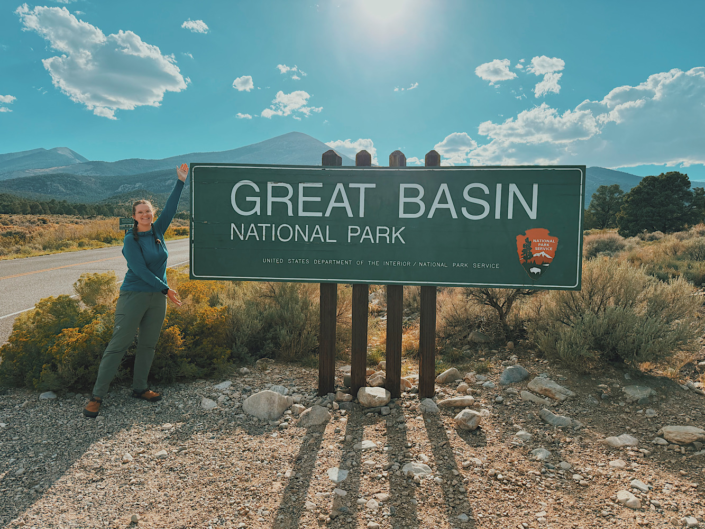
Great Basin National Park at a Glance
- Location: Eastern Nevada near the Utah border
- Nearest town: Baker, Nevada
- How long to spend: 2 full days
- Best for: Hiking, caves, ancient trees, mountain scenery, history, and dark skies
- My highlights: Wheeler Peak, Lehman Caves, and the bristlecone pines
- What I wish I had time for: Lexington Arch
A big reason more people don’t visit Great Basin National Park is its remoteness. There’s a whole lot of open desert surrounding the park and very few amenities nearby.
My husband and I visited Great Basin on our way back to Grand Junction, Colorado, after a week in Yosemite National Park. For us, it was literally on the way, but for many people, Great Basin will need to be an intentional stop.
At about 4.5 hours north of Las Vegas or 3 hours and 45 minutes southwest of Salt Lake City, this isn’t really a day-trip destination.
Is Great Basin National Park Worth Visiting?
So, if it’s so far out there, why bother visiting?
Great Basin National Park is home to Wheeler Peak, a 13,000-foot mountain, or what we’d call a 13er out here in Colorado, and one of Nevada’s tallest peaks.
The park is also known for its incredibly dark night skies and some of the world’s oldest trees: ancient bristlecone pines. And if that isn’t enough variety, you can head underground to tour an impressive cave system with a park ranger.
That variety is what makes this relatively small national park so noteworthy. You can summit a 13,000-foot peak, walk among trees that have been alive for thousands of years, and explore a cave all in the same trip.
And you can do it without the crowds you’ll typically find at places like Zion, Arches, or Yosemite.
Yes, Great Basin National Park is absolutely worth visiting. I spent two full days here, and it felt like the perfect amount of time to experience the park’s highlights without rushing.
Best Things to Do in Great Basin National Park
1. Hike Wheeler Peak
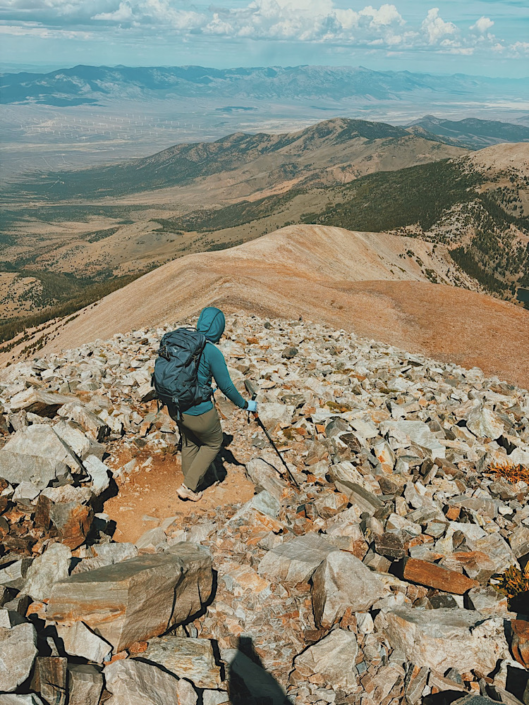
Since I’ve hiked more than fifteen Colorado 14ers, I felt pretty prepared to take on Wheeler Peak. Hiking at high elevation is no joke, though, especially if you aren’t used to it. My guide to hiking your first 14er can help you know what to expect before tackling a high-elevation hike like this one.
Here’s a breakdown of the Wheeler Peak trail:
- Distance: 8.8 mi
- Elevation Gain: 2,875 ft
- Difficulty: Hard
- Hiking Time: 6+ hours
- Wheeler Peak Elevation: 13,065 feet
- Wheeler Peak Trail Map
My Wheeler Peak Hike
My trail stats: 9.13 mi, 3,018 ft of elevation gain, and 5 hours 23 minutes of moving time.
Start early. Afternoon storms are always something to take seriously above treeline, and while we were on Wheeler Peak, we could see clouds dumping rain in the distance.
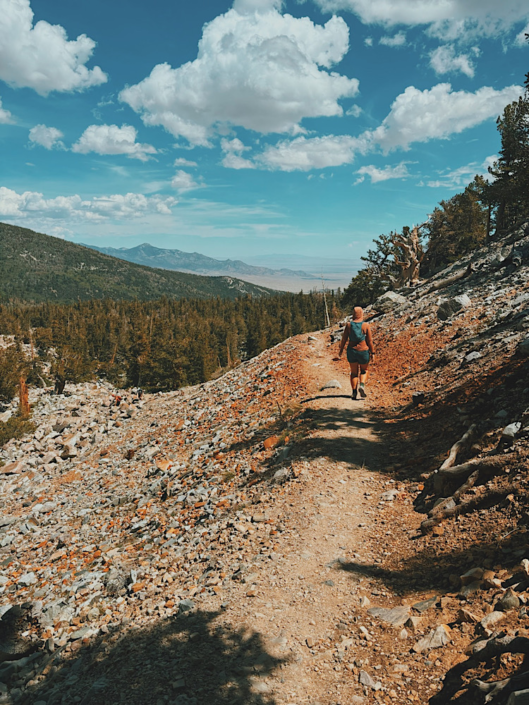
The Wheeler Peak Summit Trail starts below treeline, and the first 2.5 miles are a fairly gentle uphill walk. I found I could move pretty quickly through this part of the trail.
Then you hit the talus.
From there, the trail gets progressively steeper, and the final half mile, especially the last quarter mile, to the summit is a doozy.
If you’re not used to hiking at altitude, you’ll probably feel it here. We passed two women hiking together, taking long breaks along the upper section of the trail. My husband and I summited and passed them again on our way down, and they hadn’t made it a quarter mile in more than an hour.
By then, the wind was picking up considerably, and storm clouds were rolling in. It was a good reminder to give yourself plenty of time on a high-elevation hike. The summit is only halfway, and you still need enough energy and good enough weather to get back down.
The Summit
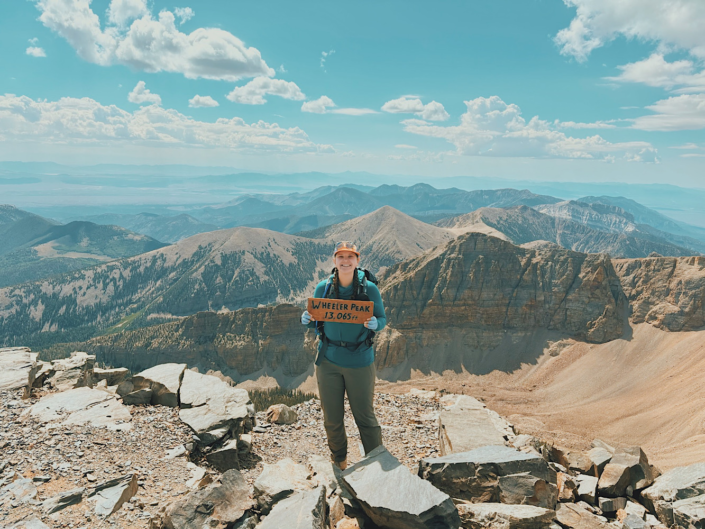
The views from Wheeler Peak were fantastic. As one of the highest points around, you can see a huge stretch of the surrounding landscape. I especially loved looking down into the basin on the south side of the mountain. We also walked to the eastern side of the summit to look over the edge, and you can see several small alpine lakes to the north.
I’d describe Wheeler Peak as a solid Class 1 hike, with large, stable talus near the summit. If you’re already comfortable hiking in high-elevation mountain terrain, this is an excellent trail. If you’ve never done a hike like this before, it’s still doable, but I’d give yourself plenty of extra time and be prepared for the altitude to slow you down.
On the way back, my husband and I took the short 0.1-mile detour to Stella Lake. We sat on the bench for a few minutes before finishing the hike, and it was a surprisingly nice break before the final, flatter stretch back to the trailhead.
2. See the Ancient Bristlecone Pines
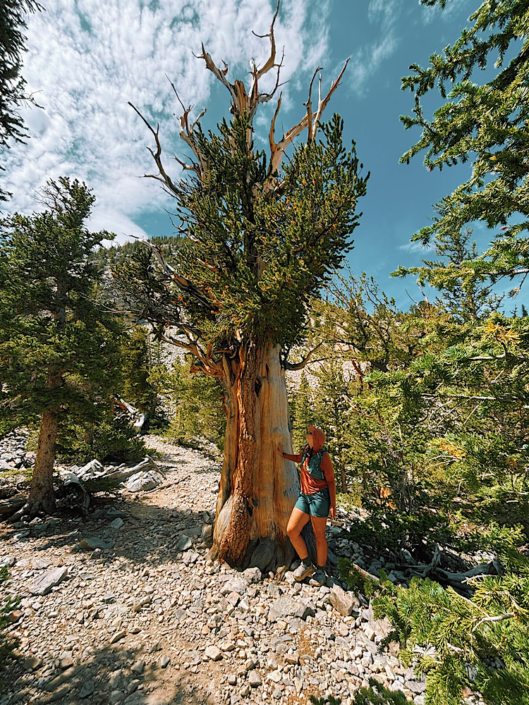
During our Lehman Caves tour, our park ranger explained how important the ancient bristlecone pines were to the creation of Great Basin National Park. These remarkable trees can live for thousands of years, with some approaching their 5,000th birthday.
One of the best places to see them is along the Bristlecone Pine and Glacier Trail. The full trail is about 4 miles with 800 feet of elevation gain, but you don’t need to hike all the way to the glacier to see the bristlecones.
We stopped at the Bristlecone Pine Interpretive Loop, where you can walk among some of the park’s ancient trees and learn more about how they survive in such a harsh environment. This was plenty for us, especially since we had other plans in the park.
The bristlecone pines are unlike almost any other trees I’ve seen. Their trunks are twisted and gnarled from thousands of years of surviving wind, cold, and poor growing conditions. With their exposed wood and unusual shapes, they look like something straight out of a fairy tale.
Even if you don’t consider yourself particularly interested in trees, I wouldn’t skip this trail. Standing next to a living organism that may have been there for thousands of years puts the landscape in an entirely different perspective.
➡️ Another tree species worth seeking out are the Giant Sequoia trees in Yosemite National Park. See my guide on hiking the Mariposa Grove Grizzly Giant Loop.
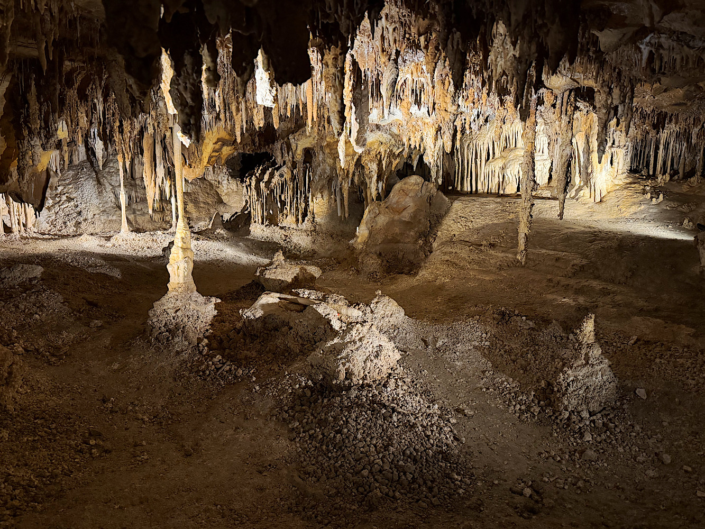
3. Take a Lehman Caves Tour
Taking a Lehman Caves tour while visiting Great Basin National Park is a non-negotiable. Tours can sell out, so book ahead on Recreation.gov. My husband and I are comfortable in caves, so we chose the longer, 90-minute Grand Palace Tour.
Our park ranger led us through a series of rooms and passageways, explaining the cave’s history. It was fascinating to see old graffiti and learn about Absalom Lehman, who began bringing paying visitors into the cave in the 1880s.
Early visitors weren’t exactly careful. We learned that Lehman’s philosophy was essentially, “If you can break it, you can take it.” You can still see damaged formations throughout the cave. Many of which will take hundreds or even thousands of years to regrow.
I’d been inside a couple of caves as a kid, but Lehman Caves blew me away. The formations were unlike anything I’d seen before.
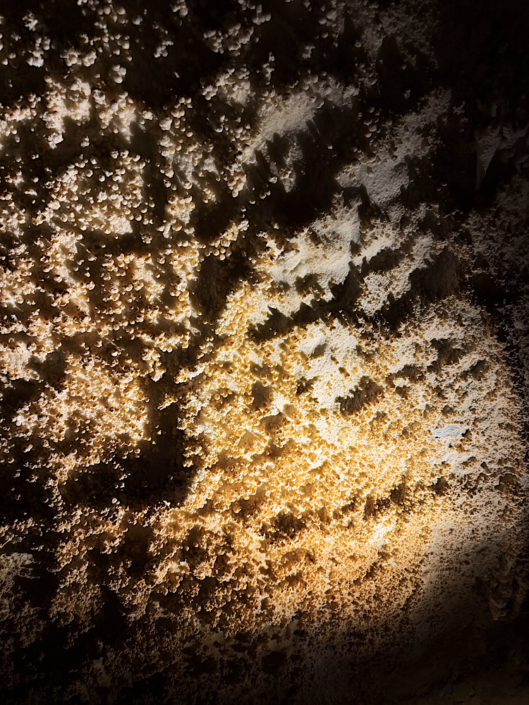
Cave popcorn
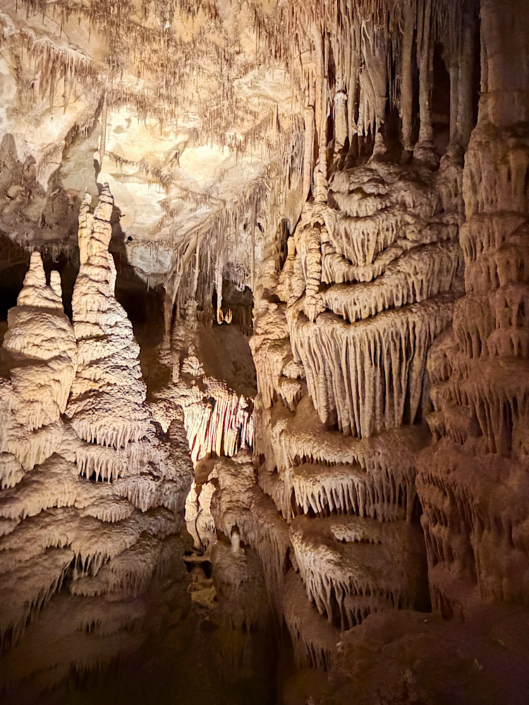
I thought this looked like layered cakes
The cave is especially known for its abundance of rare shield formations, but my favorites were the cave popcorn and cave bacon. The upgraded lighting system also showed off the formations beautifully. We visited in 2026, shortly after a major lighting renovation replaced a system that hadn’t been significantly upgraded since the 1970s.
A few people on our tour had recently visited Carlsbad Caverns National Park and said they thought Lehman Caves was even more impressive. I haven’t been to Carlsbad yet, so I can’t make that comparison myself, but that felt like a pretty strong endorsement.
The Grand Palace Tour has stairs and some tight passageways to maneuver through. The cave stays around 50°F, so I recommend wearing pants and bringing a sweatshirt. We intentionally booked our tour for the afternoon, and escaping underground into the cool cave was pretty perfect after being outside in the summer heat.
You’ll also need to follow the park’s precautions for white-nose syndrome, a fungal disease that has devastated bat populations across North America. Gear and footwear that have been inside other caves can potentially spread the fungus. Pay close attention to the park’s current decontamination requirements when you book your tour.
4. Drive Wheeler Peak Scenic Drive
Wheeler Peak Scenic Drive takes you from the desert floor into the mountains surprisingly quickly. As you gain elevation, you’ll get fantastic views across the surrounding desert and toward Wheeler Peak, with several places to pull over, hike, or simply take in the scenery.
One stop we made was the Osceola Ditch Trail, where you can still see remnants of an old aqueduct built to transport water to the mining town of Osceola. Gold was discovered in the area in the 1800s, and the ditch is an interesting reminder that there’s more history than you might expect.
Even if you aren’t planning to hike Wheeler Peak, I’d still make the drive. Watching the landscape transition from dry Great Basin desert to pine and aspen forest is part of what makes this park so interesting.
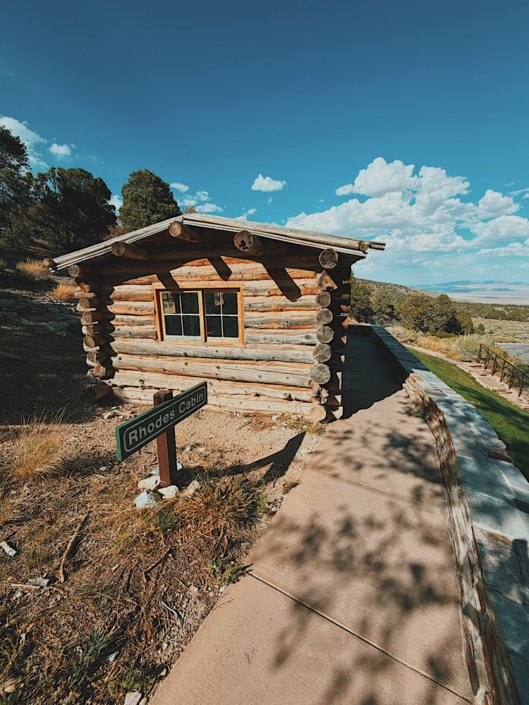
5. Learn About Great Basin’s History
One thing that surprised me about Great Basin National Park was how much history there was to learn. This park isn’t just about hiking and scenery. It also preserves remnants of the people who explored, mined, ranched, and lived in this remote part of Nevada.
Near Lehman Caves, you can see the historic Rhodes Cabin and the cave’s original natural entrance. The Lehman Caves Visitor Center is also worth a stop before or after your tour to learn more about the area’s history.
We encountered pieces of this history throughout our visit. From learning about early cave tourism on our Lehman Caves tour to seeing the old Osceola Ditch along Wheeler Peak Scenic Drive. These little stops added a lot of context to the park and were an unexpected highlight of our two days in Great Basin.
6. Go Stargazing
Great Basin National Park is known for its incredibly dark night skies, thanks in large part to its remote location and lack of nearby light pollution.
I’ll admit, we didn’t stay up to stargaze during our trip, but I wish we had. After full days of hiking and exploring, going to bed sounded pretty good at the time. But if I visit Great Basin again, I’ll absolutely make a point to stay up and see the stars.
The park also hosts astronomy programs throughout the year, so check the ranger program schedule during your visit. If the timing works out, this would be a great way to experience another side of the park after dark.
7. Visit Lexington Arch
Lexington Arch is the one place I wish we’d had time to visit in Great Basin National Park.
The problem is that Lexington Arch is nowhere near the main area of the park. It’s tucked into a remote southern section, far from Lehman Caves, Wheeler Peak Scenic Drive, and the campgrounds where we spent our time. I underestimated just how much additional driving it would take to get there. It simply didn’t fit into our two-day itinerary.
If Lexington Arch is high on your list, plan for it from the beginning rather than assuming you can squeeze it in between the park’s other attractions. Personally, I’d add a third day to a Great Basin itinerary and dedicate that extra time to exploring this more remote part of the park.
This is the biggest thing I would do differently on a return trip. Two days felt perfect for everything we did, but I’d happily stay one more day to finally see Lexington Arch.
My 2-Day Great Basin National Park Itinerary
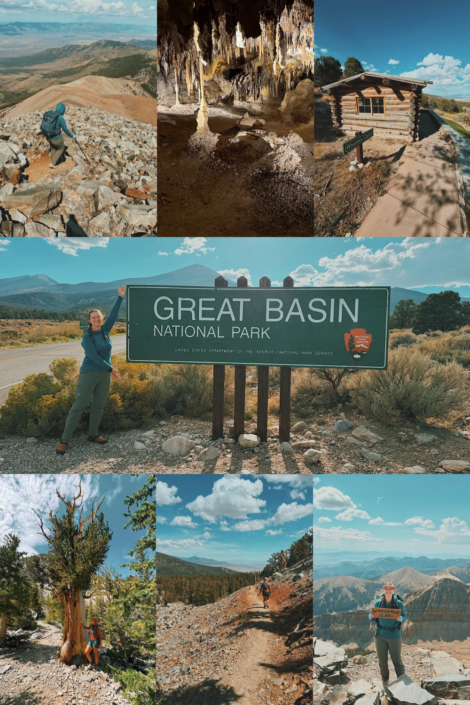
Two full days felt perfect for our first visit to Great Basin National Park. We saw the major highlights without feeling rushed, and I’d plan my trip almost exactly the same way again.
Day 1: Hike Wheeler Peak
Dedicate your first day to hiking Wheeler Peak. Start early to give yourself plenty of time before afternoon weather rolls in, and keep the rest of the day flexible after such a big hike.
We stopped at Stella Lake on the way down and explored a few stops along Wheeler Peak Scenic Drive.
Day 2: Bristlecone Pines + Lehman Caves
Spend the morning hiking to the ancient bristlecone pines, then book a Lehman Caves tour for the afternoon.
This worked perfectly for us. We could hike during the cooler part of the day and escape into the 50°F cave during the warmer afternoon.
If You Have a Third Day
Use it for Lexington Arch. It’s far enough from the main area of Great Basin that I wouldn’t try to squeeze it into either day.
For a first visit, two full days in Great Basin National Park are plenty. Add a third if Lexington Arch is a priority.
Planning Your Great Basin National Park Trip
Great Basin is remote, so I recommend arriving with everything you need rather than assuming you can easily pick something up nearby. Fill up on gas, download your maps for offline use, and bring food and other essentials.
We camped at Upper Lehman Creek Campground, which made it easy to access the park’s main areas. If you don’t want to camp, you’ll find a few accommodations in nearby Baker, Nevada.
If you plan to hike Wheeler Peak, I recommend staying at Wheeler Peak Campground the night before if you can get a spot. It was already full when we tried to reserve it, but staying there would put you right near the trailhead for an early start.
Summer through early fall generally offers the best chance of snow-free conditions at higher elevations. Even in summer, expect much cooler temperatures and rapidly changing weather as you drive higher into the mountains.
Finally, book your Lehman Caves tour before your trip. This is one Great Basin experience you won’t want to miss, and the tour you want may already be sold out if you wait until you arrive.
📌 Pin this image on Pinterest to save this post for reference.
Great Basin National Park FAQs
How many days do you need in Great Basin National Park?
I recommend spending two full days in Great Basin National Park. That gave us enough time to hike Wheeler Peak, see the ancient bristlecone pines, tour Lehman Caves, and explore Wheeler Peak Scenic Drive without feeling rushed. Add a third day if you want to visit remote Lexington Arch.
What should you not miss in Great Basin National Park?
Don’t miss Lehman Caves, the ancient bristlecone pines, and Wheeler Peak Scenic Drive. If you’re comfortable with a strenuous high-elevation hike, summiting Wheeler Peak was also a highlight of my trip.
Do you need reservations for Great Basin National Park?
You don’t need a reservation simply to visit Great Basin National Park, but you should reserve your Lehman Caves tour ahead of time. Campground reservations are also worth making in advance, especially if you want to stay near Wheeler Peak.
Is Lehman Caves worth visiting?
Absolutely. Lehman Caves was one of the biggest surprises of my trip. The cave is filled with unusual formations, including an abundance of rare cave shields, and the ranger-led tour also covers the cave’s fascinating history. I would consider it a must-do on a first visit.
Can you visit Great Basin National Park in one day?
You can visit Great Basin in one day, but you’ll need to prioritize. For a one-day trip, I would choose Lehman Caves, the bristlecone pines, and Wheeler Peak Scenic Drive. If you want to summit Wheeler Peak and experience the other major attractions, give yourself two full days.