Best Hiking Daypacks for Every Type of Hike
Find the best hiking daypacks for your adventures.
I own more hiking backpacks than any one person probably needs. But after years of hiking in Colorado, Utah, and beyond, I’ve learned that the pack I want for a long mountain day is very different from the one I grab for a short hike or pack into my luggage for an international trip.
You’ll notice that most of these bags are from Osprey. That wasn’t intentional, and this isn’t a sponsored post. I just genuinely like their packs, and they keep winning when I compare my options for a new bag. After years of use, they’ve also proven to be durable and comfortable.
Here are the hiking daypacks I actually use, what each one does best, and which I’d choose if I could keep only one.
➡️ Find more gear recommendations and packing lists on my gear hub.
Disclosure: This post may contain affiliate links. If you purchase through these links, I may earn a small commission at no extra cost to you. I only recommend products I genuinely believe are worth considering, and I clearly note when I haven’t personally used something. Thank you for supporting Emma Gets Outside!
Best Hiking Daypacks at a Glance
Best overall: Osprey Sirrus 24
Best for bulky loads: Osprey Sirrus 34
Best for light loads: Osprey Dyna 6
Best multi-sport pack: Osprey Raven 10
Best for travel: Osprey Daylite Plus
Best budget pick: REI Flash 22
The one I’m eyeing: Osprey Tempest Velocity 20
My Top Pick: Osprey Sirrus 24
The Osprey Sirrus 24 is my top pick for the best hiking daypack overall. After more than five years of use, I think its 24L capacity, supportive frame, comfortable hip belt, and durability make it the best choice for most day hikers who want one versatile pack.
➡️ Find more of my favorite gear picks for your outdoor and travel adventures.
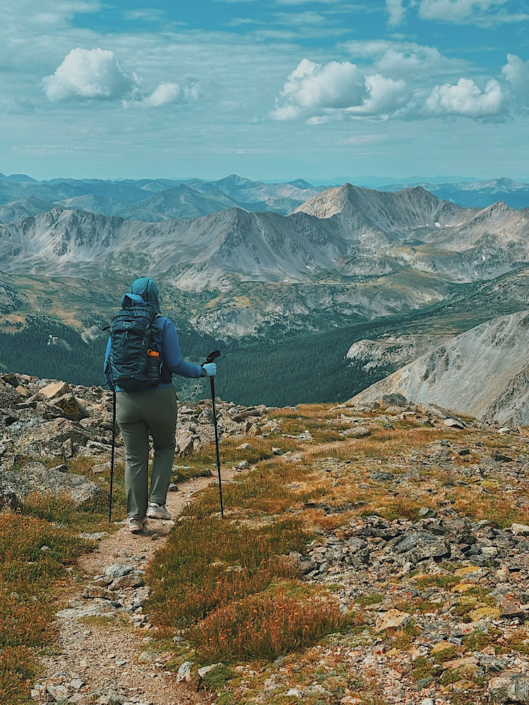
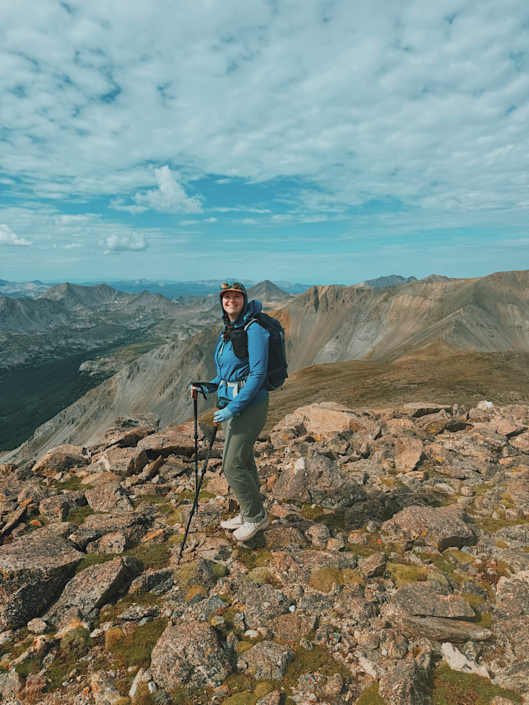
Osprey Sirrus 24: Best Overall
I’ve had this bag for over 5 years and taken it on all kinds of hikes across Colorado and Utah. From hiking 14ers to exploring trails in Moab, this bag has been through a lot.
The frame and padded hip belt take the load off my shoulders, making it comfortable even when I’ve packed the bag full.
The 24L capacity is perfect for a couple of layers, plenty of snacks and water, plus some emergency essentials. I start running out of space when I want to bring my camera along with layers and water, but for most day hikes, 24L is plenty.
For most people, I’d say this is an excellent all-around hiking daypack for most trails.
What I Like
The Osprey Sirrus 24 is very comfortable. I can wear it all day without issue. I appreciate the built-in rain cover, and after more than 5 years of use, the padding still hasn’t worn out. All the zippers still glide smoothly, and the fabric has no holes.
What I Don’t Like
The hole for the water bladder hose was so small and tight that I eventually had to cut the bag to make it work.
I also don’t love the top pocket design. When the pocket is full, it’s really difficult to feed the bladder hose through the opening. I always make sure the top pocket is empty before putting my bladder in the pack.
Emma’s Verdict
If you want one supportive hiking backpack that can handle everything from moderate trails to long mountain days, this is the one I’d recommend to most people.
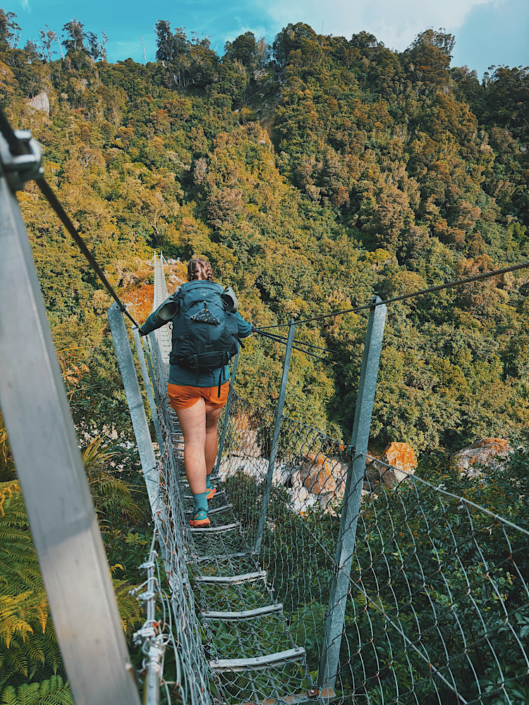
Hut hiking in New Zealand with the Sirrus 34
Osprey Sirrus 34: Best for Bulky Loads
After years of hiking with the Sirrus 24, I wanted a bigger option for days when I carry a lot of stuff. Mainly when I need a couple of layers and want to zip my camera into the pack without being cramped.
I even used the Sirrus 34 for an overnight hut trip in New Zealand. I needed to carry my sleeping bag, but the hut provided a bed, so I didn’t need my full backpacking setup.
Most people probably don’t need a 34L pack for day hikes. But if you carry a lot of layers or bulky gear, the extra space is really nice to have.
Choose the Sirrus 24: Normal day-hiking gear, typical water carries, extra layers, and the 10 Essentials.
Choose the Sirrus 34: Photography equipment, lots of water, bulky cold-weather gear, unusually long days, or minimalist hut trips.
What I Like
It has the same comfortable, supportive build I love about the Sirrus 24, just with more capacity. Osprey’s durability has also impressed me over the years, and it’s one reason I keep buying their packs.
What I Don’t Like
For such a big bag, you’d think I’d be able to fit my phone in the hip belt pocket. Nope.
My solution is the Matador Speed Stash Pocket, which gives me an easy-to-reach spot for my phone. I use it on my Sirrus 24 too, and I even attach it to my travel backpack.
Emma’s Verdict
Most day hikers don’t need a 34L pack. I reach for mine specifically when my camera, water, layers, and other gear make the Sirrus 24 feel stuffed.
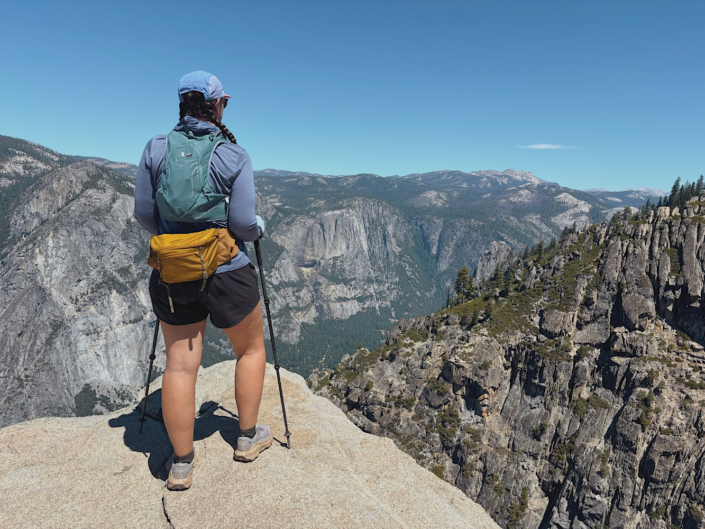
Hiking in Yosemite with the Osprey Dyna 6
Osprey Dyna 6: Best for Light Loads
The Dyna is technically closer to a hydration vest than a traditional daypack, but that doesn’t stop it from being one of my most-used packs. It’s my favorite option when I don’t need to carry much.
I use it for hikes when I don’t need layers or much else besides food and water. Often, I carry my REI Trail 5 Waist Pack with my camera and the Dyna on my back. It might look a little funny, but it works.
Another reason I chose this vest is that it uses a bladder instead of bottles. I’ve never tried a vest with the flexible water bottles, but they just look awkward to me. I wanted to keep all my water on my back, more like a traditional backpack.
The 1.5L bladder lasts surprisingly long, and I can fit an impressive amount of snacks in all the little pockets.
What I Like
I love the phone pocket built into the front. That’s what made me get the Speed Stash for my other bags. Easy phone access became a necessity.
The bladder-style water storage was another important feature for me. It’s my favorite way to carry water, and I like having it tucked away on my back rather than carrying bottles on the front.
What I Don’t Like
Because the Dyna sits directly against my back, I get noticeably sweatier than I do with my framed backpacks that have ventilation.
Emma’s Verdict
I love the Dyna for its intended purpose, but I don’t consider it a replacement for a full daypack. I wouldn’t use it for long mountain hikes that require substantial layers and emergency gear.
It’s best when the trail, weather, and conditions allow me to safely carry less.
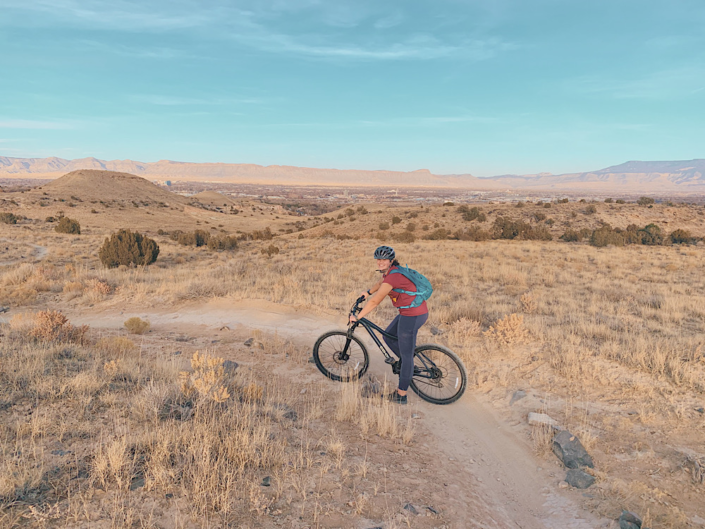
Mountain biking with the Osprey Raven 10
Osprey Raven 10: Best Multi-Sport Pack
This was the first technical backpack I ever bought. I originally got it for biking, but I ended up using it for hiking because I didn’t have any other backpacks. My Osprey Raven 10 went canyoneering, skiing, biking, and hiking.
Even though I don’t use it much anymore, it was an excellent starter backpack for me. The 2.5L water capacity was substantial enough for most of the trails I was doing at the time, and I wasn’t doing much mountain hiking where I needed to carry extra layers.
The Raven sits somewhere between my Dyna and my framed hiking packs. It carries more than a running vest, but you don’t get the same support as something like the Sirrus 24.
What I Like
I love how versatile this bag is. If you hike and bike, you can easily use it for both, and it has a place to carry your biking helmet.
I used it for a couple of years as my main hiking bag before eventually upgrading to a more supportive hiking pack.
What I Don’t Like
The hip belt isn’t nearly as supportive as the one on my framed backpacks. I didn’t mind that when I was carrying smaller loads, but as I started doing bigger hikes and carrying more gear, I wanted more support.
Emma’s Verdict
If you hike and bike and want one small pack for both, the Raven 10 makes a lot of sense. It worked well as my first technical backpack, especially on shorter hikes with smaller loads.
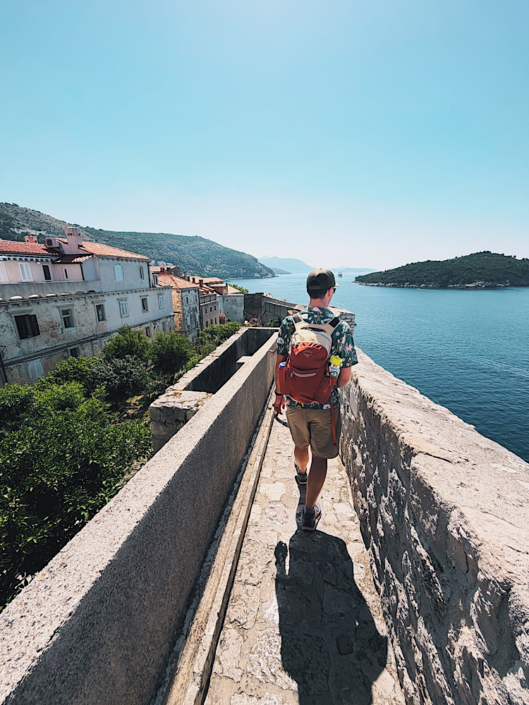
Exploring Dubrovnik, Croatia with the Osprey Daylite Plus
Osprey Daylite Plus: Best for Travel
I got the Osprey Daylite Plus specifically for traveling. Its two side pockets for water bottles and ability to fit under an airplane seat make it a reliable travel companion.
I wanted this bag to serve multiple purposes. It’s my personal item at the airport, my city backpack for exploring, and my pack for short hikes. When I’m traveling internationally, I try to limit the number of bags I bring (keyword try, it doesn’t always end up that way).
It’s easier to use off-trail than my more technical hiking packs, but it’s less supportive when carrying heavy loads.
I loved having this bag while walking around cities in Croatia. My husband carried it with our water and snacks, and we could throw any shopping purchases into it as we explored.
What I Like
Because this bag has a chest strap, I can secure my Matador Speed Stash to it to keep my phone close while traveling. I don’t like having my phone in my pocket when I’m walking through the airport or around a city, so having it easily accessible on my chest is really convenient.
The two water bottle pockets were also a huge selling point for me. Easy access to water matters to me while hiking and traveling.
What I Don’t Like
I’m not sure why they even include a hip strap on this bag. I’ve never used it because it doesn’t really provide any support. It basically just keeps the bag close to your body.
Emma’s Verdict
This is my pick for someone who wants one small backpack that works for travel, city exploring, and short hikes rather than buying a highly specialized hiking pack.
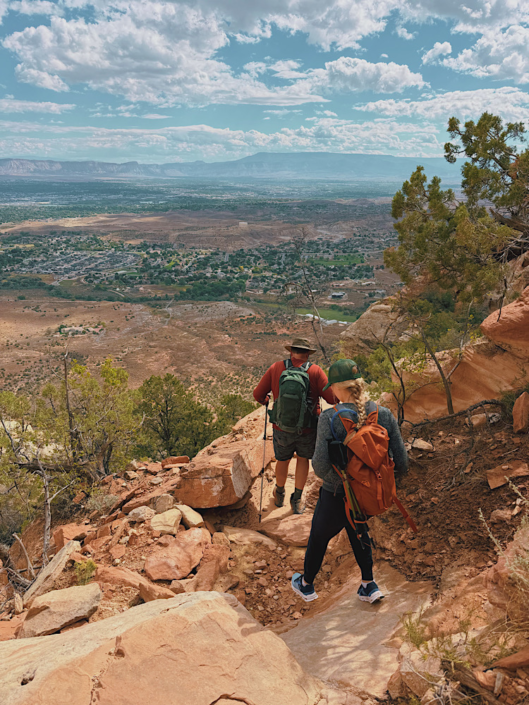
Family hiking with the REI Flash 22
REI Flash 22: Best Budget Pick
I don’t personally own the Flash 22, but several friends and family members love this bag, so I thought it was worth including in my best hiking daypacks roundup.
The Flash 22 is very lightweight, with a frameless design and simple construction. It’s less expensive than more technical hiking packs but still has enough capacity for normal day-hiking gear.
I think it makes the most sense for people who don’t carry particularly heavy loads or need a framed pack’s support. It’s simple design also makes it easier to pack for travel.
REI also makes the smaller Flash 18, but I’d choose the 22L size if this will be your primary daypack. The extra capacity makes it more versatile without jumping up to a much bigger hiking backpack.
Emma’s Verdict
I haven’t personally tested the Flash 22, so I can’t give it the same firsthand recommendation as the packs I’ve used for years. But based on its size, simple design, lower price, and how much my friends and family like theirs, I think it’s a good option for someone who wants a straightforward daypack without spending as much on a more technical pack.
One More Daypack I’m Considering: Osprey Tempest Velocity 20
I’ll be totally honest here: I haven’t bought the Osprey Tempest Velocity 20… yet. I’m eyeing this bag because it sits somewhere between a running vest and a traditional hiking backpack.
Because my go-to packs are framed, they can be bulky to pack for international travel. I stuffed my Sirrus 34 into a duffel bag to bring to New Zealand, but it wasn’t pretty.
For future trips, I want a hiking daypack that fits more than a running vest but is still relatively easy to pack, without sacrificing too much support. Enter the Tempest Velocity.
I’m looking at the 20L because I already know that a pack around this size works well for me on day hikes. The Tempest Velocity also comes in a 30L, but I think that would defeat the purpose of buying this as my smaller, more packable hiking bag.
So, is it actually the perfect travel hiking backpack? I can’t tell you that yet. But it’s the one I’m currently considering for exactly that reason.
Framed vs. Frameless Backpacks
A framed hiking daypack has more structure and typically distributes weight better. My Sirrus 24 and 34 are framed, and I find them much more comfortable when I’m carrying several liters of water, camera gear, and extra layers.
The tradeoff is bulk. A frameless backpack is generally easier to pack, travel with, and use when you don’t need as much support. My Dyna 6, for example, sits directly against my back and doesn’t distribute weight like my Sirrus packs, but I don’t need it to when I’m carrying such a small load.
Choose a framed backpack if you regularly carry heavier loads and prioritize support.
Choose a frameless backpack if you pack light and prioritize a smaller, simpler bag.
If you’re buying one hiking daypack and aren’t sure which you need, I’d lean toward a frame. I’d rather have the extra support when I need it than wish I had it halfway through a long hike.
How Big Should a Hiking Daypack Be?
Choosing the best hiking daypack isn’t just about finding the right brand or features. You also need the right capacity.
For most day hikers looking for one versatile backpack, I think 20–25L is a good place to start. It gives you room for water, food, the 10 Essentials, and extra layers without adding unnecessary bulk.
Smaller packs work well if you consistently carry less, while 30L+ packs make more sense for bulky gear, cold-weather layers, or photography equipment.
I tend to need more space than some hikers because I carry several liters of water and often bring my camera, so think about what you actually carry rather than automatically choosing the same size I use.
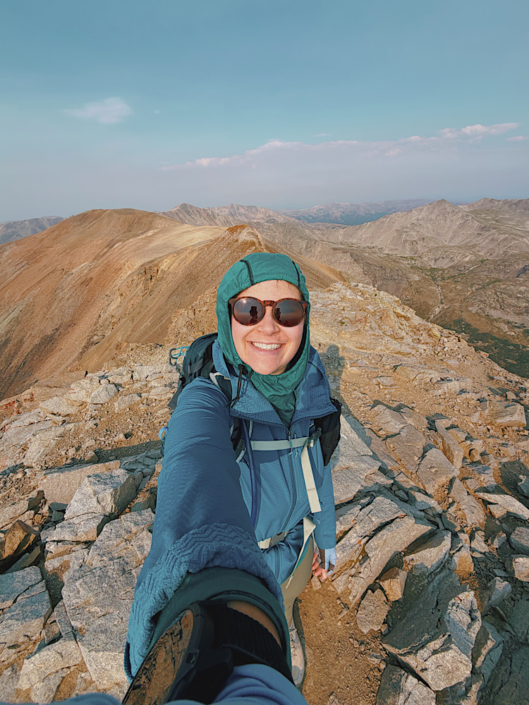
What I Look for in a Hiking Daypack
When I’m comparing the best hiking daypacks, these are the features that matter most to me:
- Support: If I’m carrying a heavier load, I want a supportive hip belt that takes weight off my shoulders.
- Hydration compatibility: I prefer a bladder, and I want it to be easy to fill, insert, and use.
- Easy-access pockets: I want to reach my phone and other essentials without taking off my pack.
- Ventilation: A suspended back panel makes a noticeable difference when I’m working hard.
- Durability: If I’m spending money on a technical pack, I expect it to last for years.
- The right capacity: Bigger isn’t always better. I want enough space for my gear without carrying unnecessary bulk.
I also consider packability when I’m traveling, although that’s much less important to me for a dedicated hiking pack.
How I Chose the Best Hiking Daypacks
I didn’t buy these hiking daypacks to test for this article. Most are bags I’ve bought for myself and used in real life over several years for hiking, travel, biking, skiing, and other adventures.
My recommendations are based on what I actually reach for, how they’ve held up, and what I’ve learned from using them.
I haven’t personally used every bag in this roundup, and I’ve clearly noted those exceptions in their individual reviews.
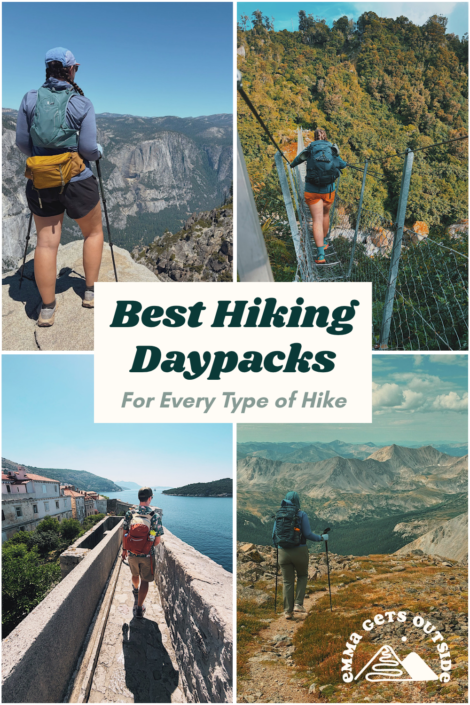
📌 Pin this image on Pinterest to save this post for reference.
Best Hiking Daypacks FAQs
What‘s the difference between men’s and women’s hiking daypacks?
Men’s and women’s hiking packs are generally designed around different torso lengths, shoulder shapes, and hip belt fits. Fit matters more to me than the label, so I recommend trying on a pack when possible and choosing whichever version fits your body comfortably.
Several packs in this roundup are women’s models, including the Osprey Sirrus and Dyna. Osprey makes comparable men’s versions if you prefer a men’s-specific fit.
What is the best hiking daypack for women?
My pick for the best hiking daypack for women is the Osprey Sirrus 24. It’s the pack I use most because the supportive frame and hip belt make it comfortable with heavier loads, while 24L gives me enough space for most day hikes without feeling oversized.
What is the best hiking daypack for men?
Several of the packs in this guide are women-specific models because those are the versions I personally use. Many hiking backpacks also come in men’s versions with different torso lengths, shoulder straps, and hip belt fits.
Rather than choosing based only on the men’s or women’s label, I’d prioritize getting the right fit for your body.
Is a 25L backpack big enough for a day hike?
For most day hikes, yes. I think 20–25L is a great range for an all-around hiking daypack because it leaves room for water, food, the 10 Essentials, and extra layers.
I use a 24L pack for most of my hiking and only move up to my 34L when I’m carrying bulky gear like my camera or extra cold-weather layers.
Do I need a waterproof hiking daypack?
I don’t consider a completely waterproof backpack necessary for most of my hiking. I care more about having a rain cover or another way to keep important gear dry when the weather changes. My Sirrus 24 and 34, for example, have a built-in rain cover that I’ve appreciated having on the trail.